
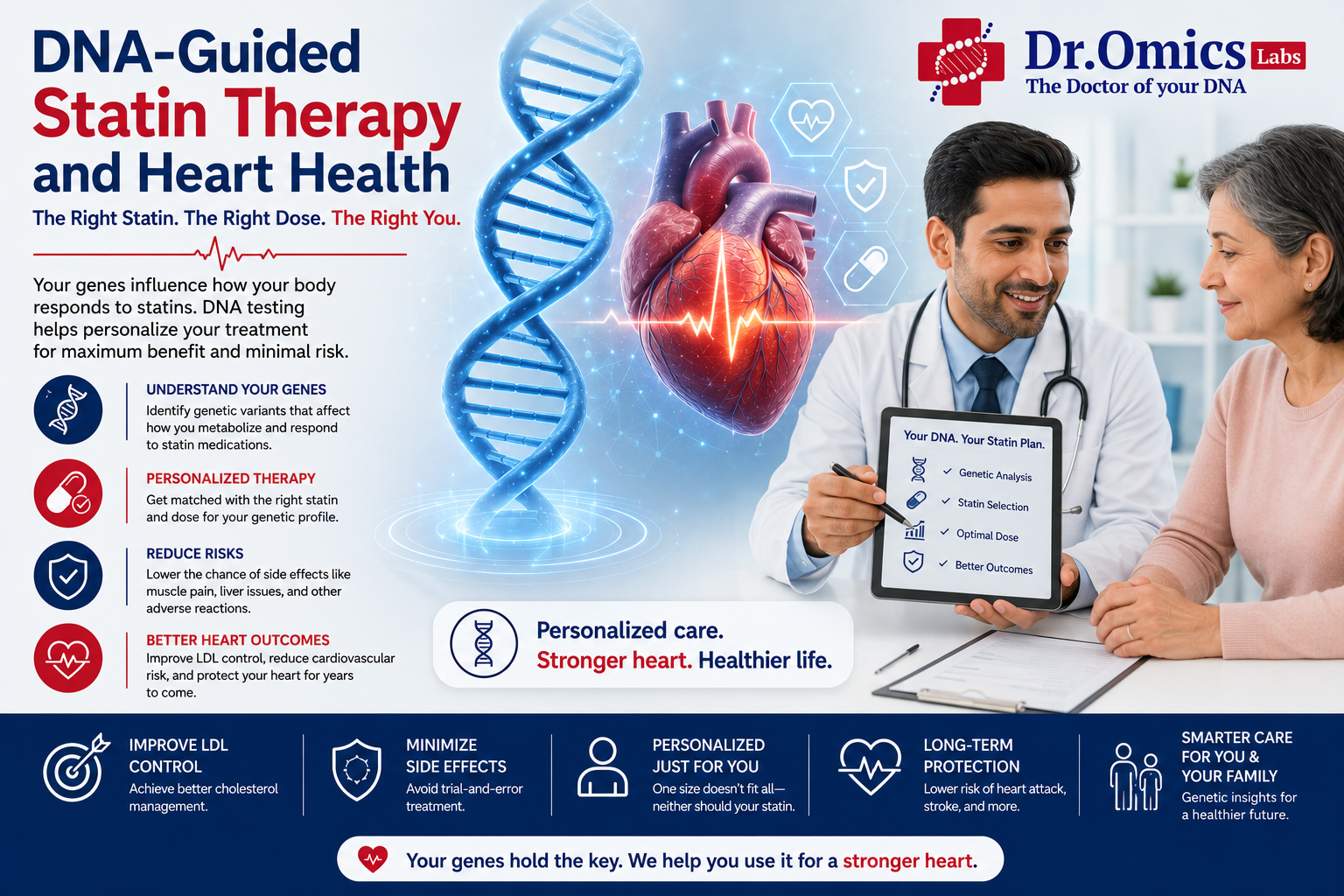
For millions of people worldwide, statins are a cornerstone of cardiovascular health. These cholesterol-lowering medications have saved countless lives by reducing the risk of heart attack and stroke. However, anyone who has spent time in a cardiology waiting room knows that statins don’t affect everyone the same way. While one person might see their LDL levels drop effortlessly, another might experience frustrating muscle aches or see very little improvement. This is where cardio precision medicine is changing the game, turning a standard prescription into a tailored health strategy.
The Science of Heart Genomics and Statins
The reason for these varying responses isn’t a mystery; it is written in your heart genomics. Our DNA dictates how our liver processes medication, how effectively a drug reaches its target, and how likely we are to experience side effects.
Through a genetic heart test, doctors can now identify specific variations in genes like SLCO1B1. This particular gene provides instructions for a protein that helps the liver absorb statins. If a patient has a certain variation in this gene, the statin stays in the bloodstream longer than intended, which can lead to muscle pain or weakness—a condition known as statin-associated muscle symptoms (SAMS). By identifying this before the first pill is even swallowed, personalized cardiology allows doctors to adjust the dose or choose a different type of statin altogether.
Cardiovascular Pharmacogenomics: Beyond the “Trial and Error”
The integration of cardiovascular pharmacogenomics is perhaps the most significant leap in modern cardiac care. Traditionally, finding the right cholesterol medication involved a “wait and see” approach. A patient would take a drug for three months, get blood work done, and then adjust. If they had side effects, they might give up on treatment entirely.
With DNA cardiac treatment protocols, we skip the guesswork. Pharmacogenomic testing provides a “traffic light” system for your doctor:
- Green Light: Your body metabolizes the statin normally; standard doses are likely safe and effective.
- Yellow Light: You may be a “slow metabolizer,” requiring a lower dose or a specific type of statin that is less likely to cause muscle issues.
- Red Light: You have a high risk of adverse effects or low efficacy; your doctor may move straight to alternative therapies like ezetimibe or PCSK9 inhibitors.
Precision Treatment for Precision Results
Understanding your genetic blueprint doesn’t just prevent side effects; it optimizes results. In the realm of personalized cardiology, the goal is to reach your target cholesterol levels as quickly and safely as possible.
For high-risk patients, such as those with a family history of early heart disease, knowing their heart genomics is vital. It allows for a more aggressive but highly calibrated approach. We are no longer just treating a number on a lab report; we are treating the unique biological system that produced that number.
Empowerment Through DNA Cardiac Treatment
The shift toward cardio precision medicine represents a move toward patient empowerment. When you understand that your response to a medication is rooted in your biology, it removes the frustration and “guilt” often associated with treatment failure or side effects.
A genetic heart test is a one-time investment that provides a lifetime of guidance. As we continue to uncover the complexities of the human genome, the bond between genetics and heart health will only grow stronger. By embracing DNA-guided therapy, we aren’t just lowering cholesterol; we are building a more resilient, informed, and heart-healthy future.
Conclusion
Your heart is unique, and your treatment should be too. By merging the traditional wisdom of cardiology with the cutting-edge science of cardiovascular pharmacogenomics, we can ensure that life-saving statin therapy is as effective and comfortable as possible. Don’t settle for the standard approach—ask how your DNA can guide your path to a stronger heart.

