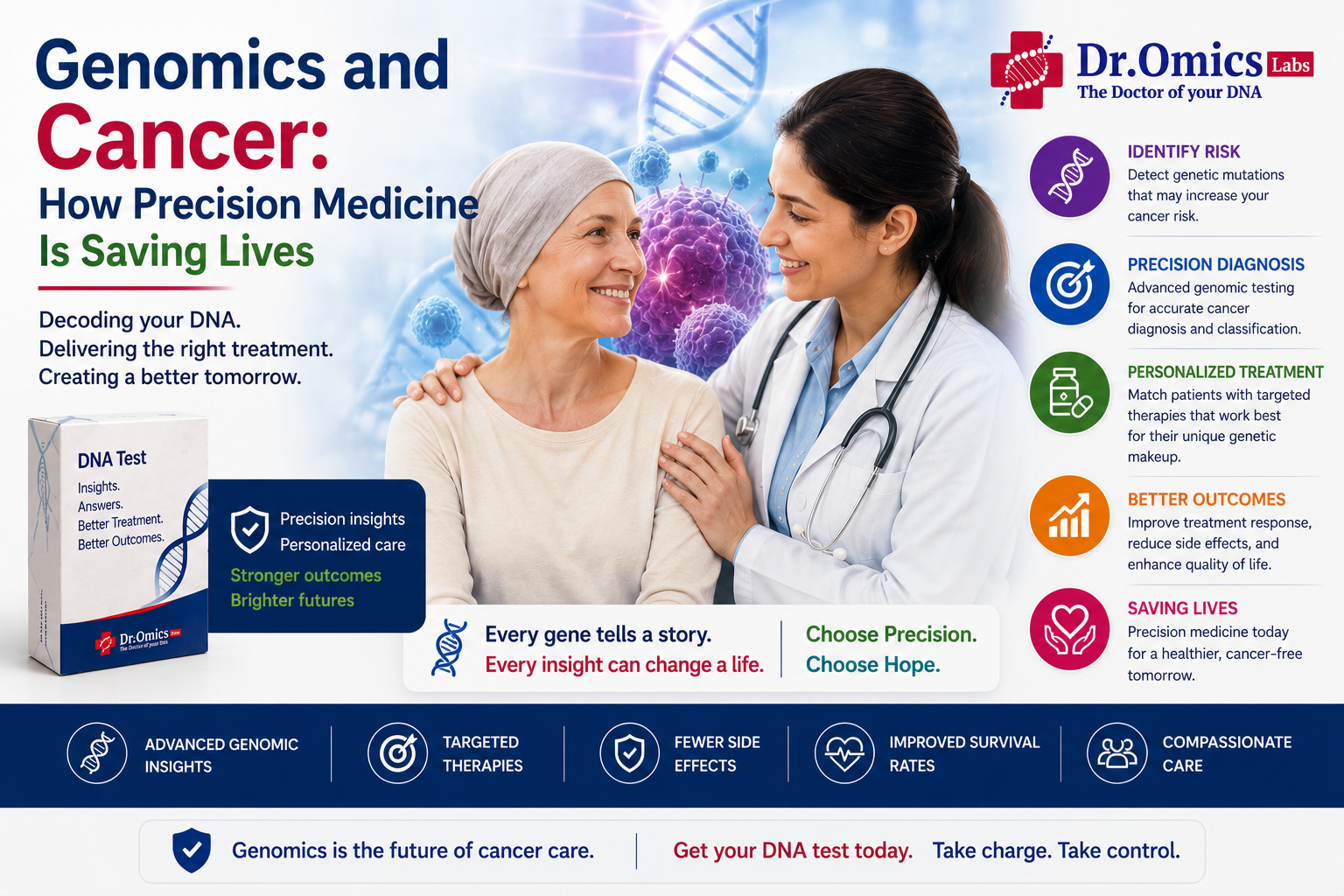
For decades, the “war on cancer” was fought with broad-spectrum weapons. Traditional chemotherapy and radiation were the standard of care—effective, but often described as “scorched earth” tactics that attacked healthy cells alongside cancerous ones. In 2026, the strategy has shifted entirely. We are no longer just treating a type of cancer; we are treating the specific genetic code of a patient’s tumor.
This revolution is known as onco precision medicine. By utilizing genomic cancer testing, doctors can now identify the exact mutations driving a malignancy, moving oncology from a practice of “best guesses” to one of absolute precision.
The Power of the Cancer DNA Test
Every cancer is unique. Even two patients with “Stage III Lung Cancer” may have tumors driven by completely different biological engines. A cancer DNA test—often performed through Next-Generation Sequencing (NGS)—acts as a high-resolution map of the tumor’s vulnerabilities.
In 2026, these tests analyze thousands of genes simultaneously, looking for:
- Driver Mutations: The “on switches” that tell cancer cells to multiply uncontrollably.
- Tumor Mutational Burden (TMB): A marker that helps predict if a patient will respond well to immunotherapy.
- Liquid Biopsies: A breakthrough in personalized oncology where a simple blood draw can detect circulating tumor DNA (ctDNA), allowing doctors to monitor treatment effectiveness in real-time without invasive surgeries.
Targeted Cancer Therapy: Hitting the Bullseye
Once the genetic profile of the cancer is known, physicians can deploy targeted cancer therapy. Unlike chemotherapy, which kills all rapidly dividing cells, targeted therapies are designed to interfere with specific proteins that are necessary for tumor growth.
The Impact: This approach is significantly increasing survival rates for high-mortality cancers. For example, metastatic melanoma—once considered a virtual death sentence—now has a 5-year survival rate of approximately 35% in 2026, a massive leap from just a decade ago.
By blocking the “fuel supply” of the tumor based on its genomic profile, patients often experience fewer side effects and a significantly higher quality of life during treatment.
Pharmacogenomics Oncology: The Right Dose the First Time
One of the most critical components of onco precision medicine is pharmacogenomics oncology. This field studies how a patient’s inherited genetic makeup (their germline DNA) affects their response to medications.
Not every body processes medicine the same way. Pharmacogenomics helps answer vital questions:
- Toxicity Risk: Will this specific patient experience a life-threatening reaction to a standard dose?
- Drug Efficacy: Does the patient have the enzymes necessary to “activate” the drug once it enters their system?
- Dosage Precision: What is the “Goldilocks” dose—not too much to be toxic, but not too little to be ineffective—for this specific individual?
By integrating pharmacogenomics into clinical workflows, hospitals are reducing the “trial-and-error” period that used to define the first few months of cancer care.
Precision Medicine in 2026: A New Standard of Care
As we look at the landscape of 2026, genomic cancer testing is moving from a “last resort” for advanced cases to a frontline tool for initial diagnosis. The global precision medicine market is projected to exceed $137 billion this year, reflecting a worldwide shift toward individualized healthcare.
Key trends saving lives today include:
- AI-Driven Discovery: Artificial intelligence is now used to analyze massive genomic datasets, identifying “hidden” biomarkers that human researchers might miss.
- Expanded Multi-Gene Panels: Testing has grown far beyond the well-known BRCA1 and BRCA2 genes, now providing guidance on colorectal, pancreatic, and prostate cancers with unprecedented clarity.
- Equitable Access: While once a premium service, precision oncology is becoming a standard expectation, with insurance coverage expanding to ensure that your zip code doesn’t determine whether you receive life-saving genomic insights.
Taking Charge of Your Treatment
If you or a loved one is facing a cancer diagnosis, the most important question to ask your oncology team is: “Has my tumor undergone genomic profiling?”
Personalized oncology is a collaborative effort. It requires:
- Comprehensive Testing: Ensuring that both the tumor’s DNA and your own pharmacogenomic profile are considered.
- Data Interpretation: Working with a multidisciplinary team that includes genetic counselors and molecular pathologists.
- Clinical Trial Matching: Using your genetic data to find cutting-edge trials specifically designed for your mutation.
Conclusion
Genomics has turned the tide in the fight against cancer. We are moving toward a future where cancer is managed as a chronic, treatable condition rather than a terminal one. Through targeted cancer therapy and onco precision medicine, we are finally treating the disease at its source.
The code to defeating cancer is written in our DNA—and in 2026, we are finally learning how to read it.