
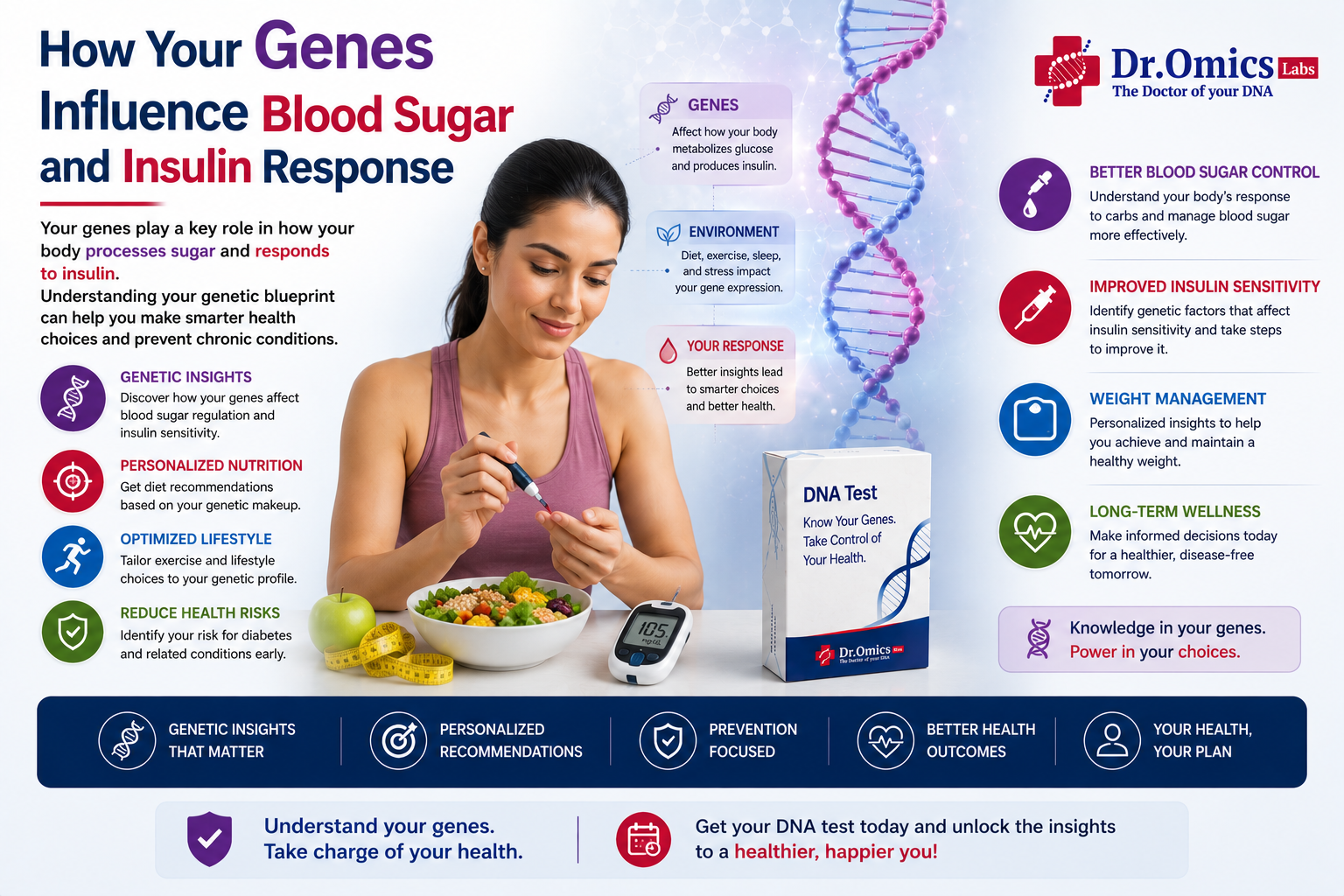
The conversation around metabolic health is changing. For years, the narrative focused almost exclusively on “calories in versus calories out.” But as we move through 2026, science has revealed a much more complex reality: your body’s relationship with sugar is unique, governed by a biological script written in your DNA.
Understanding the link between your type 2 diabetes DNA and your daily physiological function is the first step toward personalized diabetes prevention. By utilizing a diabetes DNA test, you can finally see how your specific genetic markers influence your blood sugar and insulin response.
The Biological Engine: DNA and Insulin Response
Insulin is the “key” that unlocks your cells to let glucose (blood sugar) in for energy. However, for many people, the locks are rusty or the keys aren’t being made fast enough. This is where dna insulin response markers come into play.
Genetic variations can affect several stages of this process:
- Insulin Production: Genes like KCNJ11 help regulate the electrical signals in the pancreas that trigger insulin release. If your DNA carries a specific variant here, your pancreas may be slower to respond to a spike in blood sugar.
- Insulin Sensitivity: The PPARG gene plays a massive role in how your fat cells and muscle tissues “listen” to insulin. Some people are genetically predisposed to “insulin resistance,” meaning their cells ignore the signal, causing sugar to build up in the bloodstream.
- Glucose Processing in the Liver: Your liver acts as a sugar warehouse. Genes such as GCK (Glucokinase) act as the “sensor” that tells the liver when to stop releasing stored sugar. A “glitch” in this sensor can lead to high fasting blood sugar levels, even if you haven’t eaten for hours.
Why a DNA Test for Diabetes Risk is a Game Changer
Traditional blood tests, like the A1c or fasting glucose test, are “lagging indicators.” They tell you what is happening in your body now or what has happened over the last three months. They are essentially a snapshot of the damage or the current state of play.
A genetic diabetes screening, however, is a “leading indicator.” It reveals your innate susceptibility before your blood sugar ever moves out of the normal range. This shift from reactive to proactive care is revolutionary for two reasons:
1. Identifying “Hidden” Risk in Thin Individuals
The “TOFI” (Thin Outside, Fat Inside) phenomenon is often driven by genetics. Some individuals may appear fit but carry a high type 2 diabetes DNA risk that affects how they store visceral fat around their organs. A dna test for diabetes risk can alert these individuals to monitor their metabolic health as closely as someone who is visibly overweight.
2. Fine-Tuning Carbohydrate Tolerance
Not all carbohydrates are created equal, and neither are the people who eat them. Your genes dictate your salivary amylase levels (the AMY1 gene), which determines how efficiently you break down starches. A diabetes DNA test can help you understand if your body can handle complex grains or if you need to be significantly more cautious with starch intake to maintain stable insulin levels.
Personalized Diabetes Prevention: Moving Beyond Generic Advice
The most powerful outcome of genetic diabetes screening is the ability to create a “user manual” for your metabolism. Instead of following generic health trends, you can implement strategies that map directly to your DNA.
- Targeted Exercise: If your genes indicate high insulin resistance in muscle tissue, resistance training (weight lifting) may be more effective for you than steady-state cardio, as it creates more “docks” for glucose to enter the muscle.
- Strategic Supplementation: Certain genetic profiles are less efficient at processing Alpha-lipoic acid or Magnesium, both of which are critical for insulin sensitivity. Knowing your levels allows for precise supplementation.
- Meal Timing: Some metabolic genotypes respond better to intermittent fasting, while others may experience a “dawn phenomenon” (high morning blood sugar) that requires a different approach to breakfast and nighttime snacking.
The Future of Metabolic Health in 2026
We are entering an era where “standardized medicine” is being replaced by “precision health.” A diabetes DNA test is no longer a luxury for the elite; it is a fundamental tool for anyone serious about longevity.
By understanding the intersection of your type 2 diabetes DNA and your environment, you gain the power to “silence” certain genetic predispositions. Epigenetics tells us that while our DNA is the blueprint, our lifestyle is the builder. You can’t change the blueprint, but you can certainly change how the house is built.
Taking Action: What Should You Do Next?
If you’re ready to stop guessing and start knowing, the path forward is clear:
- Get Tested: Look for a comprehensive metabolic genetic test that specifically analyzes insulin signaling, glucose transport, and inflammatory markers.
- Consult a Specialist: Data is only as good as its interpretation. Work with a provider who understands neurogenomics and metabolic genetics to translate your results into an actionable plan.
- Monitor Progress: Use a Continuous Glucose Monitor (CGM) for two weeks after getting your DNA results. This allows you to see in real-time how your “genetic” response matches your “actual” response to specific foods.
Conclusion
Your blood sugar isn’t just a reflection of what you ate for lunch; it’s a reflection of a complex genetic symphony. By using a diabetes DNA test to understand your dna insulin response, you can take the guesswork out of your health.
Personalized diabetes prevention is the most effective way to ensure a vibrant, disease-free future. Your genes have a story to tell—it’s time you started listening.