
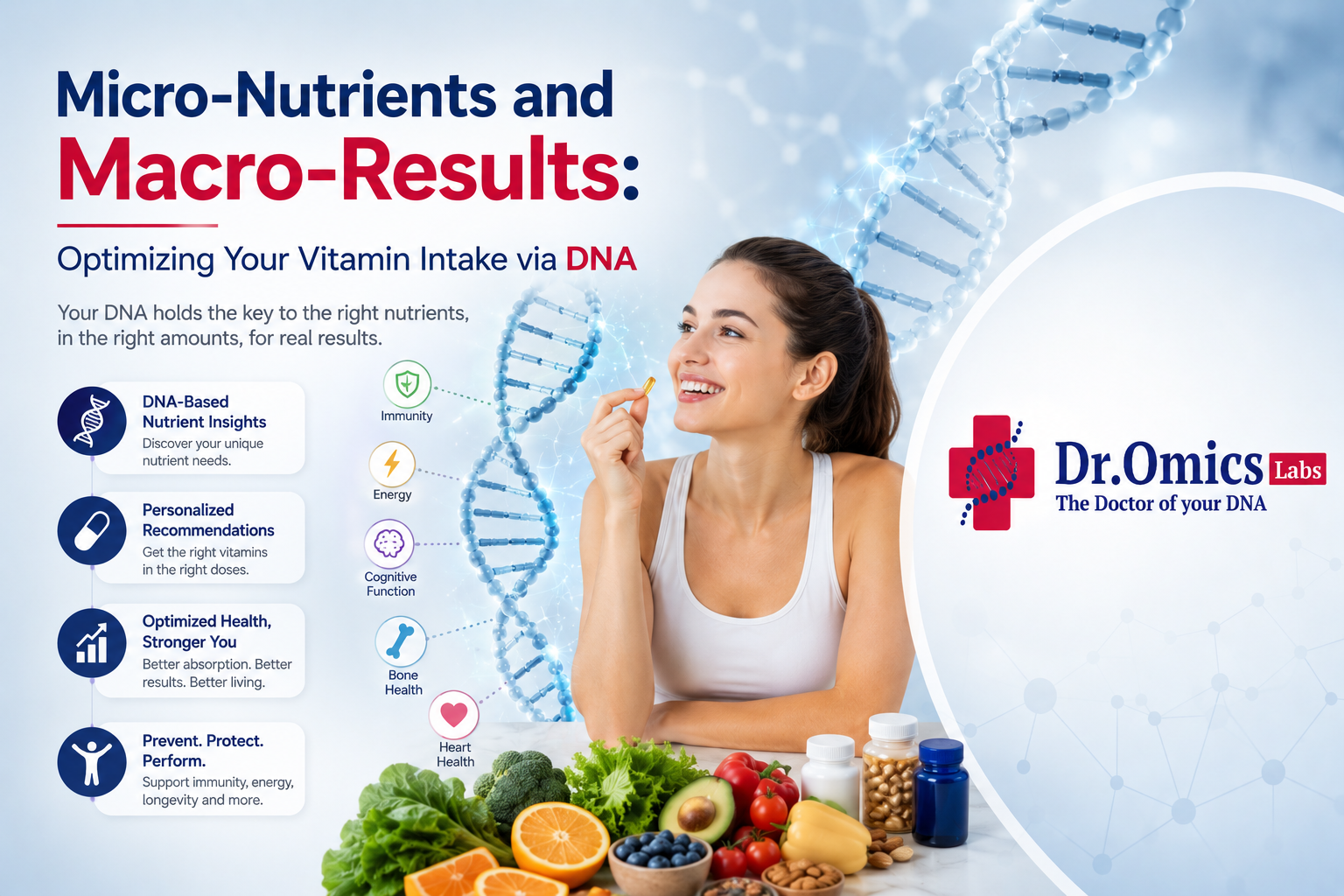
We’ve all been there: standing in the pharmacy aisle, staring at a wall of multivitamins, wondering if we actually need any of them. For years, nutritional advice was based on the “Recommended Dietary Allowance” (RDA)—a baseline designed to prevent deficiency in the average person. But in 2026, we’ve realized that no one is truly “average.”
Through the lens of Healthy Genie, we are moving away from guesswork and toward DNA-based nutrition. By understanding your unique vitamin absorption genetics, you can stop wasting money on supplements you don’t need and start fueling your body with a personalized supplement plan that actually works.
The Science of Why “One-Size-Fits-All” Fails
Have you ever wondered why your friend feels a surge of energy from a B-complex while you feel nothing? The answer lies in your nutrient metabolic rate. Our DNA dictates the shape and efficiency of the “transporter” proteins that carry vitamins from our gut into our bloodstream, and then into our cells.
Even with a perfect diet, genetic “glitches” can leave you functionally deficient. Here are a few key players:
- The MTHFR Gene (Folate): This is perhaps the most famous example of vitamin absorption genetics. Many people carry a variant that makes them unable to convert folic acid (the synthetic form) into methylfolate (the active form). Without this conversion, your body can’t repair DNA or regulate mood effectively.
- The VDR Gene (Vitamin D): Your Vitamin D Receptor (VDR) gene determines how well your cells “grab” Vitamin D from your blood. If you have a specific variant, you might need a dose three times higher than the RDA just to maintain healthy bone density and immune function.
- The BCMO1 Gene (Vitamin A): This gene controls the conversion of beta-carotene (from carrots and greens) into active Vitamin A (retinol). Some people are “poor converters,” meaning they must get their Vitamin A from animal sources or specific supplements rather than just plants.
Nutrient Metabolic Rate: The Speed of Health
Your nutrient metabolic rate isn’t just about how you absorb vitamins, but how quickly you use them and flush them out.
The 2026 Insight: Some individuals are “hyper-metabolizers” of Vitamin C. Under stress or physical exertion, their bodies burn through their stores so quickly that a standard morning dose is gone by noon.
Understanding these rates through DNA-based nutrition allows you to implement “timed-release” strategies. Instead of one massive pill, your genetic profile might suggest smaller, divided doses throughout the day to keep your levels stable.
Crafting Your Personalized Supplement Plan
A personalized supplement plan isn’t just about adding more pills; it’s often about subtraction and synergy. When you know your genetic predispositions, your approach to supplementation changes in three major ways:
1. Targeted Bioavailability
If your DNA suggests poor absorption of standard minerals, you can switch to “chelated” versions (minerals bound to amino acids) that bypass your genetic roadblocks. For example, someone with specific magnesium-transport variants might find Magnesium Glycinate life-changing, while Magnesium Oxide does nothing but cause digestive upset.
2. Avoiding Toxicity
More is not always better. Some people have a genetic predisposition to store iron (hemochromatosis) or struggle to clear fat-soluble vitamins like Vitamin E. A DNA test can warn you to avoid high-dose supplements that could actually become toxic to your liver over time.
3. Identifying Synergies
DNA testing can reveal how your body handles “nutrient pairs.” For instance, if your genetics show poor calcium regulation, you’ll know that taking Calcium without Vitamin K2 could be risky, as K2 ensures the calcium goes to your bones rather than your arteries.
The Healthy Genie Approach: Data Over Hype
At Healthy Genie, we believe that information is the ultimate wellness tool. We are currently in an era where “biohacking” has gone mainstream, but true optimization requires a map. Vitamin absorption genetics provides that map.
By combining your genetic data with annual blood work, you create a feedback loop. Your DNA tells you what might happen, and your blood work tells you what is happening. Together, they allow for a level of precision that was unimaginable a decade ago.
How to Start Your DNA-Based Nutrition Journey
If you’re ready to optimize your micro-nutrients for macro-results, follow these steps:
- Test, Don’t Guess: Take a high-quality nutritional DNA test that focuses specifically on micronutrient pathways.
- Analyze Your Diet: Cross-reference your results with your current eating habits. If you are genetically a “poor converter” of plant-based fats, you may need to prioritize algae-based EPA/DHA supplements.
- Review with a Professional: Work with a nutritionist who specializes in nutrigenomics to ensure your personalized supplement plan accounts for your current health goals and any medications you may be taking.
Conclusion
Your body is a high-performance machine, and vitamins are the sparks that keep the engine running. However, using the wrong “fuel” for your specific genetic engine is an expensive mistake.
By embracing DNA-based nutrition, you take control of your health at the cellular level. You aren’t just taking vitamins because a celebrity recommended them; you’re taking them because your code demands them. Optimize your intake, respect your nutrient metabolic rate, and watch as your “micro” changes lead to “macro” results in your energy, immunity, and longevity.