
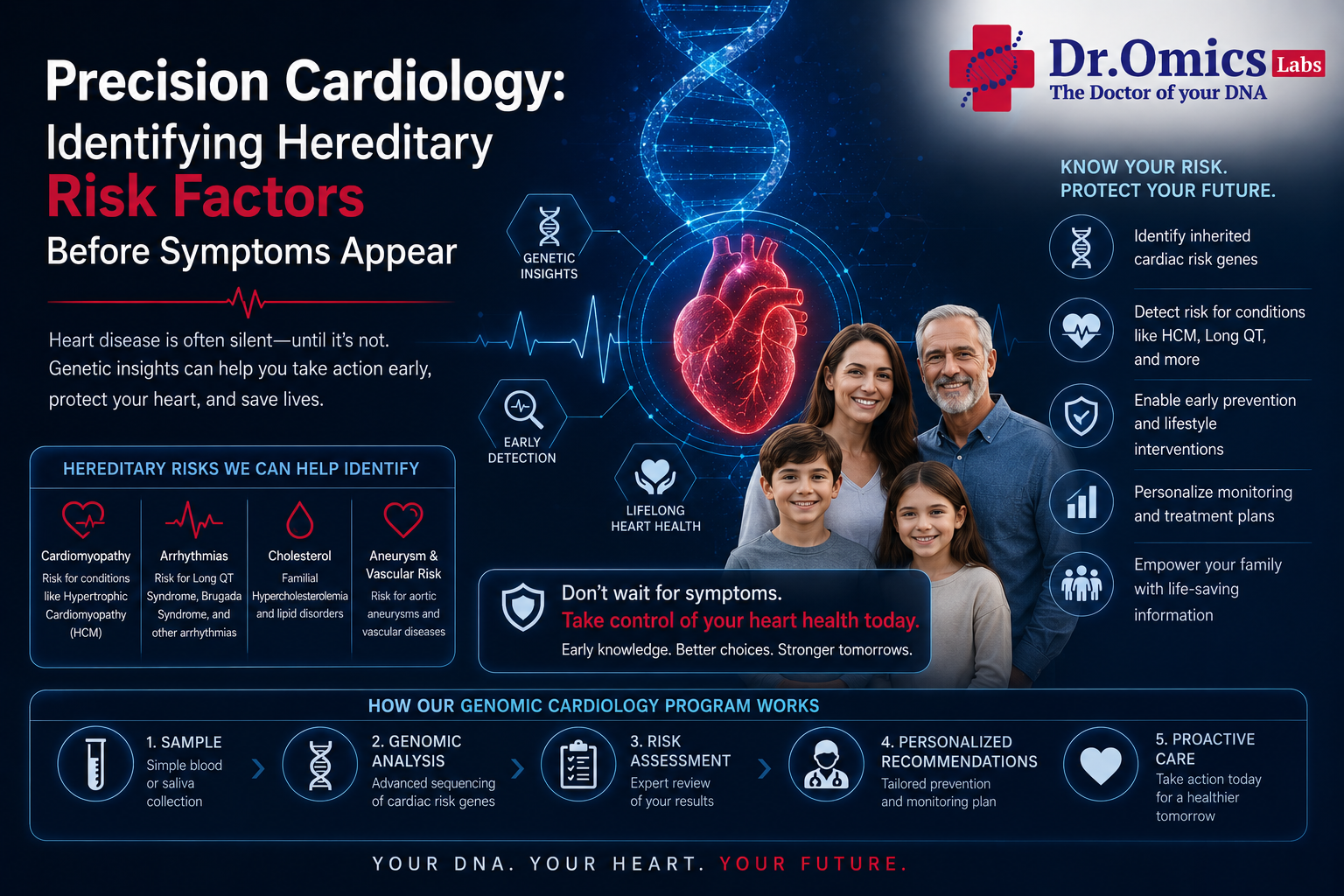
For decades, the warning signs of heart disease were often the symptoms themselves: chest pain, shortness of breath, or, in many tragic cases, a sudden cardiac event. In this traditional model, cardiology was a reactive field, stepping in only after the damage had begun. However, we are now entering the era of precision cardiology, where the goal is to identify danger years—or even decades—before a single symptom appears. At the heart of this revolution is the heart DNA test, a tool that allows us to look past lifestyle factors and into the very blueprint of cardiovascular health.
The Power of Early Detection
The most significant advantage of modern preventive cardiology screening is its ability to uncover what is invisible to the naked eye. While we can measure blood pressure and track diet, we cannot see how our body is programmed to handle the stresses of aging and metabolism without looking at our genetic code.
A heart DNA test analyzes specific cardiovascular genomic markers that dictate everything from the strength of our arterial walls to the way our electrical system regulates heart rhythm. By identifying these markers early, patients and physicians can move from “guessing” to “knowing.” Instead of waiting for a high cholesterol reading at age 50, a young adult can discover a predisposition at 25 and begin a life-saving management plan.
Understanding Hereditary Lipid Risk
One of the most critical areas where DNA testing is changing lives is in the management of cholesterol. We often hear that high cholesterol is a result of a poor diet, but for millions of people, the issue is actually a hereditary lipid risk.
Conditions such as Familial Hypercholesterolemia (FH) are caused by genetic variations that prevent the liver from effectively clearing LDL (the “bad” cholesterol) from the blood. For individuals with this genetic profile, even the most disciplined diet and exercise routine may not be enough to keep their arteries clear. One of the primary heart DNA test benefits is the ability to distinguish between lifestyle-driven cholesterol issues and genetic ones. This distinction is vital because genetic risks often require earlier and more specific pharmaceutical interventions to prevent early-onset heart disease.
Beyond Cholesterol: A Multi-Faceted View
Precision cardiology doesn’t stop at lipids. Comprehensive genomic markers can also reveal:
- Hypertension Predisposition: How your kidneys and blood vessels are genetically programmed to regulate salt and pressure.
- Clotting Risks: Genetic tendencies toward thick blood or slow clot dissolution, which are major factors in stroke prevention.
- Structural Vulnerabilities: Predispositions for heart muscle thickening (cardiomyopathy) or valve issues that may not show up on a standard EKG.
Personalized Prevention Strategies
The ultimate goal of identifying these risk factors early is to create a personalized shield. When a preventive cardiology screening reveals a high genetic risk, it doesn’t mean heart disease is inevitable; it means the “margin for error” is smaller.
With this knowledge, your healthcare provider can craft a strategy that is as unique as your DNA:
- Targeted Lifestyle Shifts: If your DNA shows a high sensitivity to sodium, you can prioritize a low-salt diet with much higher precision.
- Pharmacogenomic Accuracy: Using your DNA to choose the specific blood pressure or cholesterol medication that your body is most likely to respond to without side effects.
- Frequency of Monitoring: Adjusting how often you receive stress tests or calcium scores based on your biological risk rather than just your age.
Conclusion: Investing in Your Future Self
The “silent” nature of heart disease is its most dangerous trait. By the time symptoms appear, the cardiovascular system has often been under strain for years. Precision cardiology flips the script, giving the advantage back to the patient.
By utilizing a heart DNA test and understanding your cardiovascular genomic markers, you are taking the most proactive step possible toward longevity. The benefits of knowing your hereditary lipid risk far outweigh the uncertainty of the unknown. Your heart has a specific story to tell—make sure you have the tools to read it before the first chapter ends.