
The landscape of managing blood sugar is shifting from reactive management to proactive, genetic prevention. With global metabolic health challenges accelerating—particularly in regions like India, which faces a massive spike in metabolic disorders—individuals are moving beyond traditional fasting blood glucose checks. Instead, they are turning to advanced genetic screening to map out their health risks years before any symptoms appear.
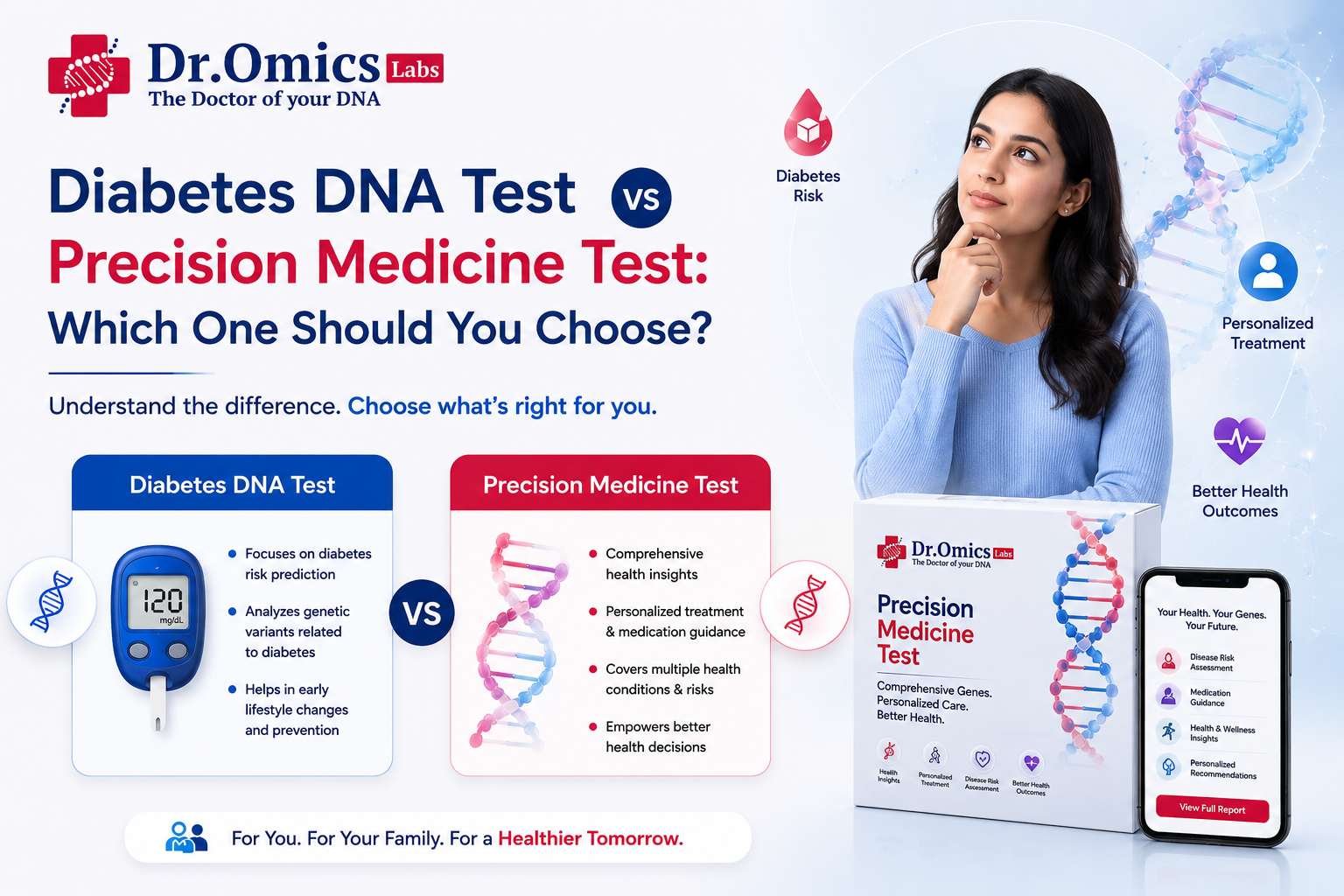
If you are looking into advanced screenings, you have likely run into two major options: a Diabetes DNA Test and a Precision Medicine Test. While both analyze your genetic profile using consumer genomics diabetes tools, they serve very different purposes.
1. The Diabetes DNA Test: Spotting the Warning Signs Early
A standard diabetes genetic test comparison reveals that a direct-to-consumer DNA test acts as an early-warning system. This tool examines a broad genetic diabetes screening panel, mapping inherited risk variants across your genome to determine your baseline vulnerability to metabolic shifts.
How It Works
Instead of checking your current blood glucose or HbA1c levels, this test maps specific variations in your genetic code, known as Single Nucleotide Polymorphisms ($SNPs$). It compiles these variations to calculate a Polygenic Risk Score (PRS), which grades your overall inherited risk.
What It Measures
- Baseline Vulnerability: Evaluates a specialized diabetes risk gene panel to see if you have inherited risk alleles that impair insulin production or reduce muscle insulin sensitivity.
- Pre-Diabetes Detection: A targeted DNA test for pre-diabetes can identify an elevated risk for developing impaired glucose tolerance long before a standard blood draw shows any elevation.
- Beta-Cell Resilience: Examines genetic markers associated with how your pancreatic beta-cells respond to chronic glucose exposure.
2. The Precision Medicine Test: Tailoring Your Treatment Roadmap
While a standard DNA screening highlights if you are at risk, a Precision Medicine Test is designed to show how your body uniquely processes nutrients, responds to lifestyle interventions, and metabolizes specific clinical treatments. It moves beyond generic risk profiling to deliver targeted, actionable data.
How It Works
Precision medicine diagnostics integrate your inherited DNA profile with dynamic biological data. Specialized clinical screenings—such as advanced metabolic profiling, pharmacogenomics panels, and targeted options like the Diabetomics DNA test—look at how your genes express themselves in real-time.
What It Measures
- Gene-Drug Interactions: Determines how your liver enzymes (like the CYP gene family) process common metabolic medications. This tells your physician exactly which therapeutic options will be most effective for you without the usual trial-and-error.
- Targeted Dietary Impact: Reveals how your body responds to specific macronutrient groups, showing whether carbohydrate restriction or targeted fat adjustments will work best to stabilize your blood sugar genetics.
- Pathological Subtyping: Helps differentiate whether a predisposition to high blood sugar stems from an autoimmune response, a peripheral insulin receptor defect, or a rare monogenic variant (such as MODY).
Direct Comparison: Mapping the Differences
To help you decide which path aligns best with your immediate health objectives, here is how the two testing modalities stack up side-by-side:
| Feature | Diabetes DNA Test | Precision Medicine Test |
| Primary Goal | Calculates early risk and baseline inherited vulnerability. | Designs customized clinical protocols and highly targeted therapies. |
| Data Analyzed | Static germline DNA ($SNPs$) and Polygenic Risk Scores. | Integrated genomics, pharmacogenomics, and functional biomarkers. |
| Best For | Proactive screening, lifestyle planning, and preventative care. | Optimizing current treatments, reversing pre-diabetes, and medication tuning. |
| Actionable Insight | Generic health modifications (e.g., “increase cardio activity”). | Granular prescriptions (e.g., “avoid drug X; prioritize carbohydrate pattern Y”). |
Which One Should You Choose?
The choice between these two approaches depends entirely on where you currently stand on your health journey.
Choose a Diabetes DNA Test If:
- You have a strong family history of metabolic conditions and want an early type 2 diabetes DNA India screening to map out a clear preventative routine.
- You are currently healthy but want to use a DNA test for pre-diabetes to understand your metabolic baselines and make long-term lifestyle changes.
- You want an accessible, direct-to-consumer option to learn about your genetic health risks without needing deep clinical guidance.
Choose a Precision Medicine Test If:
- You have already been diagnosed with pre-diabetes or type 2 diabetes and are looking for an effective, personalized strategy to manage or reverse the condition.
- Your current therapies are causing side effects or failing to properly regulate your blood sugar levels.
- You want a comprehensive, medically supervised evaluation—such as the specialized Diabetomics DNA test methodology—to build a targeted dietary, exercise, and pharmaceutical plan built entirely around your biological profile.
The Takeaway: A standard diabetes DNA test gives you a clear look at your inherited genetic risks, making it an excellent option for early screening. However, if you need a detailed, actionable blueprint to manage your health or optimize medical treatments, a precision medicine test provides the comprehensive depth required to take control of your metabolic future.