
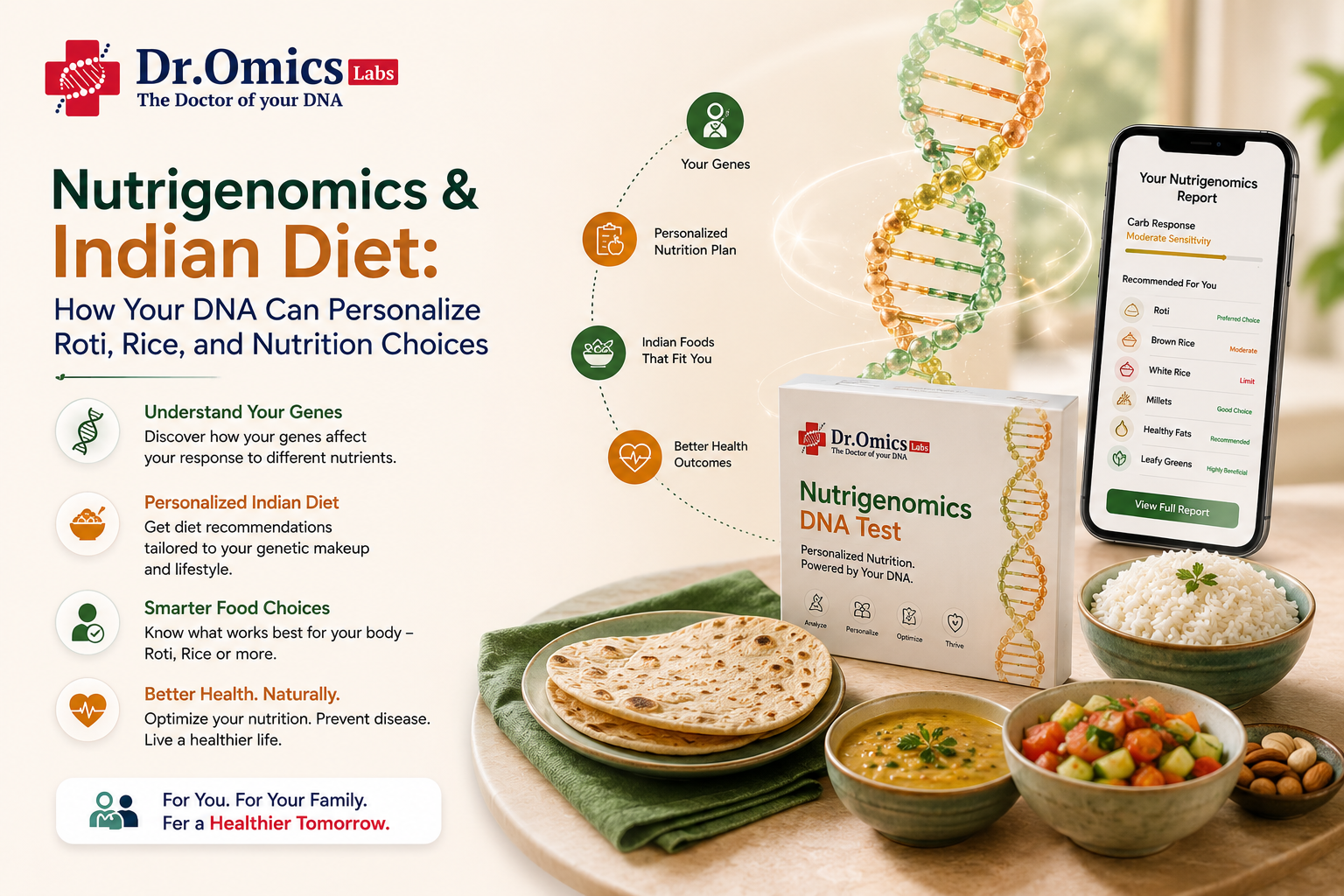
Every week, millions of Indians jump from one trending diet to another. We cycle through keto, intermittent fasting, and restrictive detoxes, often only to end up right where we started—fatigued, frustrated, and staring longingly at a plate of warm food.
The truth is, your lack of long-term success isn’t due to a lack of willpower. It’s because traditional healthy eating advice relies on a “one-size-fits-all” template. But human biology doesn’t work that way.
Welcome to the era of nutrigenomics Indian food—the science of how your unique DNA interacts with the specific nutrients you consume. By unlocking a DNA based Indian diet plan, you can stop guessing and finally understand how your body is genetically hardwired to process staple foods like roti, rice, ghee, and dal.
What is Nutrigenomics?
Nutrigenomics (nutritional genomics) is the study of the relationship between human genes and nutrition. Using a simple, non-invasive cheek swab, scientists can map variations in your DNA called Single Nucleotide Polymorphisms (SNPs). These variations determine whether you are a fast or slow metabolizer of certain macronutrients, your risk for vitamin deficiencies, and your innate sensitivities to common ingredients.
Instead of fighting your heritage, a genetic diet for Indians uses your genetic blueprint to optimize your cultural comfort foods for peak metabolic health.
The Great Carbohydrate Debate: Roti vs. Rice Genetics
In almost every Indian household, the debate rages on: Is roti healthier than rice, or is rice easier on the stomach?
Nutrigenomics reveals that the answer is entirely written in your genetic code. Roti rice genetics comes down to how your body handles specific grains and carbohydrates.
- The TCF7L2 Gene (The Carb Processor): This gene regulates blood glucose levels and insulin secretion. If you carry a specific variant of the TCF7L2 gene, your body has high carbohydrate sensitivity. Eating refined white rice or large amounts of wheat rotis can cause sharp blood sugar spikes, drastically increasing your risk of insulin resistance and Type 2 Diabetes.
- The LCT & HLA Genes (The Intolerance Markers): Do you feel chronically bloated after eating wheat rotis? It might not be “normal gas.” Variations in your HLA genes can flag a genetic predisposition to gluten sensitivity, while mutations in the LCT gene dictate adult-onset lactose intolerance.
For a high-carb responder, switching white rice to unpolished red rice or substituting standard wheat roti for lower-glycemic millets (like jowar or ragi) can completely change their metabolic profile.
Fat, Ghee, and Cardiovascular Health: The Indian Paradox
South Asians have a disproportionately high risk of cardiovascular disease, often referred to as the “South Asian Paradox.” While traditional wisdom blames fats or oils entirely, Indian food and genetics studies show a far more nuanced picture.
+—————+——————————————+——————————————+
| Gene Marker | Function | Genetic Risk Variant Impact |
+—————+——————————————+——————————————+
| APOA2 | Regulates saturated fat sensitivity | High saturated fat intake triggers |
| | and obesity risk | systemic inflammation and weight gain |
+—————+——————————————+——————————————+
| APOE | Governs cholesterol transport and | Poor clearance of LDL (“bad”) |
| | clearance | cholesterol; increases heart disease risk|
+—————+——————————————+——————————————+
If your genetic test reveals a high-risk variant in the APOA2 gene, loading up your dal with dollops of pure desi ghee—even if it is organic—can cause direct fat storage and inflammation. Conversely, someone with a normal APOA2 variant might process high-quality saturated fats flawlessly.
Micronutrient Blindspots in the Indian DNA
Even if you eat a pristine vegetarian diet, your DNA nutrition India profile might show that you are starving at a cellular level. Due to deep-seated genetic adaptations, many Indians struggle with specific vitamin pathways.
The MTHFR Gene and Folate
The MTHFR gene converts dietary folate into its active, usable form. A massive percentage of the Indian population carries a mutated MTHFR variant. When these individuals eat synthetic folic acid or fail to consume enough leafy greens, homocysteines build up in their blood, escalating their risk of heart attacks and stroke.
Vitamin B12 and D Deficiencies
Because traditional Indian diets are heavily plant-based, Vitamin B12 deficiency is rampant. Coupled with genetic variations that impair the absorption of Vitamin D and B12, a custom personalized Indian diet genomics approach will pinpoint exactly whether you need dietary adjustments or highly specific methylated supplements to protect your nerves and bone health.
Steps to Get Started with a Gene Diet Compatibility India Plan
Shifting to a genetic-based lifestyle doesn’t mean changing your entire identity; it means refining your plate.
1.Take a Buccal Swab Test:Home Kit.
Order a validated genetic nutrition test from a reputable provider in India. This involves a simple, painless cheek swab done at home.
2.Analyze Key Nutrient Path Markers:2-3 Weeks.
Your DNA is sequenced to read variations across 70+ lifestyle and metabolic genes, including carbohydrate handling, fat oxidation, and food sensitivities.
3.Consult a Nutrigenomics Expert:Crucial Step.
Never rely on a generic, automated PDF report. Sit down with a trained genetic nutritionist to cross-reference your DNA data with your current blood biomarkers and lifestyle habits.
4.Tailor Your Traditional Plate:Sustainable Adaptation.
Modify your daily meals. Swap wheat for almond or amaranth flour if gluten-sensitive; adjust your white rice to brown, red, or cauliflower rice based on your TCF7L2 data.