
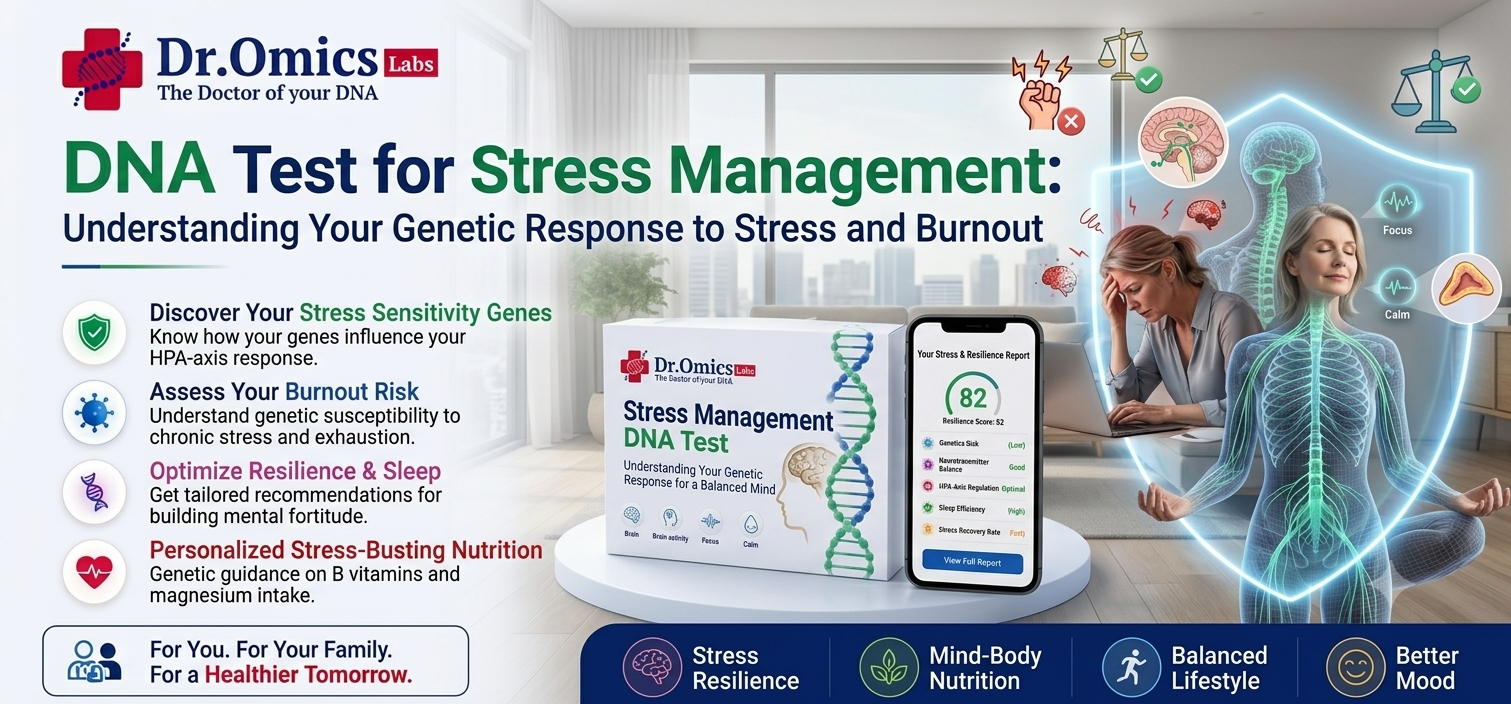
Standard wellness advice treats burnout like a lifestyle failure. If you are feeling chronically exhausted, “tired but wired” at night, or easily overwhelmed, the generic prescription is always the same: take a deep breath, practice mindfulness, and sleep more.
But what if your nervous system isn’t processing daily pressures the same way as everyone else? Why can some individuals breeze through high-stakes corporate environments while others face rapid emotional and physical exhaustion?
The answer lies hidden within your cells. Emerging research reveals that genetic factors account for roughly 33% to 36% of the variability in burnout-related traits. By utilizing a specialized DNA test for stress India, you can uncover your unique genetic stress profile and switch from generic coping mechanisms to precision, bio-hacked recovery.
The Biological Command Center: The HPA Axis
Every psychological stressor triggers a physical cascade. This response is governed by the HPA axis (Hypothalamic-Pituitary-Adrenal axis), a critical communication network linking your brain to your adrenal glands.
When your brain perceives a threat, the HPA axis acts as an alarm system, instructing the body to release a flood of survival hormones like adrenaline, noradrenaline, and cortisol. Under normal conditions, these hormones spike to help you meet a deadline or survive a crisis, then drop quickly once the threat passes.
However, variations in your HPA axis genetics can disrupt this feedback loop. If your genetic wiring blocks the “off switch,” your body continues to run on high alert long after your workday has ended. This persistent low-grade activation gradually erodes your resilience, shifting your body from temporary strain into full clinical burnout.
Key Genes Decoding Your Stress Response
A comprehensive genomic profile evaluates several key markers across different pathways to map out how your body synthesizes, processes, and clears stress molecules.
1. The Cortisol Regulation Group (FKBP5 & NR3C1)
Cortisol is widely known as the body’s primary “stress hormone.” A cortisol gene test looks closely at receptors and regulatory loops:
- FKBP5 (The Circuit Breaker): This gene acts as a biological brake pedal, helping your body return to normal baseline after a high-cortisol event. Specific variations (such as the rs1360780 variant) impair this function, causing your cells to ignore the signal to stop producing cortisol.
- NR3C1 (The Glucocorticoid Receptor): This gene codes for the actual receptors that bind cortisol. Certain polymorphisms reduce receptor sensitivity, meaning your system requires much higher levels of circulating cortisol just to register a normal signal. This leads to baseline cortisol elevation, persistent fatigue, and abdominal weight gain.
2. The Adrenaline Cleanup Crew (COMT)
An adrenaline gene test heavily focuses on the COMT (Catechol-O-methyltransferase) gene. COMT functions as the primary cleanup crew for catecholamines (adrenaline and noradrenaline) in the prefrontal cortex.
- Slow Clearing (“Worry” Variant): Individuals who carry a lower-activity COMT variant clear adrenaline out of their bloodstream at a much slower rate. If you feel a racing heart, hand tremors, or an inability to calm down hours after a stressful meeting, your nervous system is likely remaining flooded due to a sluggish COMT clearance rate.
- Fast Clearing (“Warrior” Variant): Conversely, fast clearers eliminate adrenaline rapidly, allowing them to remain calm under acute pressure, though they may require more external stimulation to perform at their peak.
3. The Neurotransmitter Regulators (SLC6A4 & MAOA)
How your brain recycles mood-stabilizing molecules directly determines your emotional buffering capacity during high-workload periods.
- SLC6A4 (The Serotonin Transporter): This gene regulates serotonin recycling. Variants like the “short allele” (5-HTTLPR region) reduce serotonin transporter availability, making an individual more prone to anxiety and environmental irritability under chronic job strain.
- MAOA (The Monoamine Oxidase A Break Down): Responsible for degrading dopamine and noradrenaline. Variations here can create wide emotional swings when environmental pressure shifts.
Why Standard Stress Management Fails Your Biology
If your genetic variants impair your cortisol receptor sensitivity or slow down your adrenaline clearance, standard meditation or breathing apps won’t completely solve the underlying physiological problem. Your cells simply aren’t receiving or executing the signals to downregulate efficiently.
Understanding your data shifts the conversation entirely. For example, if a burnout genomics India report flags an FKBP5 variant, your recovery plan might focus on targeted cellular support like magnesium glycinate or phosphatidylserine to lower evening cortisol, rather than relying solely on cognitive behavior strategies. If a slow COMT pathway is flagged, minimizing caffeine intake becomes a physiological necessity, as caffeine further stalls adrenaline clearance.
Taking Control with Precision Wellness in India
Accessing these advanced insights has never been easier. Preventive health programs offering a stress management DNA India profile utilize simple, non-invasive home cheek swabs or saliva kits.
[Cheek Swab Collection] ➔ [Genomic Lab Sequencing] ➔ [HPA Axis & Cortisol Profiling] ➔ [Personalized Lifestyle & Supplement Roadmap]
By uncovering the exact molecular mechanisms driving your stress physiology, you can stop guessing with random health trends. A personalized genetic stress blueprint empowers you to construct a workspace, diet, and recovery regimen tailored precisely to your biological framework—allowing you to conquer demands without sacrificing your health.

