
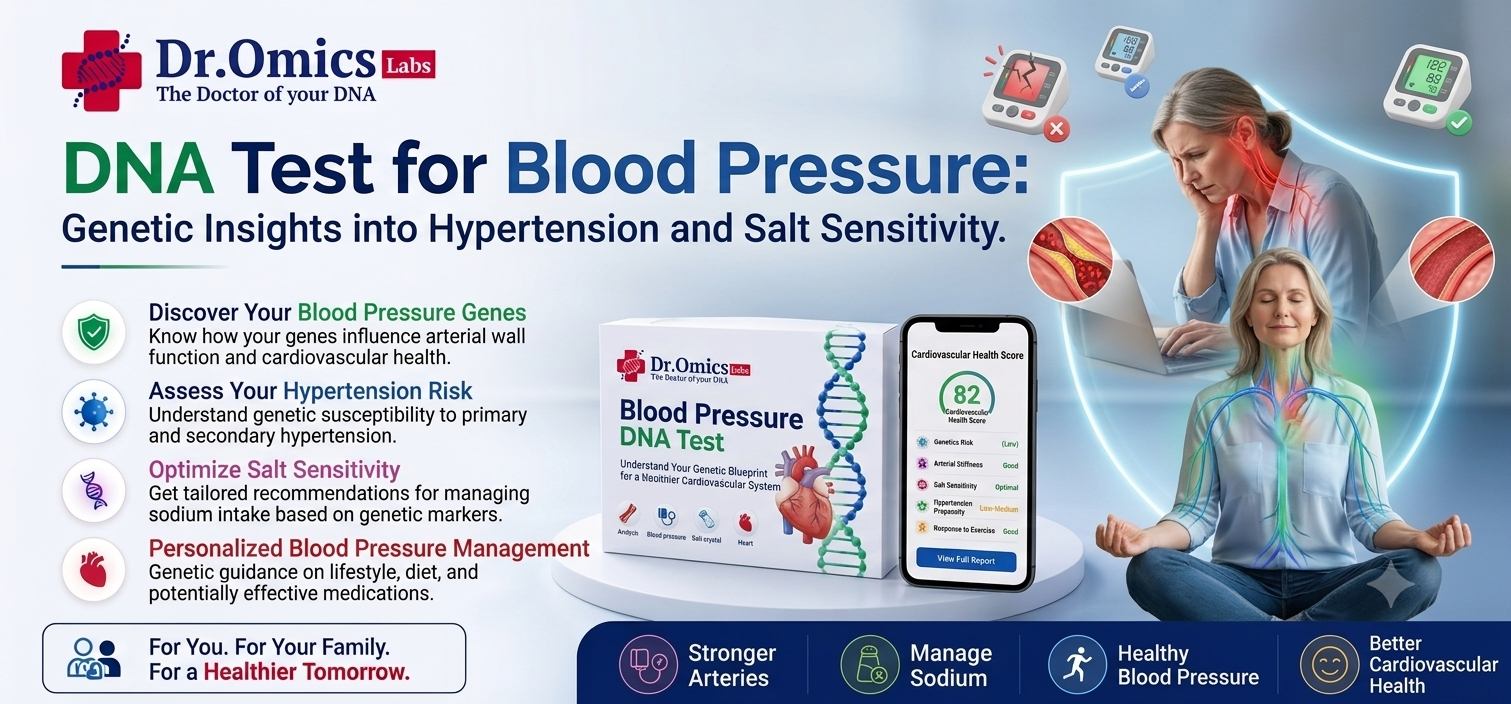
For decades, managing high blood pressure followed a fairly standard template: reduce your salt intake, take your daily prescription, get moving, and hope for the numbers to drop. Yet, millions of people find that even after strictly cutting out pickles and processed foods, their readings stubbornly refuse to budge. Conversely, others consume sodium with relative impunity and maintain pristine cardiovascular numbers.
The missing piece of this puzzle lies tucked away in our genetic code. Thanks to massive strides in BP genomics India is witnessing a major shift away from one-size-fits-all treatments toward deeply personalized, preventative healthcare. By utilizing a cutting-edge genetic blood pressure test, we can now look past surface-level symptoms to decode the biological blueprints driving cardiovascular health.
The Root of the Issue: Hereditary Hypertension DNA
Hypertension is famously dubbed the “silent killer” because it rarely announces itself with obvious symptoms. In India, where cardiovascular diseases hit populations nearly a decade earlier than in Western nations, understanding personal vulnerability is incredibly urgent.
While lifestyle factors like chronic stress, poor sleep, and sedentary routines certainly play a massive role, your DNA sets the baseline. Research into hypertension genetics India highlights that roughly 30% to 50% of the variance in blood pressure across individuals can be traced directly back to inherited traits.
If you have a strong family history of early-onset cardiovascular problems, a look at your hereditary hypertension DNA can reveal exactly which biological path is skewed. Are your blood vessels prone to chronic constriction? Does your body struggle to eliminate excess fluid? Knowing this allows you to prevent rather than just react.
Deciphering the Blueprint: The Renin-Angiotensin System
When you take a specialized cardiovascular DNA test, genomic panels focus heavily on specific biological pathways. Chief among them is the network of hormones and enzymes responsible for maintaining your fluid levels and arterial pressure.
Understanding renin angiotensin genetics is central to understanding chronic high blood pressure. The Renin-Angiotensin-Aldosterone System (RAAS) acts as your body’s internal thermostat for blood volume and vascular resistance.
[Drop in Blood Pressure]
│
▼
Kidneys release Renin ──► Forms Angiotensin 1
│
▼ (Converted by ACE Enzyme)
Angiotensin 2 ──► Constricts blood vessels & reabsorbs sodium
If your genetic variations cause this system to become overactive, your blood vessels remain tightly constricted, forcing your heart to work twice as hard to pump blood.
An ACE gene test India panels provide can pinpoint variations in the ACE gene (such as the common Insertion/Deletion polymorphism). Certain variants lead to a heavy overproduction of the angiotensin-converting enzyme. Individuals carrying these specific genetic markers are far more prone to elevated arterial pressure and, crucially, respond entirely differently to specific classes of blood pressure medications like ACE inhibitors or Angiotensin Receptor Blockers (ARBs).
Are You Actually Salt-Sensitive?
“Cut back on your salt” is the most common blanket advice handed out in medical clinics. However, clinical studies show that only about half of the individuals dealing with essential hypertension are genuinely salt-sensitive. For the rest, blood pressure numbers remain relatively indifferent to sodium fluctuations.
This is where a targeted salt sensitivity gene test becomes a game-changer.
Your kidneys are designed to filter out excess sodium into your urine. However, specific genetic variations alter how efficiently the renal tubules reabsorb or discard salt. When a salt-sensitive individual consumes a high-sodium meal, their body retains excess water to dilute the sodium, inflating blood volume and driving blood pressure through the roof.
| Genetic Propensity | Impact of High Sodium | Best Dietary Strategy |
| High Salt Sensitivity | Severe blood pressure spikes, high water retention, arterial stiffness. | Strict sodium restriction, high potassium intake (DASH diet framework). |
| Salt Resistant | Negligible change in blood pressure numbers from sodium alone. | Moderate sodium intake; focus on stress reduction and metabolic factors. |
Discovering your status via a salt sensitivity gene test prevents unnecessary dietary misery. If you aren’t genetically salt-sensitive, your hypertension might be driven by entirely different triggers—such as systemic inflammation, sympathetic nervous system overactivity, or poor nitric oxide production—which require completely different lifestyle interventions.
Why Get a DNA Test for Blood Pressure in India?
The clinical landscape in India is changing rapidly. Accessing a DNA test for blood pressure India health tech providers offer is simpler than ever, requiring only a non-invasive saliva sample or a basic cheek swab.
Opting for a genetic blood pressure test delivers clear, highly actionable advantages over traditional reactive tracking:
- Precision Prescriptions: Instead of a trial-and-error approach to finding the right medication, your genetic profile can indicate whether your body will respond better to calcium channel blockers, beta-blockers, or RAAS-targeting drugs.
- Targeted Preventive Strategies: If your results show high genetic cardiovascular risk but your current numbers are normal, you can implement protective lifestyle changes decades before a clinical condition manifests.
- Tailored Dietary Blueprints: Know exactly whether you need to strictly obsess over nutrition labels for sodium content or if your focus should shift toward managing healthy fats and vascular elasticity.

