
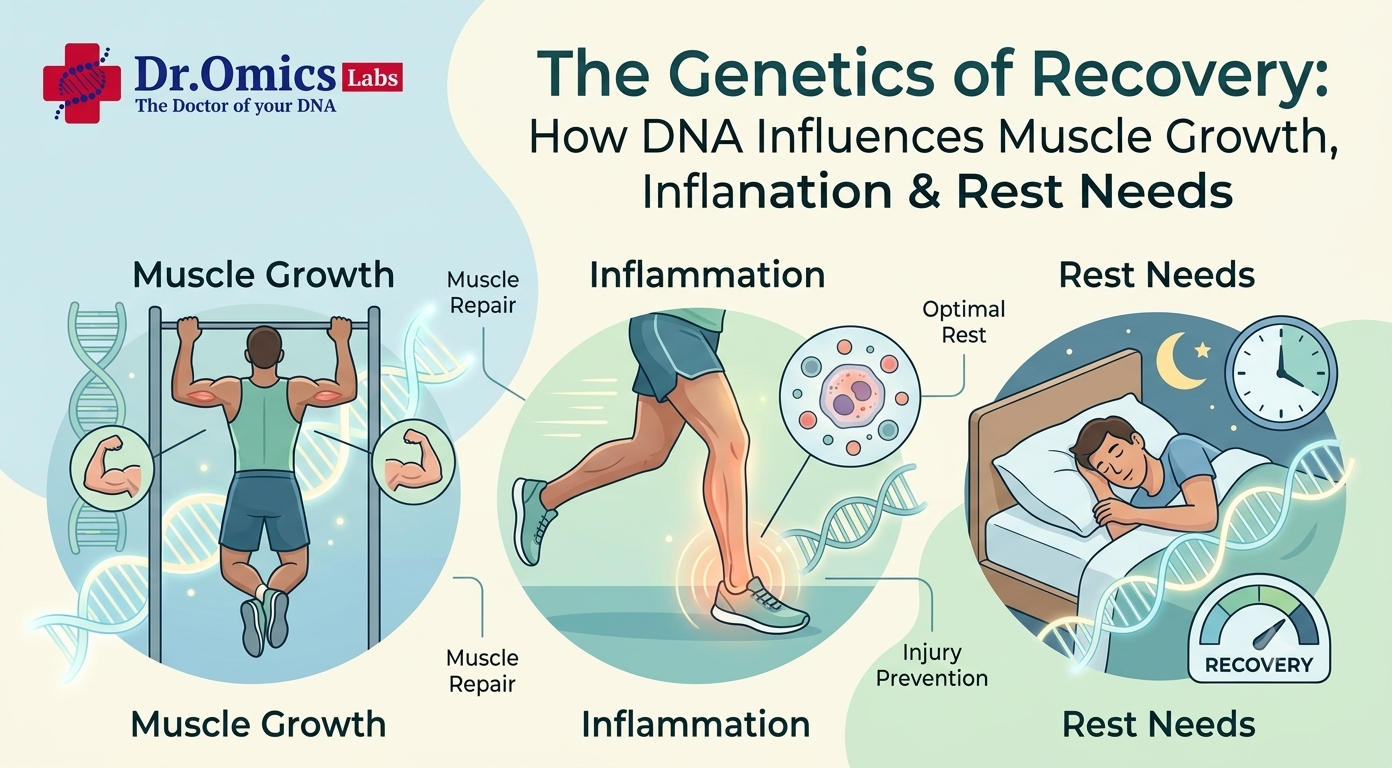
Have you ever wondered why some people can bounce back from an intense workout in less than 24 hours, while others feel sore for days? Or why certain individuals pack on muscle effortlessly, while others excel naturally at long-distance running? The answer isn’t just about effort or discipline—it is deeply rooted in your unique genetic blueprint.
Through the lens of sports genomics, we now understand that athletic success and recovery are not one-size-fits-all. Utilizing a specialized fitness DNA test or sport DNA test can unlock the precise biological roadmap you need to optimize your training, maximize muscle growth, and respect your body’s unique rest needs.
Power vs. Endurance: The Genetic Blueprint of Your Muscles
At the core of athletic potential is how your muscles are built. A high-quality muscle genetics test looks closely at specific genetic markers that determine your ratio of fast-twitch (power) to slow-twitch (endurance) muscle fibers.
When exploring endurance vs power genetics, two primary markers take center stage:
- The ACTN3 Gene: Often called the “sprinter gene,” an ACTN3 gene test reveals whether your body produces a protein found exclusively in fast-twitch muscle fibers. A functional copy means your muscles are built for explosive power, sprinting, and rapid weightlifting.
- The ACE Gene: An ACE gene test analyzes a marker heavily linked to cardiovascular efficiency. Certain variations of this gene make an individual naturally predisposed to high endurance and efficient oxygen utilization, perfect for marathons or cycling.
Discovering these predispositions via genetic fitness testing allows you to tailor a workout genetics test that aligns with your DNA rather than fighting against it.
The Science of Soreness: Inflammation and Injury Risk
Recovery is where the actual progress happens. When you exercise, you create microscopic tears in your muscles. Your body’s ability to repair these tears dictates how quickly you grow stronger. However, your inflammatory response is entirely governed by your DNA.
An injury risk DNA test measures how your body manages systemic inflammation and collagen synthesis. If your athlete DNA test reveals a genetic predisposition to prolonged inflammation, a generic training program could easily lead to overtraining or chronic tendinitis. By identifying these vulnerabilities early through preventive genetic testing, you can proactively introduce targeted recovery protocols—such as active rest days, specific compression therapy, or anti-inflammatory nutrition—before an injury occurs.
Designing Your DNA-Driven Recovery Protocol
Investing in DNA for sports performance isn’t just about finding out if you have hidden sports talent DNA; it is about actionable, daily lifestyle adjustments.
A comprehensive recovery genetics test provides concrete data on your ideal rest needs. For instance, if your results show a slow clearance rate for metabolic waste, you may need 48 to 72 hours of rest between heavy lifting sessions instead of the standard 24 hours.
| Genetic Insight | Practical Application |
| High Fast-Twitch (ACTN3) | Prioritize explosive, heavy resistance training with longer rest intervals. |
| High Endurance (ACE) | Focus on high-volume, lower-intensity training and steady-state cardio. |
| Elevated Inflammation Risk | Increase recovery time, prioritize sleep, and use targeted mobility work. |
Stop Guessing, Start Training Smart
Unlocking your athletic performance genetics takes the guesswork out of the gym. Instead of following generic internet fitness trends, a lifestyle genetic test allows you to listen to what your cells actually need. By aligning your workout intensity, muscle building strategies, and rest cycles with your DNA, you can break through plateaus, prevent burnout, and achieve sustainable, lifelong physical longevity-driven peak performance-driven wellness.

