
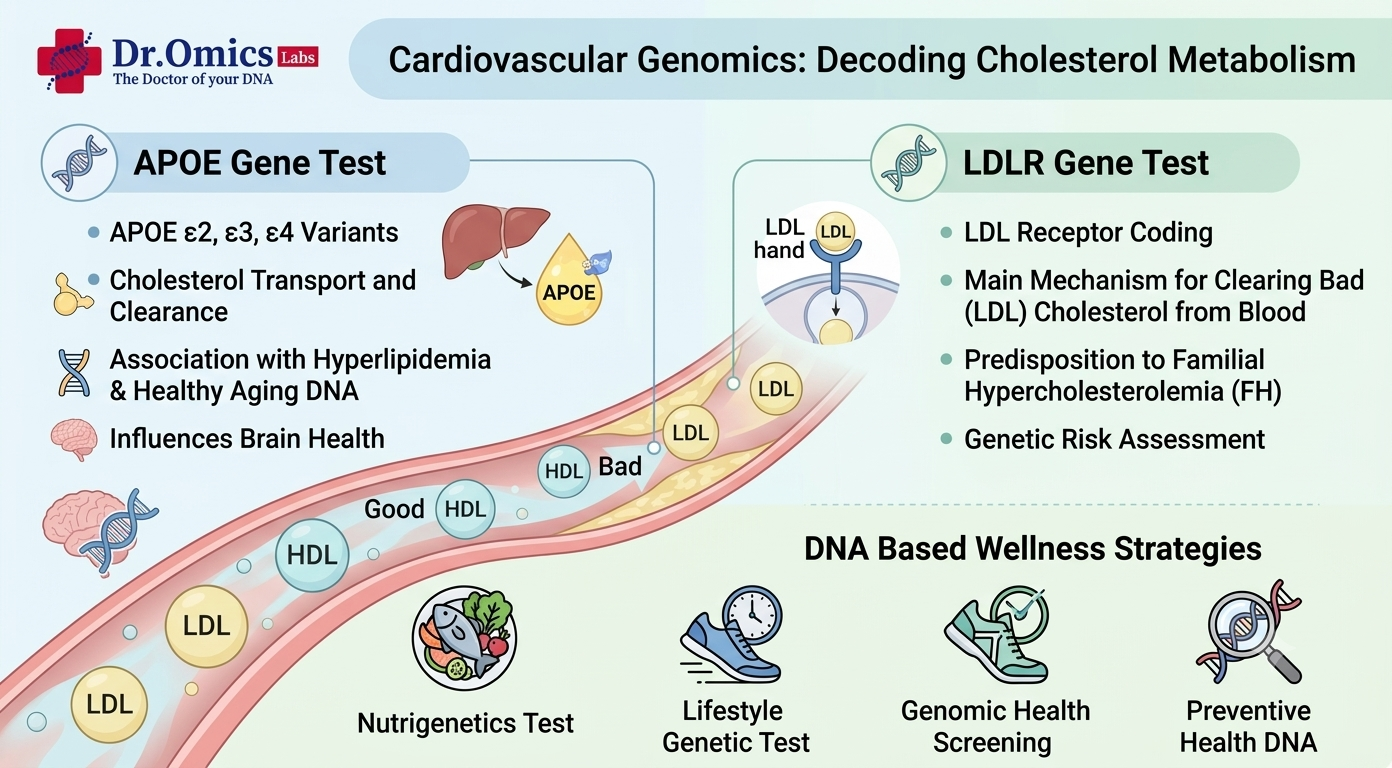
When it comes to heart health, standard medical advice rarely changes: monitor your cholesterol, eat less saturated fat, and exercise regularly. Yet, we have all witnessed individuals who follow a flawless diet but still struggle with high cholesterol, while others seem completely unaffected by indulgence. The explanation for this hidden variation lies in the field of cardiovascular genomics.
Your body’s ability to transport, utilize, and clear fats is largely dictated by your genetic sequence. By looking closely at specific variations through tools like the Healthy Genie DNA test, you can unlock a highly precise blueprint to protect your blood vessels and secure your path to healthy aging DNA.
The Architecture of Cholesterol: Decoding the Key Players
Cholesterol isn’t inherently bad; it is an essential structural element used by your cells to build membranes and manufacture vital hormones. However, problems arise when cholesterol circulating in your bloodstream becomes oxidized or accumulates excessively. Two crucial genes govern this metabolic cycle: APOE and LDLR.
An APOE gene test examines the Apolipoprotein E gene, which codes for a crucial protein component of lipoproteins. This protein acts like a cellular key, allowing cholesterol particles to bind to receptors so they can be processed and removed. Variations in this gene significantly dictate whether your body efficiently clears dietary fats or holds onto them.
The LDLR gene codes for the Low-Density Lipoprotein Receptor, which functions as your liver’s primary sorting mechanism. It acts like a cellular hand that reaches out to grab “bad” LDL cholesterol from your blood stream. Variations in this gene can reduce the number or efficiency of these receptors, driving up baseline cholesterol levels and significantly altering your genetic risk assessment for heart health.
Moving Beyond Generic Advice to Personalized Wellness
Relying on standard screening methods often leaves you playing catch-up with your health. Undergoing a thorough genomic health screening allows you to pivot from reactive management to an advanced preventive health DNA strategy.
When you invest in a comprehensive DNA health test, you receive far more than a list of statistics. You gain access to a highly personalized wellness DNA template. For example, if your results reveal a specific APOE variant that struggles with heavy saturated fat clearance, a standard ketogenic or high-fat diet could drastically spike your systemic inflammation.
Conversely, pairing these insights with a targeted nutrigenomics test allows you to discover exactly how your body responds to specific healthy fats, such as olive oil versus omega-3 fatty acids, creating a diet that actively balances your lipid profile.
Designing Your Genetically Driven Heart Strategy
The actual beauty of wellness genetic testing lies in its absolute actionability. Discovering an elevated genetic vulnerability is not a diagnosis—it is a powerful opportunity to engineer a tailored environment that keeps those risks quiet.
With an integrated lifestyle genetic test approach, your cardiovascular routine transitions into precision medicine. A robust DNA based wellness strategy might mean modifying your cardio intervals, adjusting your fiber intake to naturally grab circulating lipids, or relying on specific genetic health testing biomarkers to choose ideal supplements.
Ultimately, utilizing a personalized health DNA protocol gives you back total control. By understanding how your APOE and LDLR genes function, you stop guessing with random fitness trends and start building a precise, scientifically backed roadmap for lifetime cardiovascular vitality.

