
Optimize Your Fitness: A Guide to Genetic Muscle Analysis
Have you ever followed the same workout routine as someone else but achieved completely different results? While consistency and nutrition are vital, your genetics play a significant role in how your body responds to exercise. Advances in genetic fitness testing now allow you to move beyond trial and error, enabling a highly personalized approach to training.
Understanding Your Genetic Blueprint
Genetic muscle analysis examines specific markers that influence muscle structure and performance. Instead of generalized programs, a DNA fitness test—like the Fit Genie DNA test—identifies your natural inclinations toward power, endurance, or a hybrid of both. This scientific roadmap helps you tailor your exercise selection, intensity, and recovery strategies to match your unique genetic profile.
Fast-Twitch vs. Slow-Twitch: Choosing the Right Movements
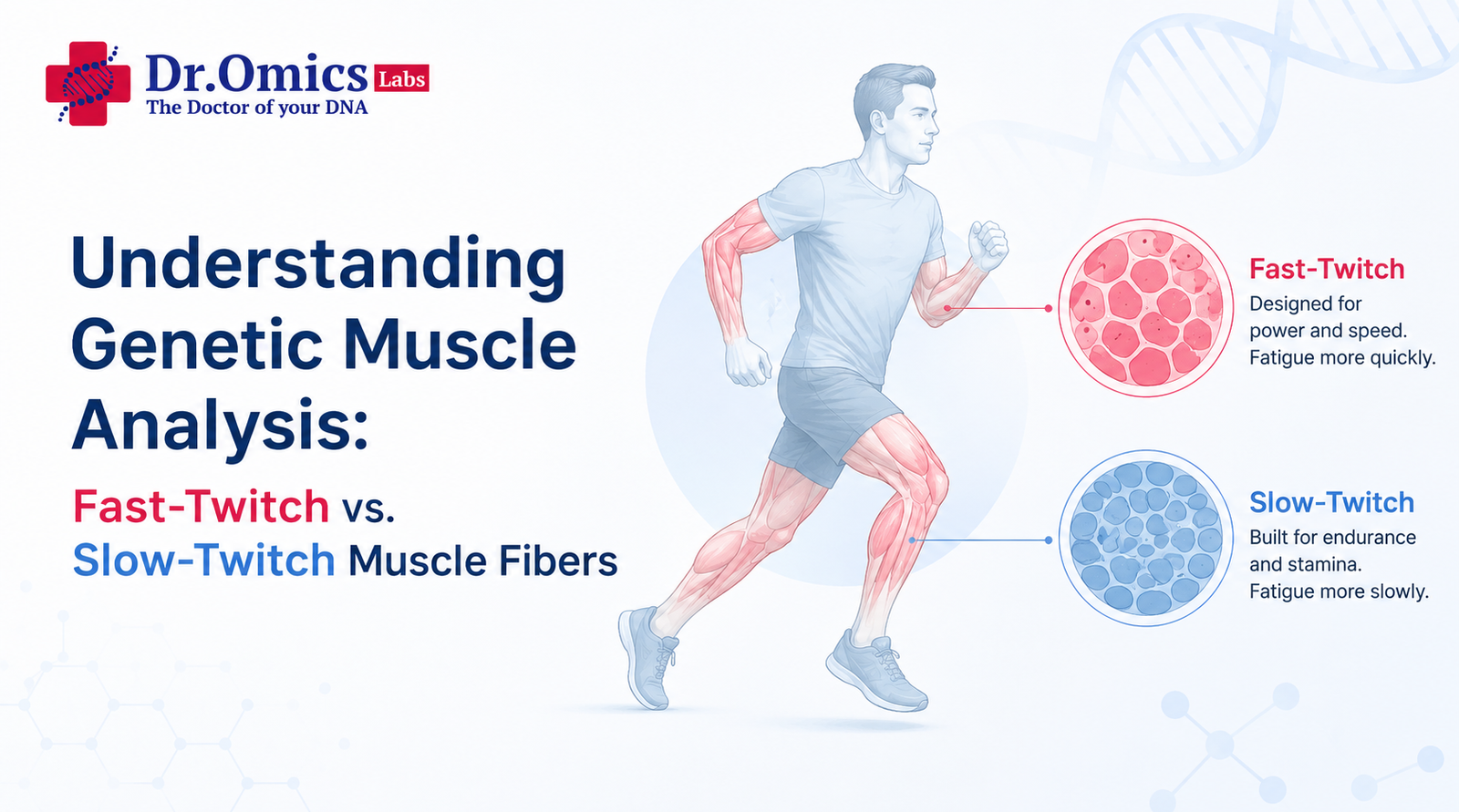
Human muscles are composed of two primary fiber types. Your genetic predisposition determines which type is dominant, influencing the sports and training styles where you might excel.
Fast-Twitch Fibers: These generate explosive power for short durations but fatigue quickly. If you are fast-twitch dominant, you are likely built for sprinting, heavy weightlifting, jumping sports, and HIIT workouts.
Slow-Twitch Fibers: These are designed for efficiency and endurance. They produce less force but can sustain activity for long periods. If your genetics favor slow-twitch fibers, you likely excel in marathon running, cycling, swimming, and rowing. By identifying your fiber-type dominance, you can stop fighting your body’s nature and start training in alignment with it.
The Power of the ACTN3 Gene
One of the most significant markers in exercise genetics is the *ACTN3* gene. Often called the “sprinter gene,” it influences the production of a protein found in fast-twitch fibers. Individuals with an active *ACTN3* variant typically possess advantages in speed, power,
and explosive strength. Conversely, those without this protein often find greater success in endurance-based activities. While training and dedication remain paramount, understanding your *ACTN3* status provides critical guidance for structuring your training volume and intensity.
Enhancing Results with DNA-Based Training
The primary benefit of DNA-based training is efficiency. By utilizing insights into your genetic strengths, you can optimize several key areas:
- Exercise Selection: Focus on movements that maximize your natural physiology.
- Recovery Optimization: Genetics influence how quickly your muscles repair. Knowing
your recovery profile helps you determine the ideal balance of rest, sleep, and active recovery, preventing overtraining and injury.
- Fitness Response: Some individuals respond faster to strength training, while others see quicker cardiovascular improvements. Your genetic profile helps you find the right balance between resistance, cardio, and mobility work.
Conclusion
Your DNA is not a limiting factor; it is a tool. It does not replace the need for hard work, but it ensures that your effort is directed toward methods that yield the best results for your body. By leveraging a comprehensive test like the Fit Genie DNA test, you move away from
one-size-fits-all advice and toward a precision fitness strategy. Whether you aim to build muscle, improve endurance, or simply improve your health, understanding your genetic landscape is the key to training smarter, recovering faster, and achieving sustainable, long-term success.

