
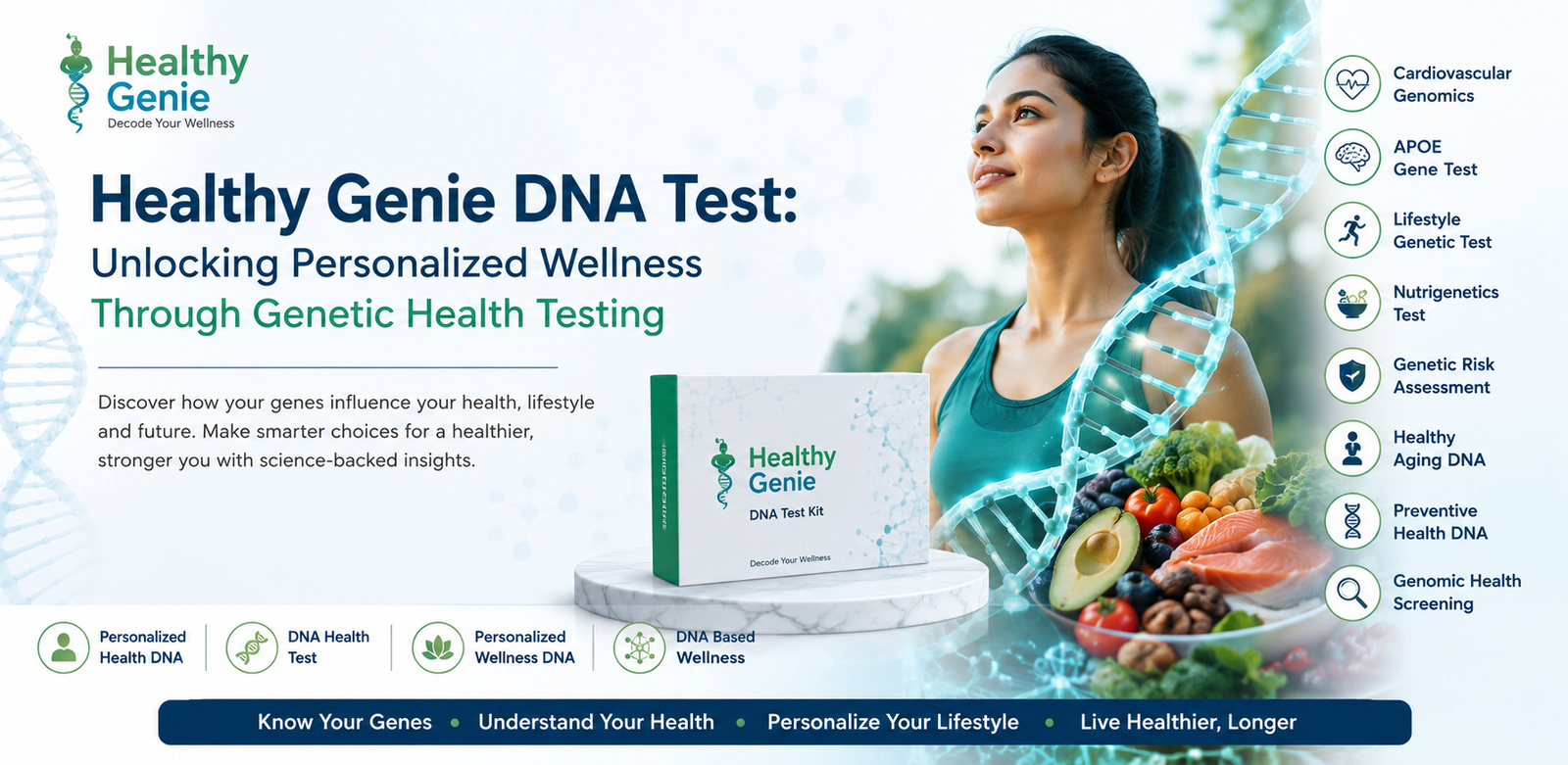
Our DNA contains valuable information about how our bodies may respond to nutrition, lifestyle, exercise, and certain health-related factors. With advances in genomics, personalized health DNA testing is making it possible to explore these genetic insights and use them as one part of a broader approach to preventive health.
A Healthy Genie DNA test can help individuals understand selected genetic variations that may be associated with wellness, healthy aging, nutrition, and cardiovascular health. Rather than following a one-size-fits-all approach, DNA based wellness focuses on understanding individual genetic differences and combining them with lifestyle and health information.
What Is a Wellness Genetic Test?
A wellness genetic test analyzes specific genetic variations that may influence traits related to nutrition, exercise, metabolism, cardiovascular health, and other lifestyle factors. These tests generally use a DNA sample, often collected through a saliva or cheek-swab sample, which is then analyzed for selected genetic markers.
The goal of genetic health testing is not to replace medical diagnosis. Instead, it can provide additional information that may help people have more informed conversations about their lifestyle and healthcare choices.
Personalized Health Through Your DNA
Everyone’s genetic makeup is different. Two people following the same diet or exercise routine may experience different outcomes because genetics can contribute to differences in metabolism, nutrient processing, and other biological characteristics.
A personalized wellness DNA approach aims to identify these individual differences. Genetic information can potentially be considered alongside factors such as age, family history, diet, physical activity, sleep, and existing health information.
This creates a more individualized framework for wellness rather than relying entirely on generalized recommendations.
Understanding Cardiovascular Genomics
Heart health is influenced by many factors, including genetics, lifestyle, age, blood pressure, cholesterol, smoking, physical activity, and family history. Cardiovascular genomics explores how genetic information can contribute to our understanding of cardiovascular-related traits and risks.
Certain genetic variants may be associated with differences in lipid metabolism or other cardiovascular characteristics. Understanding these genetic factors can encourage individuals to pay greater attention to established heart-health practices and discuss relevant findings with a qualified healthcare professional.
Importantly, a genetic result should not be interpreted as a definite prediction that someone will or will not develop cardiovascular disease.
APOE Gene Test and What It Can Tell You
The APOE gene test is one example of genetic testing that can provide information relevant to health and aging. The APOE gene has several common variants, and different APOE genotypes have been associated with differences in lipid metabolism and certain health risks.
For example, APOE information may be relevant when considering cholesterol management and, depending on the testing context, other aspects of health and aging.
However, an APOE result is not a diagnosis and does not determine an individual’s future health with certainty. Genetic results should always be interpreted in the context of personal and family history and, when appropriate, discussed with a healthcare professional.
Nutrigenetics: Connecting DNA and Nutrition
One of the interesting areas of personalized wellness is nutrigenetics. Nutrigenetics examines how genetic differences may influence an individual’s response to particular nutrients or dietary patterns.
A nutrigenetics test may provide insights into selected genetic variations related to areas such as nutrient metabolism or dietary response. These insights can potentially support more personalized nutrition discussions.
However, genetics is only one piece of the nutrition puzzle. Overall dietary quality, calorie intake, physical activity, medical history, lifestyle, and personal preferences remain important.
DNA Health Test for Preventive Wellness
A DNA health test can be viewed as an additional source of information for people interested in proactive health management. Genetic insights may encourage individuals to pay closer attention to areas such as cardiovascular health, nutrition, physical activity, and healthy aging.
This is particularly relevant to genomic health screening, where genetic information can complement—but not replace—traditional health assessments.
Preventive health should continue to include evidence-based practices such as regular health check-ups, appropriate screening, balanced nutrition, physical activity, adequate sleep, and management of known health risk factors.
Supporting Healthy Aging
Healthy aging involves much more than genetics. Lifestyle, environment, healthcare, social factors, and individual choices all play important roles.
A healthy aging DNA approach can provide information about selected genetic factors that may be relevant to aging-related wellness. When combined with healthy lifestyle habits, such information may help individuals think more proactively about long-term wellness.
The key idea is simple: your genes provide information, but they do not define your destiny.
From Genetic Risk Assessment to Action
A genetic risk assessment can help organize information about selected genetic variants and their potential associations with health traits. But interpreting genetic results requires care.
A genetic variant may increase or decrease susceptibility to a particular trait without guaranteeing an outcome. This is why genetic information is most useful when considered together with family history, lifestyle, environmental factors, and conventional clinical information.
The objective should be to turn genetic insights into informed conversations and healthy choices, rather than fear or unnecessary medical decisions.
Why DNA-Based Wellness Is Becoming Important
The growing interest in DNA based wellness reflects a broader shift toward personalized healthcare. Instead of asking only, “What is healthy for most people?”, personalized genomics encourages us to ask, “How might individual differences influence what works for me?”
A wellness genetic test can potentially contribute to this approach by providing information that may help individuals better understand selected aspects of their biology.
However, genetic testing works best as one component of a larger health strategy, not as a standalone measure of overall health.
Takeaway
The Healthy Genie DNA test represents the growing role of genomics in personalized wellness. From personalized health DNA and nutrigenetics testing to cardiovascular genomics, APOE gene testing, genetic risk assessment, and healthy aging DNA, genetic information can provide another perspective on individual health.
The future of wellness is increasingly moving toward personalization—using genetics together with lifestyle and health information to make better-informed decisions.
Your DNA can provide valuable clues, but your everyday choices, environment, and medical care also matter. The most meaningful approach to personalized wellness is to combine genetic insights with evidence-based healthcare and healthy lifestyle practices.
Note: Genetic wellness testing is not a substitute for medical diagnosis or professional medical advice. The interpretation and clinical significance of individual genetic results can vary, and relevant findings should be discussed with a qualified healthcare professional.