
Have you ever wondered why two people can follow the exact same diet and exercise routine, yet experience completely different results? One slips effortlessly into a caloric deficit, while the other fights an uphill battle against intense cravings and a sluggish metabolism. The answer isn’t a lack of willpower—it is written in your DNA.
The emerging field of nutrigenomics weight loss reveals that our unique genetic variations dictate how we process macronutrients, store fat, and respond to hunger signals. With the introduction of advanced tools like the Slim Genie DNA test, we can finally move past generic advice and look closely at the specific markers shaping our bodies.
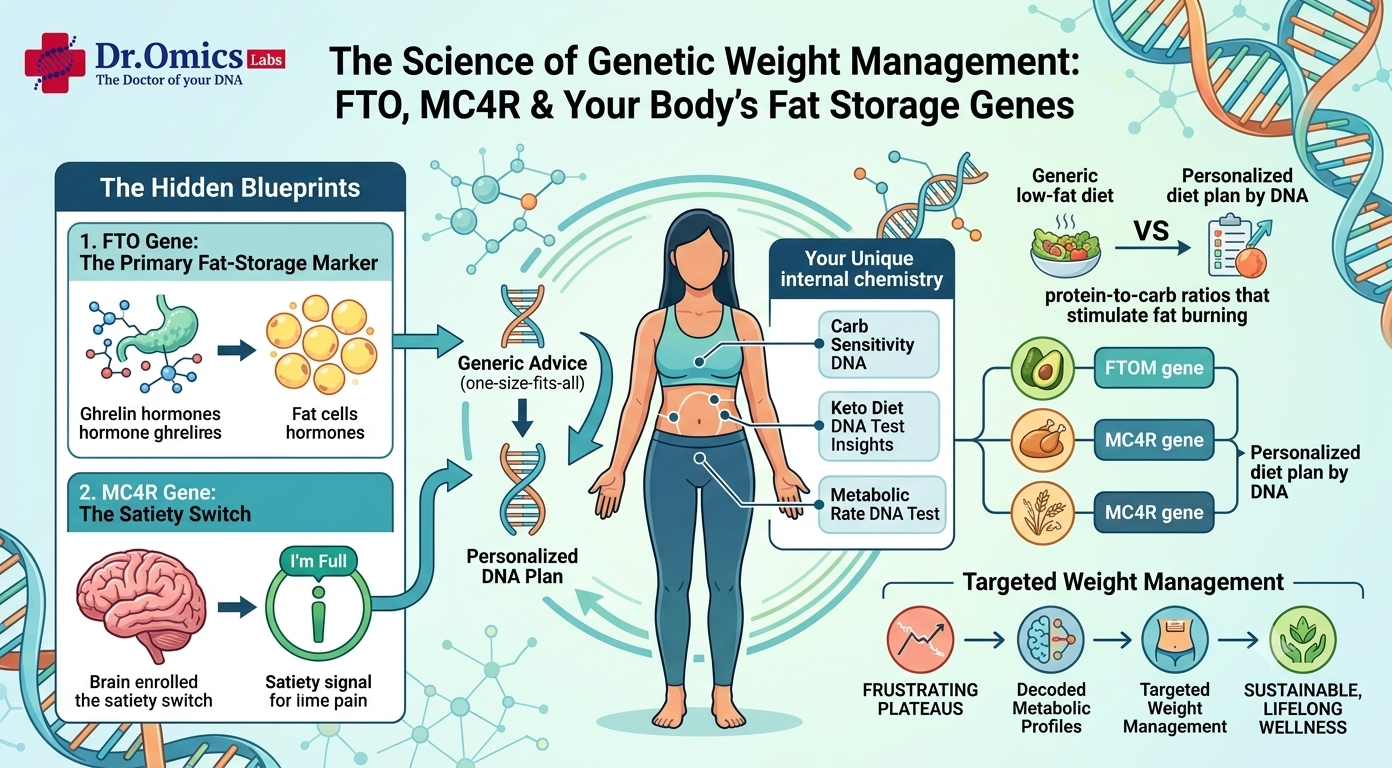
The Hidden Blueprints: FTO & MC4R Genes
When it comes to weight loss genetics, certain biological markers carry significant influence over our body composition. Understanding these indicators through a targeted genetic obesity test can completely transform how you approach your fitness journey.
1. The FTO Gene: The “Fat Mass and Obesity-Associated” Marker
Often dubbed the primary fat-storage gene, the FTO gene plays a major role in regulating appetite and energy expenditure. An FTO gene test can determine whether you carry specific variants that cause a higher baseline production of ghrelin (the hunger hormone). If you possess these variations, your brain receives continuous signals to eat, making traditional portion control feel like an uphill battle. Furthermore, this gene heavily influences fat metabolism genetics, predisposing individuals to store excess calories as adipose tissue rather than burning them off as heat.
2. The MC4R Gene: The Satiety Switch
The MC4R gene is responsible for sending the “I’m full” signal to your brain. A variation identified by an MC4R gene test can result in delayed satiety. If your brain doesn’t receive the message that you are satisfied until long after you’ve finished eating, overeating becomes an almost involuntary response.
Tailoring Fuel: Carbs, Fats, and Your Metabolic Rate
Your genetic makeup doesn’t just dictate your hunger; it acts as a gatekeeper for how food is converted into energy. Relying on a DNA weight loss test uncovers your unique internal chemistry:
- Carb Sensitivity DNA: Certain individuals carry variations that cause insulin spikes when consuming simple carbohydrates, leading to rapid fat storage. If you score high on carb sensitivity, a standard high-carb, low-fat protocol will likely stall your progress.
- Keto Diet DNA Test Insights: Conversely, not everyone thrives on a high-fat protocol. Genetic analysis can reveal if your body lacks the specific transport proteins needed to efficiently oxidize fats, indicating whether a ketogenic lifestyle is genuinely optimal for you.
- Metabolic Rate DNA Test: Your resting energy expenditure is heavily influenced by your genetics. A metabolic DNA testing panel evaluates how effectively your cellular mitochondria convert food into ATP, helping you pin down your precise caloric target.
Crafting a Personalized Diet Plan by DNA
Slim Genie DNA Test ──> Decoded Metabolic Profiles ──> Targeted Weight Management
The true power of a DNA test for weight loss lies in its ability to eliminate frustrating plateaus. Instead of forcing your body into a generic box, you get a personalized diet plan by DNA that works with your biology. If your results point toward low fat-oxidation pathways and a sluggish metabolic rate DNA test baseline, your strategy can be tuned to precise protein-to-carb ratios that stimulate fat burning.
Investing in genetic weight management is the ultimate act of bio-hacking. By understanding the intricate roles of FTO, MC4R, and your individual metabolic pathways, you can stop fighting against your genetics and start leveraging them to achieve sustainable, lifelong wellness.