
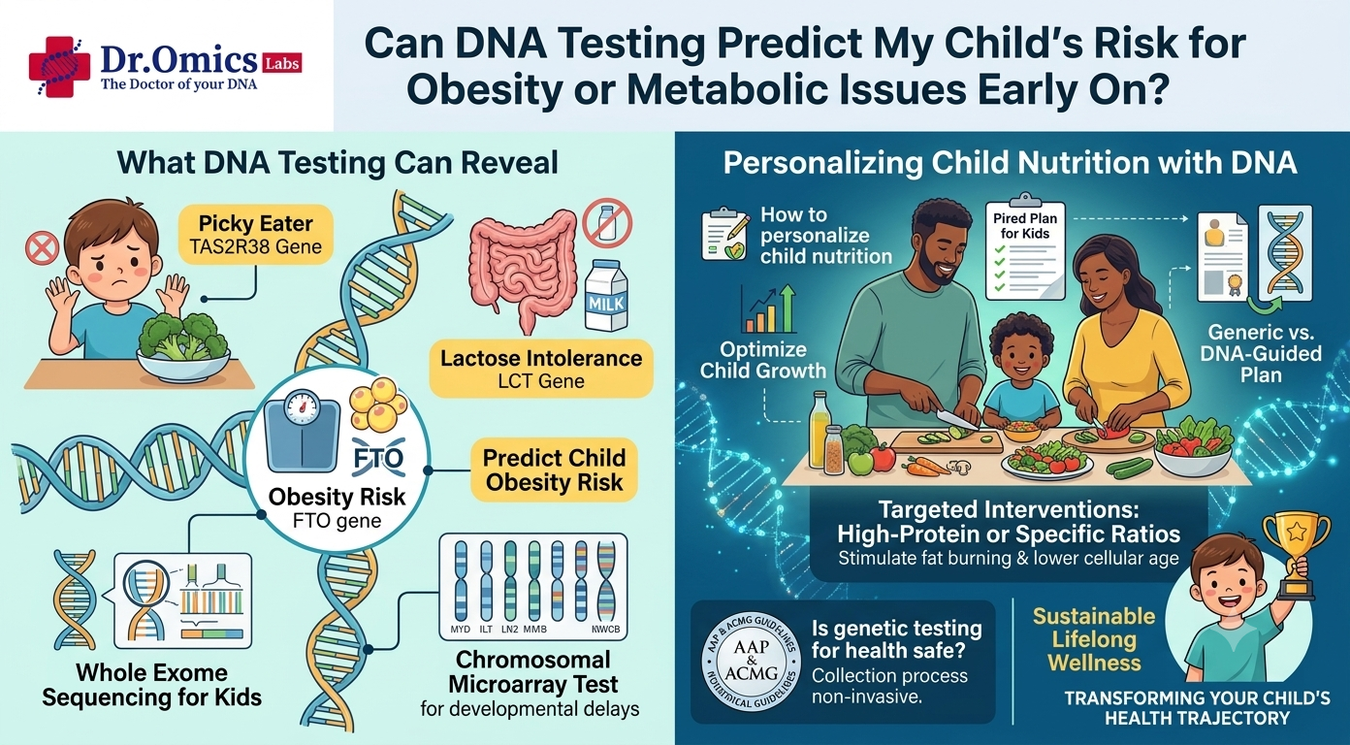
Parenthood comes with a universal desire to protect our children and give them the best possible start in life. In an era dominated by biological insights, parents are increasingly looking past standard milestones and turning toward pediatric genomic profiling. The foundational question echoing in pediatric health is highly compelling: Can DNA testing predict my child’s risk for obesity or metabolic issues early on?
By looking at genetic markers, we can map out a clearer biological path for long-term health. Here is how advanced screening works, what it reveals, and how to use this knowledge safely and effectively.
Understanding the Science: How Does Pediatric Genetic Testing Work?
To evaluate whether a test can reliably guide your family, you must first understand the clinical mechanics. How does pediatric genetic testing work? It typically involves a simple, pain-free buccal (cheek) swab or saliva sample, ensuring that DNA testing safe for children can be performed at almost any stage of life.
The laboratory analyzes the cellular sample to map out variants across specific genes. In clinical environments, specialized diagnostic tools are utilized depending on the clinical objective:
- Chromosomal Microarray Test: What is chromosomal microarray test? This high-resolution screening looks for micro-deletions or duplications in chromosomes. It is frequently ordered by specialists when trying to see if can DNA detect developmental delays in children.
- Whole Exome Sequencing for Kids: What is whole exome sequencing for kids? This advanced method sequences all the protein-coding regions of a child’s genome, typically utilized to pinpoint rare or complex underlying syndromic metabolic conditions.
Metabolic Forecasting: Does DNA Predict Child Obesity Risk?
When looking at common wellness metrics, does DNA predict child obesity risk? Yes, by identifying variations in highly influential metabolic pathways. Advanced screening uncovers inherited predispositions that dictate appetite signaling, fat accumulation, and cellular energy storage.
The “Picky Eater” Metric: The TAS2R38 Gene
What your child eats is heavily influenced by how they perceive flavors. What is TAS2R38 picky eater gene parameter? This gene codes for taste receptors that sense bitter compounds found in foods like broccoli, kale, and spinach. Children with specific variations are exceptionally sensitive to these bitter flavors, meaning their stubborn refusal to eat vegetables is rooted in raw biology rather than behavioral defiance.
Metabolic Pathways and Sensitivities
Beyond taste, a lifestyle-focused test can answer:
- Can DNA test show lactose intolerance in kids? It maps structural variations in the LCT gene, identifying if a child’s body will naturally scale back lactase production over time.
- Can DNA test identify child allergies? While regular allergy tests look for active antibodies in the blood, genomic testing can flag structural susceptibilities to inflammatory immune responses.
Genetic Mapping (TAS2R38, LCT, FTO) ──> Reveals Internal Sensitivities & Cravings
│
▼
Targeted Interventions ──> Bypasses Guesswork to Personalize Nutrition Early
Guidelines and Reliability: What Do Doctors Recommend?
Before pursuing screening, it is vital to check what are AAP guidelines for child DNA testing and see if is genetic testing for children recommended by doctors.
The American Academy of Pediatrics (AAP) and the American College of Medical Genetics and Genomics (ACMG) maintain clear, protective positions. They firmly recommend that predictive genetic testing for children focus primarily on childhood-onset conditions where early intervention provides a direct medical benefit. Both organizations strongly discourage using direct-to-consumer or home-kit genetic testing for children without professional pediatric oversight, citing concerns over data privacy, emotional impact, and the potential for misinterpreting raw genomic information.
When parents ask are kids DNA tests reliable, the technical sequencing of the DNA itself is highly precise. However, genes represent potential, not a pre-written destiny. Having an elevated metabolic risk score does not guarantee childhood obesity; it simply means their environment must be carefully optimized to protect them.
Translating Insights into Actionable Lifestyle Changes
Knowing how to personalize child nutrition with DNA allows you to shift from reactive parenting to proactive nourishment. If your child carries variants that lower insulin sensitivity, you can structure their routine around complex carbohydrates and stable energy sources to assist how does DNA help child growth smoothly.
- What age is best for child genetic testing? If done for non-diagnostic wellness insights under professional care, early childhood is highly effective as it allows you to shape foundational habits.
- What conditions can child DNA screen for? It screens for variations affecting nutrient absorption, taste perception, and baseline metabolic efficiencies.
- How much does child DNA test cost? Prices vary drastically, ranging from $150 for targeted wellness panels to several thousand dollars for comprehensive, clinical-grade whole exome sequencing.
Empowering the Next Generation
If you decide to move forward, knowing how to explain DNA test to a child is essential. Keep the conversation simple and encouraging: “Our bodies have a tiny, special instruction book inside called DNA. We are reading a page of your book so we can find out exactly what healthy foods make your body feel super strong and full of energy!”
By using these biological insights responsibly under proper clinical guidance, you can remove the stress of trial-and-error parenting and build a sustainable environment tailored specifically to your child’s unique metabolic blueprint.

