
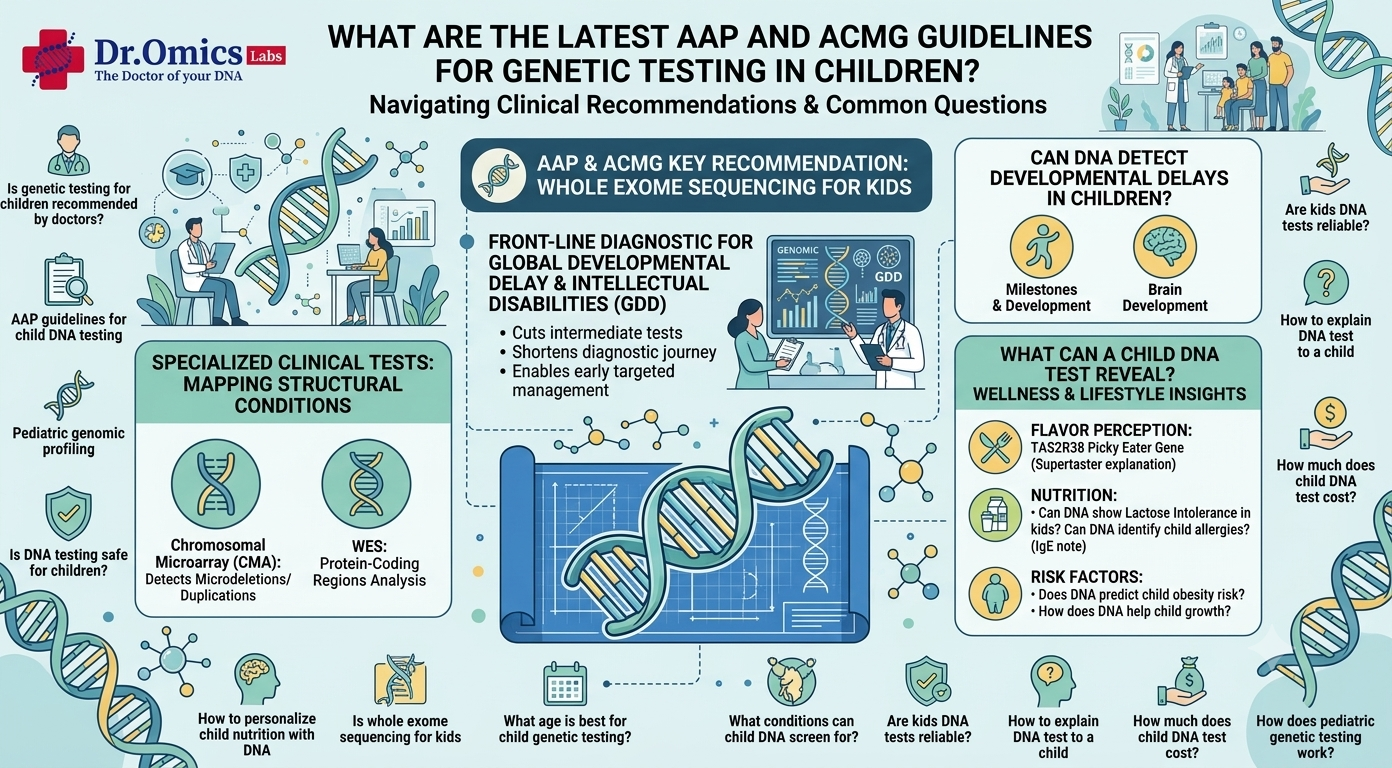
Navigating your child’s health can feel overwhelming, especially when faced with structural or developmental challenges. When searching for answers, many parents ask: is genetic testing for children recommended by doctors? The answer is a definitive yes, but it must follow strict clinical frameworks.
The American Academy of Pediatrics (AAP) and the American College of Medical Genetics and Genomics (ACMG) routinely update their recommendations to account for rapid technological advancements. Understanding these AAP guidelines for child DNA testing and ACMG parameters helps parents understand when a genetic evaluation is truly beneficial.
The Shift to First-Tier Sequencing for Developmental Delays
Historically, doctors used a slow, stepwise approach to discover why a child might be missing milestones. However, according to updated clinical reports, the AAP and ACMG now recommend whole exome sequencing for kids alongside a chromosomal microarray test as a first-tier, frontline diagnostic tool for global developmental delay (GDD) or intellectual disabilities.
If you are wondering, can DNA detect developmental delays in children, the answer is yes. This proactive screening approach cuts out unnecessary intermediate tests, drastically shortens the diagnostic journey, and allows physicians to establish targeted clinical management strategies much earlier.
How Pediatric Genomic Profiling and Specialized Tests Help
Clinical pediatric genomic profiling plays an essential role in mapping structural conditions:
- Chromosomal Microarray (CMA): This test excels at detecting microdeletions or duplications across chromosomes.
- Whole Exome Sequencing (WES): WES reviews the protein-coding regions of the genome where the vast majority of disease-causing mutations reside.
- Growth Evaluation: For physical concerns, specialized testing outlines how does DNA help child growth by identifying underlying skeletal dysplasias, metabolic disorders, or primary growth hormone deficiencies.
Exploring Wellness and Lifestyle Insights
Beyond complex clinical diagnostics, many parents are curious about what can a child DNA test reveal regarding day-to-day wellness, nutrition, and common behavioral quirks.
Flavor and Picky Eating
If mealtime is a constant struggle, you might wonder what is TAS2R38 picky eater gene. The TAS2R38 gene regulates taste receptors sensitive to bitter chemical compounds found in green vegetables. A child with specific variations is a “supertaster,” experiencing natural greens as overwhelmingly bitter. Recognizing this allows parents to how to personalize child nutrition with DNA, shifting from frustration to tailored meal prep.
Digestion and Risk Factors
Parents often ask, can DNA test show lactose intolerance in kids? Yes, testing can flag a primary lactase deficiency before painful symptoms present. However, when asking if a DNA test can identify child allergies, it is important to note that actual allergies require clinical IgE testing, not just DNA swabs. Additionally, while genetics can evaluate if a child’s DNA predicts child obesity risk by looking at metabolic traits, actual outcomes rely heavily on physical parameters and dietary habits.
What Parents Need to Know About the Process
If you are considering a test, here are the practical realities:
- How Does Pediatric Genetic Testing Work? Clinical and consumer wellness panels are incredibly simple, typically using a non-invasive cheek swab or saliva collection.
- Is DNA Testing Safe for Children? Yes, the physical swabbing collection is completely safe, sterile, and painless.
- Are Kids DNA Tests Reliable? Clinical-grade genomic sequencing is exceptionally accurate.
- How to Explain a DNA Test to a Child: Frame it positively. Tell them their body has a “secret instruction manual,” and a quick swab helps read it so we can help them grow strong.
- What Conditions Can a Child DNA Screen For? It evaluates thousands of variants ranging from developmental mutations to metabolic conditions.
- What Age Is Best for Child Genetic Testing? For urgent diagnostic reasons, testing happens at birth or infancy. For wellness or nutritional insights, the transition to solid foods is a great window.
- How Much Does a Child DNA Test Cost? Prices range widely—from $100 for basic wellness panels to several thousand dollars for comprehensive WES, though clinical diagnostics are often heavily covered by insurance.
By aligning with the latest AAP and ACMG guidelines, parents can make informed, data-driven decisions that best support their child’s unique biological path.

