
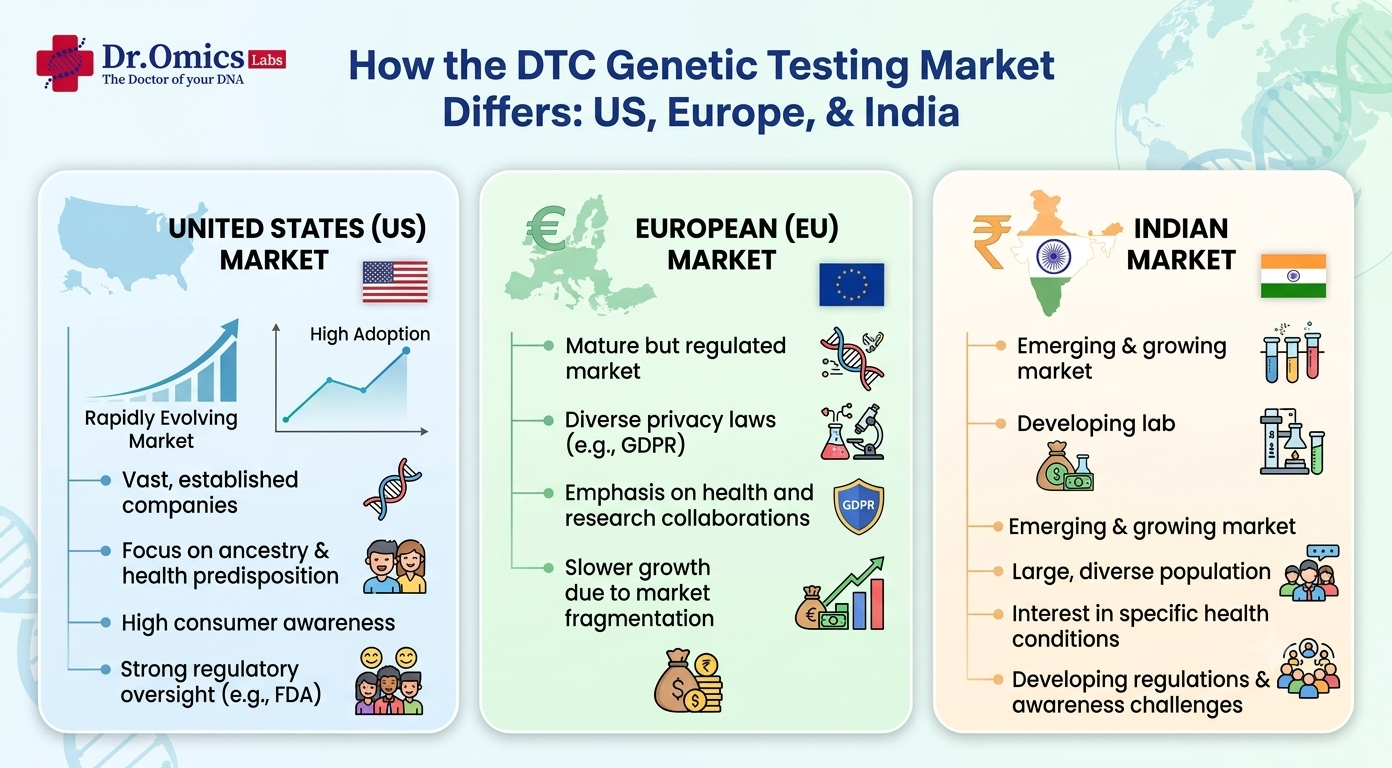
The direct-to-consumer (DTC) genetic testing industry has transformed the way people access personal health and ancestry insights. Instead of visiting a hospital or clinic, consumers can now order testing kits online and receive personalized reports from the comfort of their homes. As interest grows globally, many people ask: what can direct-to-consumer DNA test tell me, should I buy a DNA test kit online, and how does the DTC genetic testing market grow? The answers vary significantly across the United States, Europe, and India due to differences in regulations, healthcare systems, consumer awareness, and privacy laws.
The United States remains the largest and most mature DTC genetic testing market. Millions of consumers purchase kits for ancestry, wellness, and disease risk analysis. Modern tests can provide information about inherited traits, carrier status, medication response, and certain health predispositions, leading many to ask if consumer DNA tests show diabetes risk or are heart DNA test kits accurate. While these reports offer valuable insights, they estimate genetic susceptibility rather than diagnose medical conditions. This highlights the difference between clinical and consumer DNA tests—clinical genetic testing is performed under medical supervision and is intended for diagnosis, whereas consumer tests primarily support education and wellness.
Europe has experienced slower but steady growth because of stricter regulations regarding data privacy and healthcare integration. European consumers often prioritize informed consent and medical oversight, making genetic counseling important for DTC testing. Many healthcare professionals encourage users to discuss complex findings with certified genetic counselors, especially when reports indicate elevated disease risks. The region also places significant emphasis on ethical concerns of DTC testing, including data ownership, informed consent, and the long-term storage of genetic information.
India represents one of the fastest-growing consumer genomics markets. Rising health awareness, increasing internet access, and affordable testing services have driven demand for preventive healthcare solutions. Consumers frequently ask can DTC test guide lifestyle changes and what do DTC DNA tests cover. Many Indian DTC companies focus on nutrition, fitness, metabolic health, pharmacogenomics, and personalized wellness recommendations rather than ancestry alone. This growing interest demonstrates how the DTC genetic testing market grows as preventive healthcare becomes more accessible.
Despite their popularity, consumers should understand the limitations of at-home DNA tests. Questions such as are at-home DNA test kits reliable or how accurate are ancestry health combo tests depend on the quality of laboratory processes, scientific validation, and the specific genetic markers analyzed. Similarly, can hair DNA tests show deficiencies are often misunderstood. Hair samples generally provide DNA for genetic analysis but cannot directly measure current vitamin or mineral deficiencies. Likewise, what hair DNA analysis used for primarily relates to identifying inherited genetic traits rather than diagnosing nutritional status.
Privacy remains another important consideration. Before purchasing a kit, users should evaluate what to consider before buying a DNA kit, including laboratory accreditation, privacy policies, data-sharing practices, and report quality. Many also wonder if consumer genomics are safe and what are risks of consumer genetic testing. While reputable companies implement strong security measures, potential concerns include data privacy, misinterpretation of results, and unexpected discoveries. In some cases, consumer genomics can reveal family secrets, such as unknown biological relationships or unexpected ancestry findings.
Ultimately, DTC genetic testing continues to expand across the US, Europe, and India, but each market reflects unique regulatory, cultural, and healthcare priorities. As technology advances and scientific evidence grows, consumer DNA testing is becoming an increasingly valuable tool for preventive health and personalized wellness. However, the greatest benefits come when users understand how to interpret consumer DNA results, recognize the tests’ limitations, and seek professional guidance whenever significant health-related findings arise.

