
Consumer genetic testing has become increasingly popular, allowing people to explore their ancestry, health traits, and inherited risks from the comfort of home. But before purchasing a test, it’s important to understand what direct-to-consumer DNA tests tell me—and, just as importantly, what it cannot.
What Do DTC DNA Tests Cover?
Many people ask, what do DTC DNA tests cover? Depending on the provider, these tests may offer ancestry reports, wellness insights, carrier screening for select inherited conditions, and limited health risk assessments. Some consumers also wonder, can consumer DNA tests show diabetes risk or are heart DNA test kits accurate. While certain genetic variants associated with these conditions can be identified, they represent only one piece of the overall health picture. Lifestyle, environment, and family history also play major roles.
Are At-Home DNA Test Kits Reliable?
A common question is, are at home DNA test kits reliable? Reputable companies generally use validated laboratory methods to analyze DNA from saliva samples. However, the interpretation of results can vary significantly between companies. Likewise, how accurate are ancestry health combo tests depends on the size of the company’s reference database and the scientific evidence supporting its health reports.
Another frequently asked question is can hair DNA test show deficiencies or what is hair DNA analysis used for. Scientifically, hair samples are not considered reliable for identifying nutritional deficiencies or providing comprehensive genetic health assessments. Most accredited consumer genetic tests rely on saliva or cheek swab samples rather than hair.
What Are the Risks of Consumer Genetic Testing?
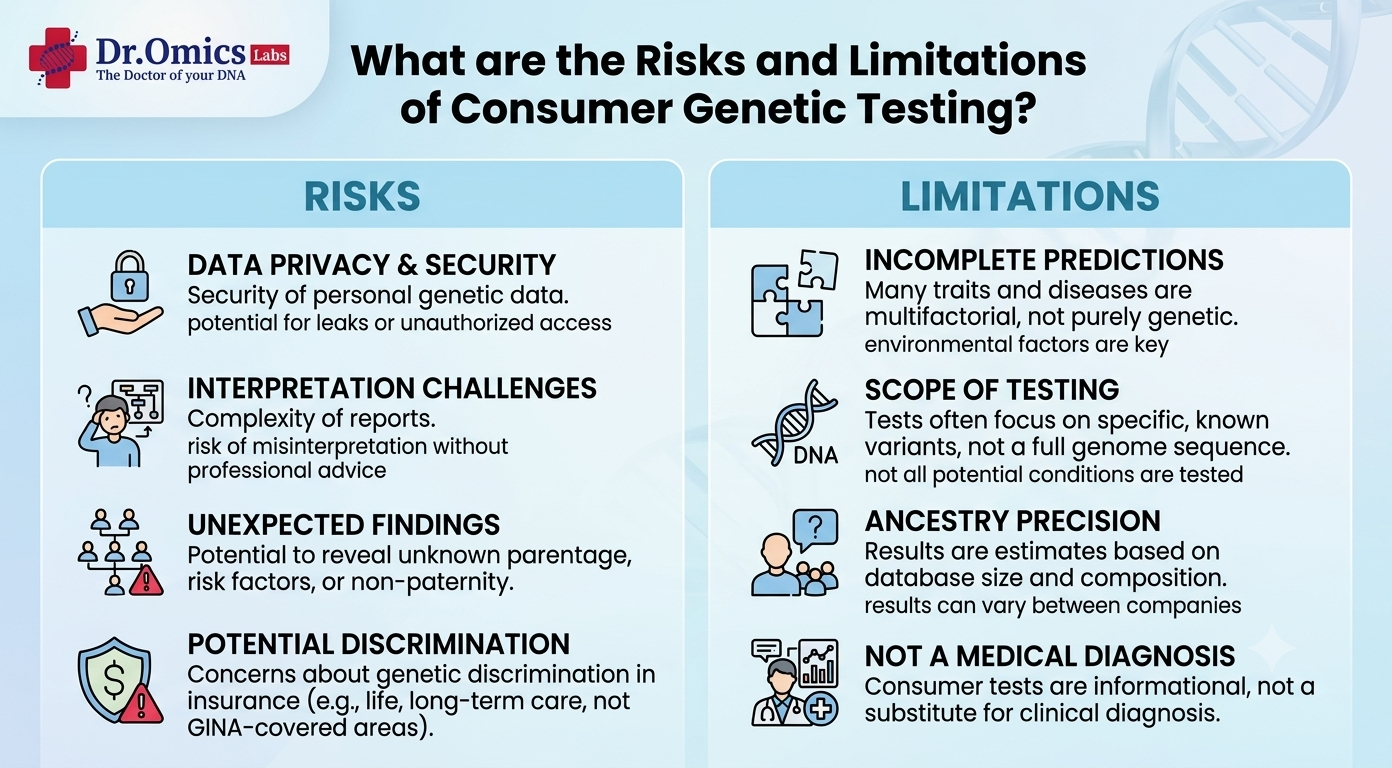
Understanding what are risks of consumer genetic testing is essential before purchasing a kit. One major limitation is incomplete health information. Most consumer tests examine only selected genetic variants rather than your entire genome, meaning important disease-causing mutations may be missed.
Privacy is another concern. Many users ask, is consumer genomics safe. While established companies invest in data security, consumers should carefully review privacy policies to understand how their genetic information may be stored, shared, or used for research.
Unexpected family discoveries are another potential risk. People often wonder, can consumer genomics reveal family secrets. In some cases, DNA testing has uncovered unexpected biological relationships, including non-paternity events, unknown siblings, or adoption histories, which can have significant emotional consequences.
Clinical vs Consumer DNA Testing
Many people ask, what is the difference between clinical and consumer DNA test. Clinical genetic testing is ordered by healthcare professionals, performed in accredited diagnostic laboratories, and interpreted within the context of medical history. Consumer DNA tests are designed primarily for personal information and education rather than diagnosis.
This distinction also explains what are limitations of at home DNA tests. Results should not be used to diagnose diseases, stop medications, or make major medical decisions without professional guidance.
Why Genetic Counseling Matters
An important consideration is why is genetic counseling important for DTC testing. Genetic counselors help explain complex findings, discuss the significance of positive or negative results, assess family history, and recommend whether confirmatory clinical testing is appropriate.
Consumers often ask how to interpret consumer DNA results because genetic risk does not necessarily mean disease will develop. Professional interpretation helps place findings into proper medical context.
Should You Buy a DNA Test Kit Online?
If you’re wondering what to consider before buying a DNA kit or should I buy a DNA test kit online, evaluate the company’s scientific credibility, laboratory accreditation, privacy practices, health report limitations, and access to genetic counseling.
Consumer testing may also help answer whether DTC test guide lifestyle changes. In many cases, results can encourage healthier habits, but lifestyle decisions should be based on a combination of genetics, medical advice, and routine health screenings.
Finally, many people are interested in how the DTC genetic testing market grows. Growing consumer awareness, advances in genomic technology, lower testing costs, and increasing interest in preventive healthcare continue to drive expansion of the global consumer genomics market. However, responsible use requires understanding both the potential benefits and the limitations of these tests.
Conclusion
Consumer genetic testing offers valuable insights into ancestry and selected health traits, but it is not a substitute for professional medical evaluation. Understanding the capabilities, limitations, privacy considerations, and ethical implications of DTC testing empowers consumers to make informed decisions and use their genetic information responsibly.

