
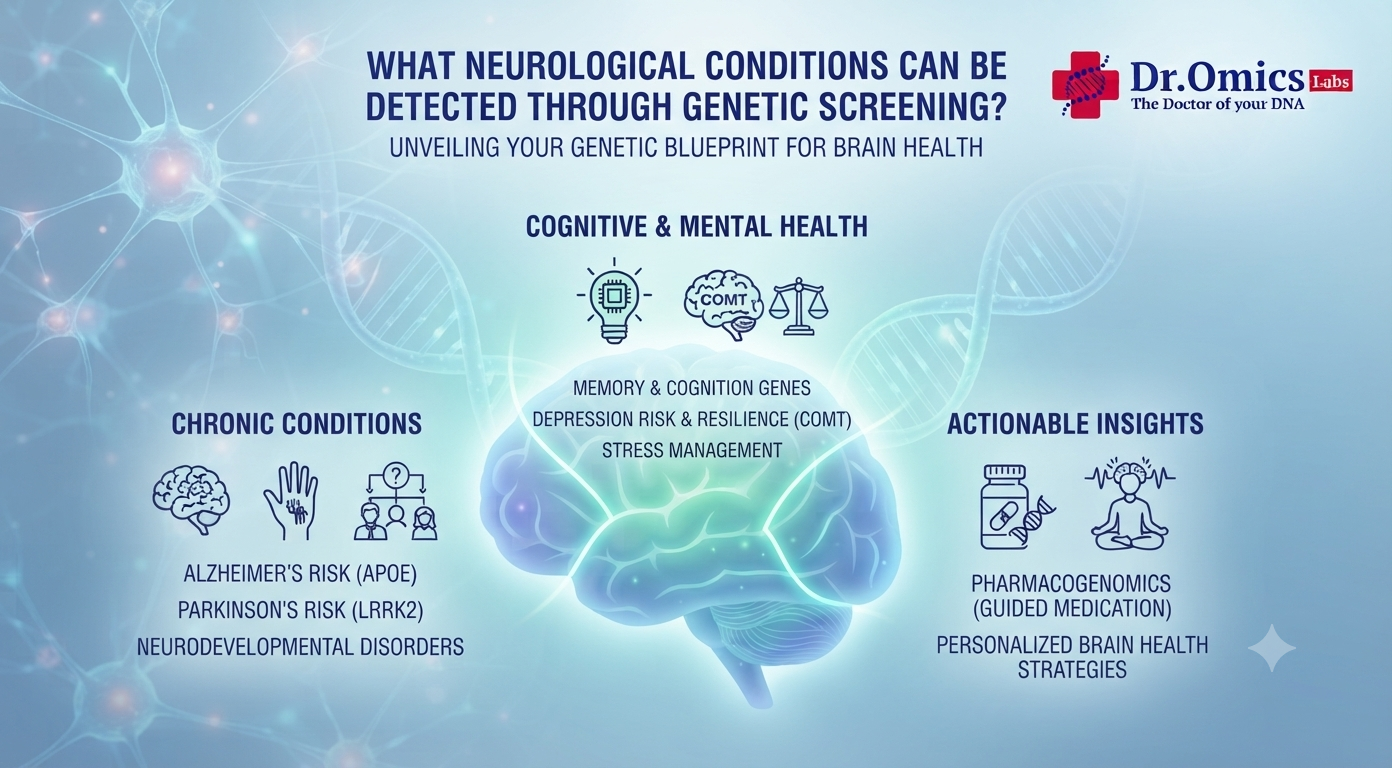
As precision medicine advances, neurogenomics is rapidly changing how we approach brain health. Many individuals are now asking: what is genetic testing for brain health, and what conditions can it actually uncover? While genetic testing is not a crystal ball for every neurological concern, it is a powerful diagnostic and predictive tool that is transforming clinical care.
Identifying Neurological and Neurodevelopmental Risks
A primary application of genetic screening is identifying susceptibility to chronic and degenerative conditions. One of the most common questions is: can DNA predict Alzheimer’s risk? While testing for variants like the APOE-ε4 allele can indicate increased susceptibility, it does not provide a definitive diagnosis. Instead, it serves as a starting point for discussions on how can a DNA test guide dementia prevention, allowing for proactive lifestyle adjustments.
Similarly, many seek to understand can DNA show Parkinson’s disease risk. Genetic screening can identify mutations in genes such as LRRK2 or GBA, which are linked to a higher risk of developing the condition. Furthermore, for families concerned about early childhood health, can DNA predict neurodevelopmental disorders? Yes, chromosomal microarray and sequencing can identify genetic variations associated with autism spectrum disorders and intellectual disabilities, enabling early intervention.
Genetic Markers and Cognitive Health
We now understand much more about what are key neurological genetic markers and what genes affect memory and cognition. Beyond simple risk factors, these markers help explain how do genetics affect cognitive decline. For example, variants in genes involved in DNA repair and synaptic function are significant contributors to long-term cognitive health.
A fascinating area of latest breakthroughs in neurogenomics is the study of methylation in brain health. Methylation—an epigenetic mechanism—regulates how genes are expressed in response to the environment. Understanding this process, along with the function of specific genes like the COMT gene for brain health, provides deep insights into temperament and resilience. The COMT gene, which regulates dopamine breakdown, is a prime example of how genetics influence depression risk and how to use genetics for stress management. By knowing your COMT status, you can better understand your brain’s dopamine processing speed—often referred to as the “warrior vs. worrier” profile—which dictates how you handle stress and cognitive load.
The Power of Pharmacogenomics
Perhaps the most actionable application of neurogenomics is how does DNA affect neurotransmitter processing. This is the foundation of pharmacogenomics—the study of how your genetic makeup affects your response to drugs. Can pharmacogenomics guide psychiatric medication? Absolutely. By analyzing specific metabolic pathways, physicians can determine which antidepressants or antipsychotics are likely to be effective and which might cause adverse side effects. This effectively answers: can a DNA test guide mental health treatment? It replaces the trial-and-error approach with a data-driven strategy.
Reliability and Interpretation
When considering these tools, the public frequently asks: is neuro genetic testing reliable and how accurate are neuro genetic tests? It is important to distinguish between clinical-grade diagnostic tests, which are highly accurate for specific conditions, and consumer-based wellness tests, which provide probabilistic data.
How to interpret neuro genetic results is a critical, often overlooked step. These results are complex, and they should always be reviewed with a neurologist or a genetic counselor. These professionals help ensure that you understand the difference between a high-risk variant and a definitive diagnosis, ensuring that the information leads to improved health outcomes rather than unnecessary anxiety.
Conclusion
Genetic screening has opened a new frontier in neurology, offering us the ability to look deep into the biological mechanisms that govern our minds. From understanding our risk for neurodegenerative diseases to optimizing psychiatric medication through pharmacogenomics, these tools provide actionable insights that were previously impossible to obtain. While the science is still evolving, the ability to personalize brain health strategies is one of the most significant breakthroughs in modern medicine. If you are considering screening, focus on the clinical utility of the test and ensure you have a professional team to help you navigate your results, ensuring that your genetic data becomes a tool for empowerment and long-term well-being.

