
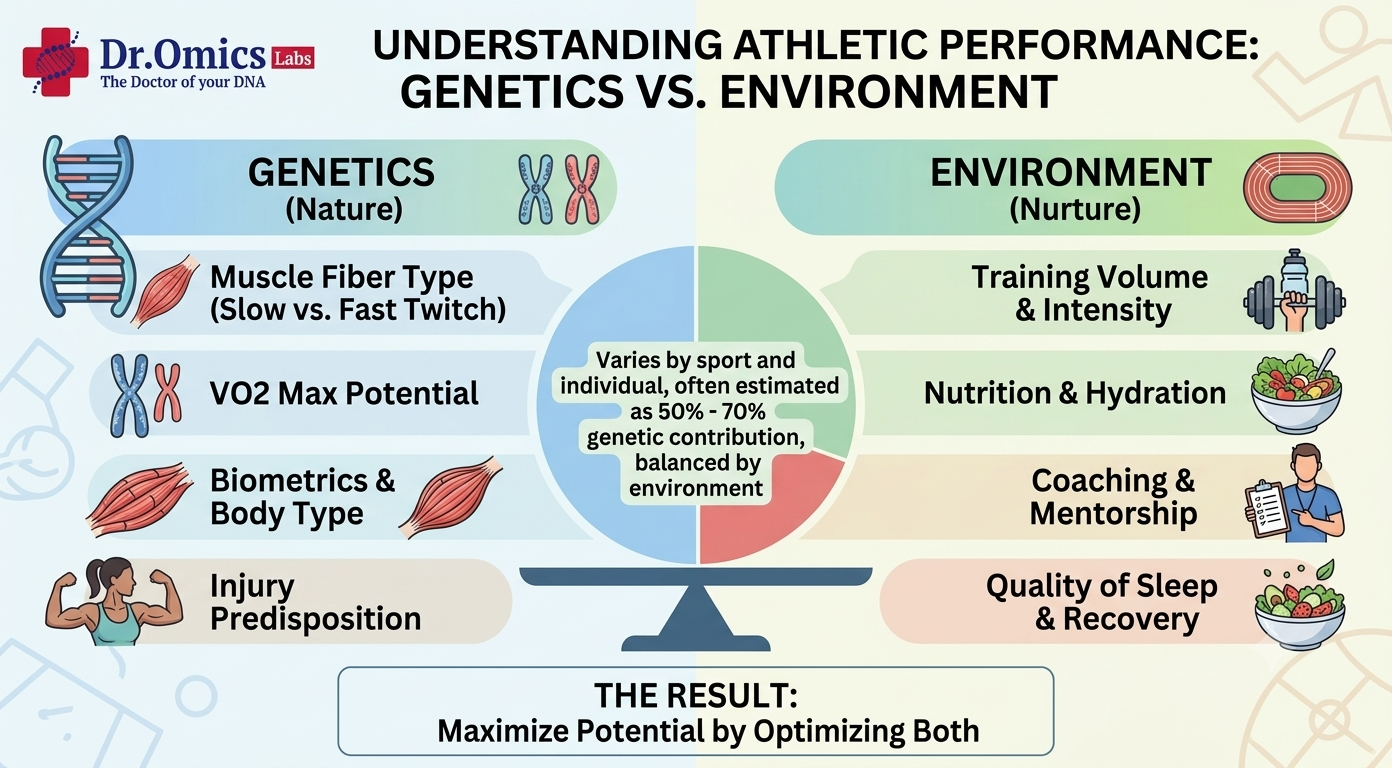
Athletic success is often viewed as the result of hard work, discipline, and consistent training. However, many people wonder how much of performance is genetic and whether DNA can influence sporting ability. The truth lies in the balance between genetics and environmental factors. While your genes provide the blueprint for your physical potential, your training, nutrition, recovery, and mindset determine how much of that potential you actually achieve.
Can DNA Improve Athletic Performance?
A common question is can DNA improve athletic performance. DNA itself does not make you faster or stronger, but understanding your genetic profile can help you make smarter training decisions. Modern sports DNA tests identify genetic variations associated with endurance, strength, recovery, and injury risk, allowing athletes to personalize their training programs.
What Is ACTN3 Speed Gene?
One of the most researched genes in sports science is the ACTN3 gene, often called the ACTN3 speed gene. This gene influences the production of alpha-actinin-3, a protein found in fast-twitch muscle fibers. Athletes with the functional ACTN3 variant tend to excel in sprinting and explosive power sports, while those without it may naturally lean toward endurance activities.
How Does Genetics Affect Muscle Growth and Strength?
Many athletes ask, how does genetics affect muscle growth and what genes affect strength training? Genes such as MSTN, IGF1, and ACTN3 play important roles in muscle development, protein synthesis, and strength adaptation. While genetics can influence how quickly muscles grow, consistent resistance training and proper nutrition remain the biggest drivers of muscle gains.
What Genetic Markers Predict Endurance?
Researchers have identified several genetic markers that predict endurance, including variations in the ACE, PPARGC1A, and VEGFA genes. These markers may influence oxygen utilization, cardiovascular efficiency, and mitochondrial function. Since VO2max genetics also contributes to aerobic capacity, some individuals naturally have a higher endurance potential, although structured training can significantly improve VO2max regardless of genetics.
Can DNA Show Fast-Twitch Muscle Fibers?
Yes, DNA testing can provide insights into whether you may have a higher proportion of fast- or slow-twitch muscle fibers. This helps answer questions like can DNA show fast twitch muscle fibers and does genetics determine ideal workout. Athletes with more fast-twitch fibers may perform better in sprinting and weightlifting, while those with more slow-twitch fibers often excel in endurance sports.
Can DNA Tests Prevent Sports Injuries?
Many athletes wonder, can DNA tests prevent sports injuries or can DNA predict ACL injury risk. Although no test can guarantee injury prevention, certain genetic markers linked to collagen formation, inflammation, and connective tissue strength may indicate increased susceptibility to tendon injuries or ACL tears. Understanding these risks helps athletes use DNA for injury prevention by adjusting training loads, strengthening vulnerable areas, and improving recovery strategies.
How Does Genetics Affect Recovery Time?
Another important factor is how genetics affect recovery time. Variations in genes related to inflammation, oxidative stress, and collagen repair can influence how quickly an athlete recovers after intense exercise. Personalized recovery plans based on genetic information may improve long-term performance while reducing overtraining.
Is Sports DNA Testing Accurate?
Many people ask, is sports DNA testing accurate and what is the best DNA test for athletes? Current DNA tests provide useful insights into genetic tendencies, but they are not definitive predictors of athletic success. Performance is influenced by hundreds of genes alongside lifestyle, coaching, motivation, sleep, nutrition, and consistent practice.
Why Athletes Take DNA Tests
Professional and recreational athletes increasingly seek genetic insights to discover how to optimize training with DNA, identify strengths, understand exercise response, and reduce injury risk. Some also learn about genetic doping detection, which refers to advanced methods used by anti-doping agencies to identify illegal gene-based performance enhancement.
Final Thoughts
So, how much of athletic performance is genetic? Research suggests genetics may account for roughly 30–80% of specific physical traits, depending on the characteristic being measured, while environmental factors shape the rest. Questions like does DNA affect flexibility, can DNA test show exercise response, and does genetics determine ideal workout all point to the same conclusion: genetics influence potential, but they do not determine destiny. The most successful athletes combine favorable genetics with intelligent training, proper nutrition, quality recovery, and unwavering dedication to maximize their performance.

