
The direct-to-consumer (DTC) genetic testing market has exploded in recent years, promising to unlock the secrets of your health, ancestry, and athletic potential from the comfort of your home. With a simple saliva sample, you can receive reports on your predisposition to complex conditions like Type 2 diabetes and cardiovascular disease. But amidst the marketing hype, a critical question remains: are at-home DNA test kits reliable for making serious health decisions?
Understanding the Limitations
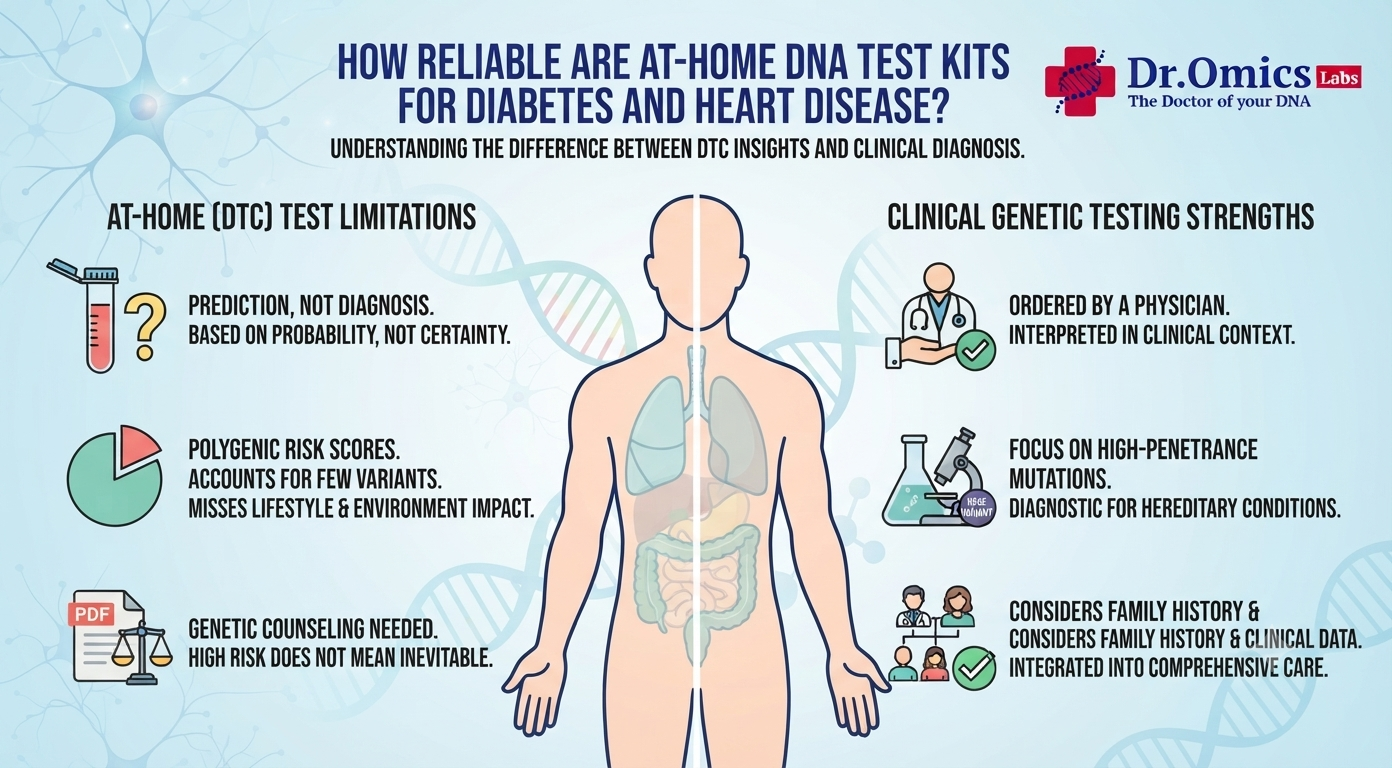
To determine if you should buy a DNA test kit online, it is essential to understand the fundamental difference between clinical and consumer DNA tests. Clinical genetic testing is performed in certified laboratories, ordered by a physician, and often focuses on high-penetrance mutations—specific, rare changes that cause diseases like hereditary cancer syndromes or severe cardiovascular disorders.
In contrast, most what do DTC DNA tests cover reports are based on polygenic risk scores. These scores aggregate data from thousands of common genetic variants, each contributing a very small amount to your overall risk. While these tests can provide a glimpse into your predisposition, what are the limitations of at-home DNA tests?
- Contextual Dependence: These tests often ignore the massive impact of family history, environment, and lifestyle, which are frequently more predictive of disease than genetic markers alone.
- Predictive Power: How accurate are ancestry health combo tests or standalone health tests? They are often less accurate for diverse populations since many reference databases have historically been biased toward individuals of European descent.
- Medical Misinterpretation: A “high risk” score does not mean you will develop the disease, nor does a “low risk” score guarantee you won’t. This is how to interpret consumer DNA results—it requires nuance that a standard PDF report cannot provide.
Diabetes and Heart Disease: The Reality
When considering can a consumer DNA test show diabetes risk or are heart DNA test kits accurate, caution is paramount. While some variants, such as the TCF7L2 gene, are statistically linked to diabetes, they are not diagnostic. Furthermore, regarding heart health, while testing can highlight predispositions, these kits are not a substitute for clinical screenings like lipid panels or blood pressure monitoring.
Is consumer genomics safe? The primary risks are not necessarily biological but psychological and informational. What are the risks of consumer genetic testing? These include anxiety stemming from potentially misleading results, the exposure of sensitive data to third parties, and the risk of consumer genomics revealing family secrets. Furthermore, there are significant ethical concerns of DTC testing, particularly regarding data privacy and the lack of professional oversight.
The Role of Professional Guidance
This is precisely why genetic counseling is important for DTC testing. A genetic counselor can bridge the gap between raw data and actionable health advice. They can help you understand the difference between clinical significance and statistical probability, ensuring you don’t make unnecessary lifestyle changes based on misinterpreted data.
While a DTC test can guide lifestyle changes—such as prompting you to start an exercise routine or adjust your diet—it should never replace a consultation with your primary care provider.
Conclusion
At-home DNA tests are fascinating tools that can offer a starting point for curiosity, but they are not diagnostic medical tools. Before you purchase a kit, ask yourself: what is my goal? If you are looking to learn about your ancestry, these kits can be highly accurate and fun. However, if you are looking to manage serious conditions like diabetes or heart disease, these tests should be viewed as supplementary information, not a medical mandate.
Reliability in consumer genomics depends on how you use the results. Always treat these reports as a conversation starter with a medical professional rather than a final verdict on your health. By prioritizing clinical oversight and professional genetic counseling, you can leverage these insights safely while avoiding the pitfalls of over-interpretation.

