
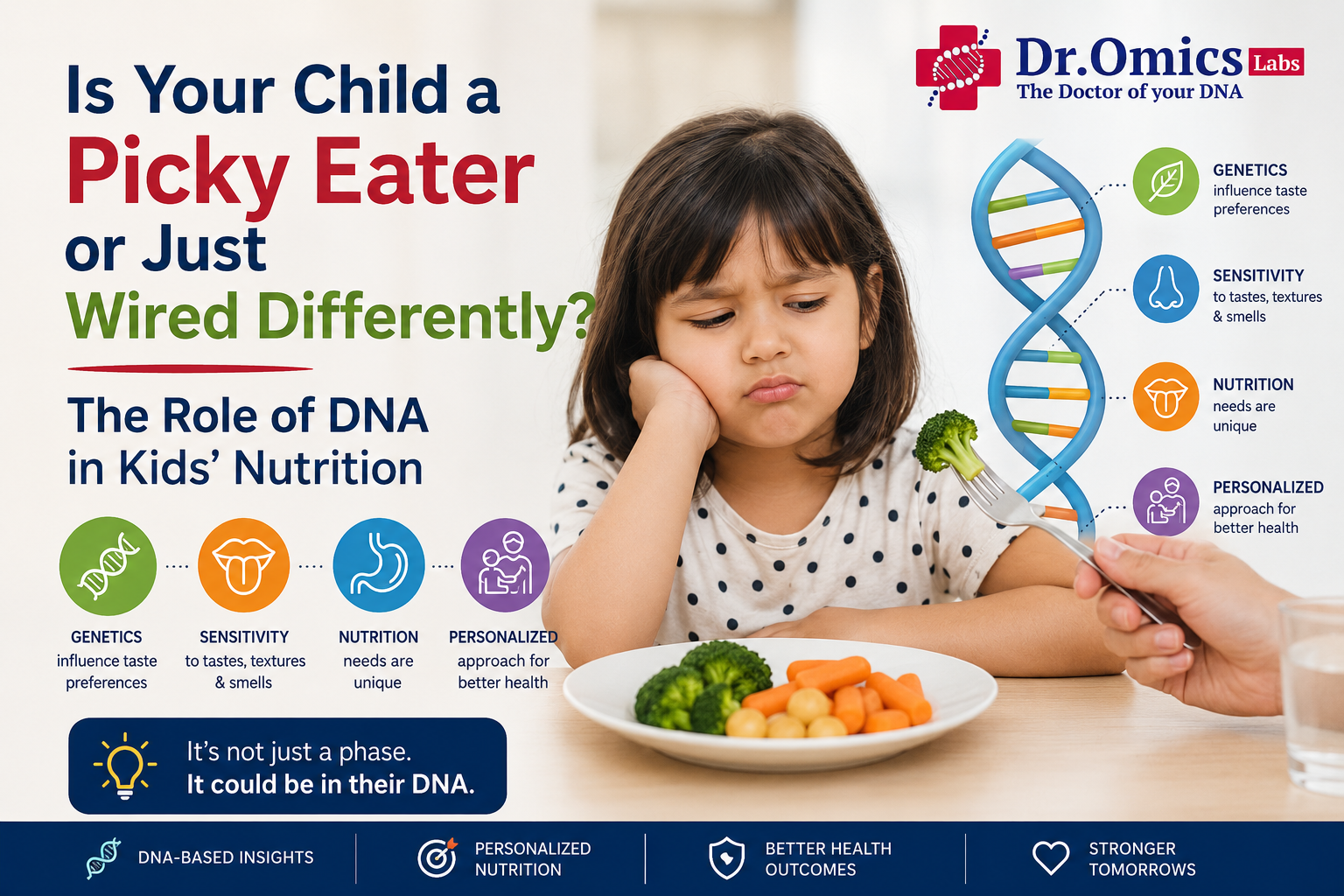
Every parent knows the dinner table struggle: the battle over broccoli, the sudden refusal of a once-loved fruit, or the child who seems to live exclusively on plain pasta. While we often chalk this up to a “phase” or simple stubbornness, groundbreaking shifts in pediatric genetics suggest there is much more happening beneath the surface.
As it turns out, your child’s plate preferences might not be a behavioral issue—it might be written in their genetic code.
The Science of the “Picky” Eater
For years, we believed that taste was purely a learned preference. However, research into the human genome has revealed that our DNA dictates how we perceive flavors. Some children are “supertasters” who possess a specific variant of the TAS2R38 gene. For these kids, the bitter compounds found in cruciferous vegetables like kale or Brussels sprouts aren’t just mild nuisances—they are overwhelmingly intense and unpleasant.
When we look at child nutritional needs, we must realize that a “one-size-fits-all” approach to mealtime is fundamentally flawed. If a child’s brain is receiving a biological signal that a certain food is toxic or unpalatable, no amount of “one more bite” coaching will change that physiological reality. This is where a DNA test for kids’ nutrition becomes a game-changer for modern parenting.
Why a Personalized Kids’ Diet Matters
Standard nutritional guidelines provide a baseline, but they don’t account for individual metabolic rates or nutrient absorption efficiencies. For example:
- Vitamin Metabolism: Some children have genetic variations that make it harder for them to convert certain vitamins (like B12 or D) into their active forms.
- Carbohydrate Sensitivity: A personalized kids’ diet can identify whether a child processes complex carbs efficiently or if they are prone to energy crashes.
- Food Sensitivities: Beyond immediate allergies, DNA can hint at predispositions toward lactose or gluten sensitivities before they become chronic issues.
By understanding these factors early, parents can move away from the “trial and error” method of feeding and toward a proactive, science-backed strategy.
Introducing the Lil Genie DNA Test
To bridge the gap between complex science and daily parenting, tools like the Lil Genie DNA test have emerged. This specialized test is designed specifically with pediatric development in mind. Unlike adult kits that focus on longevity and disease risk, these tests focus on actionable insights that impact a child’s growth, energy levels, and cognitive development.
The process is simple and non-invasive—usually a quick cheek swab—but the data it returns is invaluable. It provides a roadmap of your child’s unique biological requirements, helping you understand why they gravitate toward certain textures or why they might need higher levels of specific micronutrients during growth spurts.
Moving From Frustration to Foundation
Understanding that your child is “wired differently” changes the entire dynamic of the household. Instead of a power struggle, mealtime becomes an opportunity for support. If you know your child has a genetic predisposition to low iron absorption, you can pair iron-rich foods with Vitamin C to boost uptake. If you know they are genetically sensitive to bitterness, you can focus on roasting vegetables to bring out natural sugars rather than steaming them.
Child nutritional needs are the building blocks of a healthy adult life. By leveraging the power of genetics today, we aren’t just solving the “picky eater” problem; we are laying the foundation for a lifetime of wellness.
If you are ready to stop guessing and start growing, exploring a DNA-based approach to nutrition might be the most important step you take for your child’s health. After all, they aren’t just what they eat—they are what they can uniquely process and thrive upon.

