
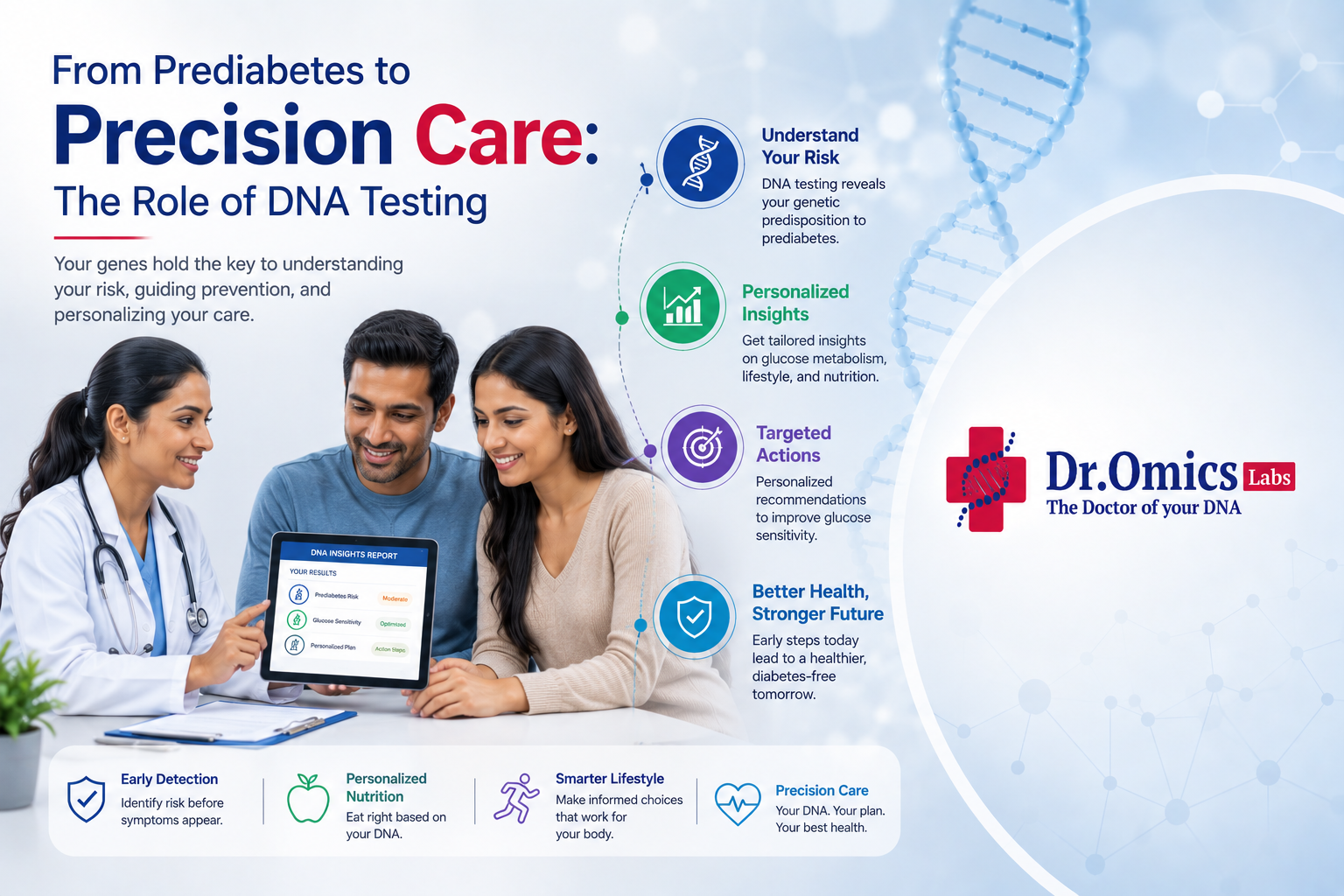
For years, a diagnosis of prediabetes felt like standing on a metabolic cliff. You were told to “eat better” and “move more,” but the advice often felt vague and impersonal. In 2026, the bridge between a warning sign and true health transformation is built on data—specifically, the code found in your own cells.
The shift from general lifestyle advice to personalized diabetes prevention is happening through the lens of genetic diabetes screening. By understanding your type 2 diabetes DNA, we can finally move away from a “trial and error” approach to metabolic health and toward a model of precision care.
The Silent Script: Why Your DNA Matters
Most people view Type 2 diabetes as a purely lifestyle-driven condition. While habits are crucial, your genetics determine the “threshold” of your metabolic resilience. A DNA test for diabetes risk doesn’t just look for a “yes” or “no” answer; it examines how your body is wired to handle glucose and insulin.
Genetic research has identified hundreds of variants that influence metabolic health. For example, the TCF7L2 gene is a major player in how your body secretes insulin. If you carry a high-risk variant, your pancreas may struggle to produce enough insulin to match a high-carbohydrate meal, regardless of how much you exercise.
Decoding the DNA Insulin Response
One of the most valuable insights from a diabetes DNA test is the understanding of your dna insulin response. Insulin is the hormone responsible for clearing sugar from your blood, but the process is multi-stepped and complex.
Genetic testing reveals exactly where the “bottlenecks” are in your specific system:
- The Signaling Problem: Your body might produce insulin, but your cells’ receptors might be genetically “deaf” to its signal (insulin resistance).
- The Transport Problem: Even if the signal is received, the proteins responsible for carrying glucose into the cell (like GLUT4) might be less efficient due to your genetic makeup.
- The Storage Problem: Your DNA influences whether excess energy is stored as “safe” subcutaneous fat or dangerous visceral fat around your organs.
By identifying these bottlenecks, a genetic diabetes screening allows you to target the specific biological mechanism that is failing, rather than just treating the symptoms.
Personalized Diabetes Prevention: A Tailored Roadmap
When you are in the “prediabetes” stage, time is your most valuable asset. The goal is to prevent the progression to Type 2 diabetes by making the most impactful changes possible. Personalized diabetes prevention ensures you aren’t wasting effort on interventions that don’t work for your biology.
Precision Nutrition
A type 2 diabetes DNA profile can reveal your carbohydrate sensitivity. For some, a moderate-carb Mediterranean diet is sufficient. For others, a genetic predisposition to high insulin resistance means a ketogenic or very low-carb approach is necessary to keep blood sugar in check.
Optimized Exercise
Did you know your genes can predict how your blood sugar will respond to different types of exercise?
- Power Genotypes: Some individuals see massive improvements in insulin sensitivity through short bursts of high-intensity interval training (HIIT).
- Endurance Genotypes: Others may see better metabolic results from long, steady-state sessions like cycling or swimming.
Targeted Supplementation
Genetic testing can identify if your body is naturally deficient in processing micronutrients like Magnesium, Vitamin D, or Chromium—all of which play pivotal roles in glucose metabolism. Instead of a generic multivitamin, you can use targeted supplementation to shore up your genetic “weak spots.”
Beyond Prediction: The Psychological Shift
There is a profound psychological benefit to genetic diabetes screening. When patients see their risk written in their DNA, the “guilt” often associated with prediabetes begins to fade, replaced by a sense of empowerment.
The 2026 Perspective: It is no longer about “what you did wrong”; it is about “how your body works.”
This clarity often leads to higher adherence to lifestyle changes. When you know that a specific dietary choice is directly helping a “sluggish” gene in your body, the motivation to stay the course becomes much stronger.
How to Integrate DNA Testing into Your Care
If you have been told you have prediabetes, or if you simply want to stay ahead of the curve, here is how to navigate the process:
- Request a Comprehensive Panel: Ensure your diabetes DNA test covers a broad range of markers, including those for insulin secretion, fat metabolism, and inflammation.
- Consult a Professional: Genetic data is complex. Pair your results with a healthcare provider who specializes in metabolic health to create a clinical action plan.
- Use it as a Baseline: Your DNA doesn’t change, but your epigenetics (how those genes are expressed) do. Use your DNA results to guide your daily habits, and use traditional blood tests (A1c, fasting insulin) to track your success.
Conclusion
The journey from prediabetes to lifelong health doesn’t have to be a guessing game. By leveraging a DNA test for diabetes risk, you gain an unfair advantage against a chronic condition.
Precision care means acknowledging that while your genes may load the gun, your lifestyle pulls the trigger. In 2026, we finally have the tools to keep that safety on. Don’t settle for “one-size-fits-all” health—unlock your genetic blueprint and take control of your metabolic future today.