The year 2026 has brought a seismic shift in how we approach family wellness. We’ve moved past the novelty of “ancestry hunting” and entered the era of precision child wellness. Parents are no longer satisfied with general growth charts; they want to understand their child’s unique biological blueprint from day one.
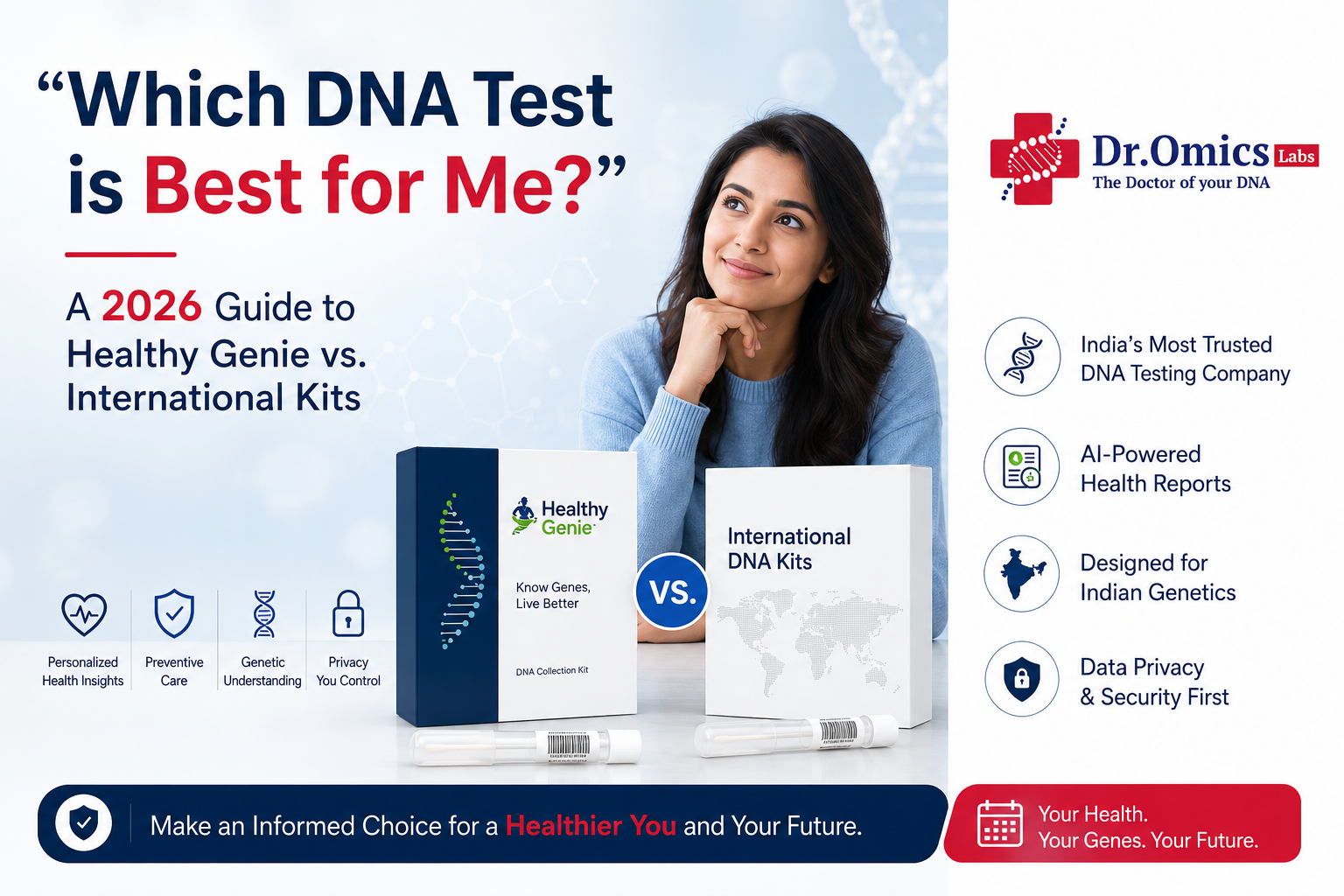
As the market for developmental genomics for infants explodes, a major question dominates the forums: Should you choose a specialized local powerhouse like Healthy Genie, or opt for the massive scale of International Kits?
This guide breaks down the science of predictive pediatric health modeling to help you decide which path is right for your family.
The New Standard: Predictive Pediatric Health Modeling
In the past, genetic testing was reactive—done only when a developmental milestone was missed. Today, predictive pediatric health modeling allows us to look ahead. These models don’t just identify “risk”; they predict how a child’s body will interact with its environment.
When comparing kits, you must look at how they handle three core pillars:
- Metabolic Efficiency: How the child processes macronutrients.
- Neuro-Developmental Trajectories: Potential strengths or sensitivities in brain development.
- Environmental Resilience: Susceptibility to allergies, pollutants, and sensitivities.
Healthy Genie: The Boutique Precision Approach
Healthy Genie has carved out a niche by focusing specifically on precision child wellness. Unlike broad-market kits, their algorithms are tuned specifically for the developmental windows of infancy and early childhood.
Pros of Healthy Genie:
- Genotype-Based Dietary Intervention: Their standout feature is a “First Foods” roadmap. Instead of guessing if your baby should start with avocado or rice cereal, Healthy Genie uses DNA to predict which foods will optimize gut health and minimize inflammatory responses.
- Actionable Pediatric Advice: The results are designed to be read by parents and shared with pediatricians. They provide a “developmental forecast” that helps parents understand if their child might need extra support in motor skills or language based on their developmental genomics.
- Data Privacy: As a more specialized firm, they often boast “vault-level” privacy, ensuring your child’s genomic data isn’t sold to pharmaceutical third parties.
Cons:
- Price Point: Precision comes at a premium. Healthy Genie is often more expensive than “big box” kits.
- Database Size: While their pediatric data is deep, their ancestry data is often less comprehensive than international competitors.
International Kits: The Global Powerhouses
Brands like 23andMe or Ancestry (and their 2026 successors) offer a different value proposition. They rely on “Big Data.” With hundreds of millions of samples, their predictive pediatric health modeling is built on massive statistical correlations.
Pros of International Kits:
- Vast Comparative Data: Because they have so many samples, they are excellent at identifying very rare genetic variants that smaller companies might miss.
- Integrated Ecosystems: These kits often come with sleek apps that track your child’s data alongside your own, creating a “Family Health Map.”
- Affordability: Scale allows them to offer testing at a fraction of the cost of specialized clinical kits.
Cons:
- Generic Recommendations: The advice is often “one-size-fits-most.” You might get a high-level risk score, but you’ll rarely get a specific genotype-based dietary intervention plan for a six-month-old.
- Privacy Concerns: Large international databases are more frequent targets for data mining and security breaches.
Head-to-Head: The “Wellness” Comparison
| Feature | Healthy Genie | International Kits |
| Focus | Pediatric & Developmental | General Wellness & Ancestry |
| Nutrition | Specific “First Foods” Plans | General Nutrient Tendencies |
| Medical Integration | High (Physician Ready) | Low (Self-Interpretation) |
| Future Proofing | Predictive modeling for growth | Statistical risk snapshots |
Why “Developmental Genomics for Infants” Matters Now
The reason to choose a kit in 2026 isn’t just to see if your child has blue eyes. It’s to mitigate issues before they arise. For example, a child with a specific variant in the MTHFR gene may require a different form of folate during their rapid growth phases.
Similarly, precision child wellness kits can identify a predisposition for “late-onset” allergies. Knowing this, parents can follow a specific clinical protocol for early allergen introduction, potentially “turning off” that genetic switch before an allergy develops.
The 2026 Philosophy: We are no longer victims of our “bad” genes. Through genotype-based dietary intervention and environmental control, we can optimize the expression of our children’s DNA.
Which One Should You Choose?
Choose Healthy Genie if:
- You want a specific, step-by-step nutritional and developmental plan for your infant.
- You are working closely with a pediatrician to optimize your child’s early years.
- You prioritize data sovereignty and specialized pediatric insights.
Choose an International Kit if:
- You are more interested in broad family history and general health tendencies.
- Budget is a primary concern.
- You want to see how your child’s DNA compares to a global population.
Final Thoughts
The decision between Healthy Genie and International Kits ultimately comes down to your goals. Are you looking for a family heirloom (Ancestry), or a tactical manual for your child’s health (Precision Child Wellness)?
In the world of 2026, the “best” test is the one that gives you peace of mind and actionable steps. Your child’s DNA is the most valuable data they will ever own—choose the partner that helps you protect and empower it.