
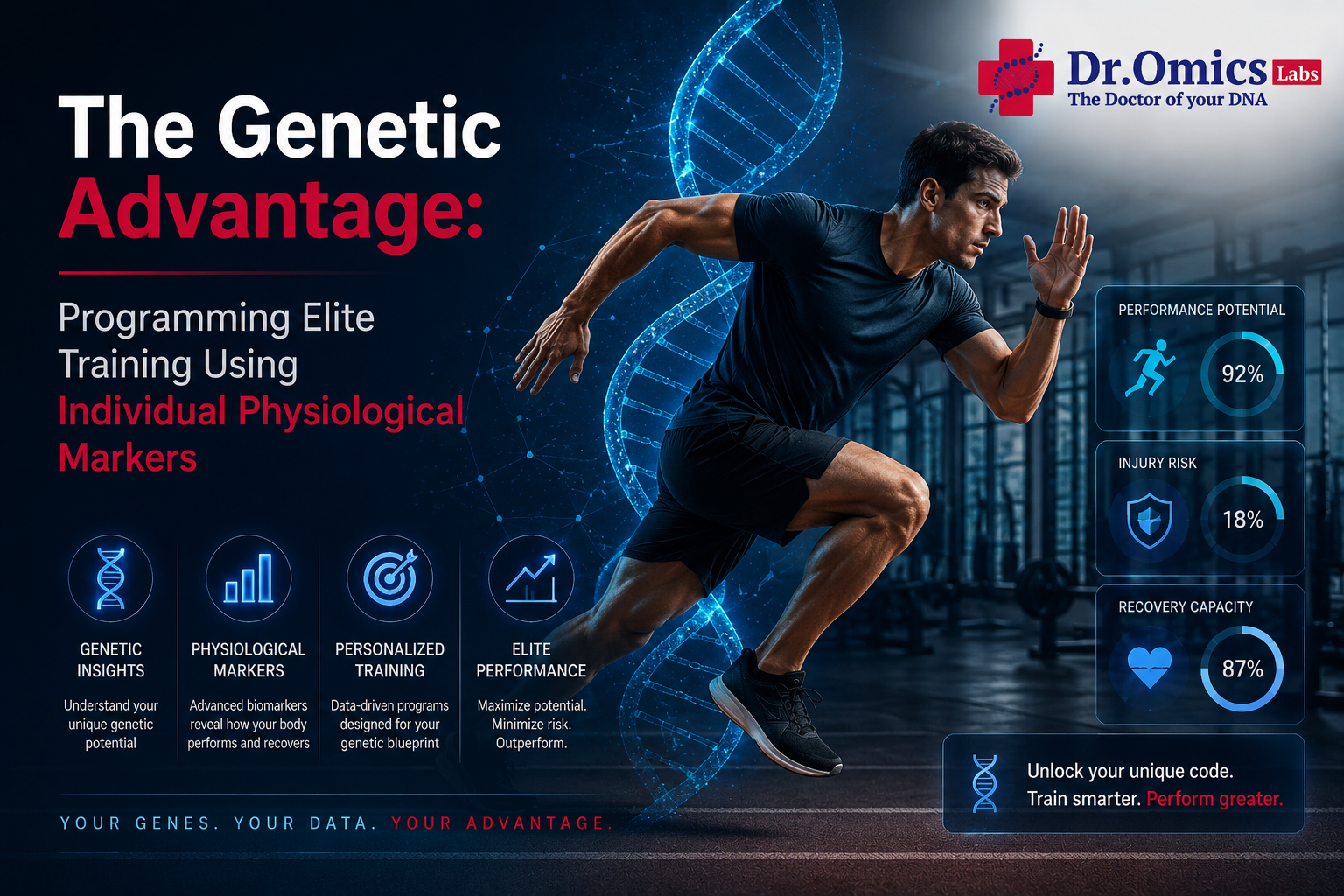
In the upper echelons of professional sports, the margin between a gold medal and a middle-of-the-pack finish is often measured in milliseconds or millimeters. For decades, elite coaches have pushed the boundaries of human performance using state-of-the-art technology and grueling training regimens. However, we have reached a plateau with “standardized” elite programming. The next frontier of human achievement isn’t found in a new piece of gym equipment, but in the athlete’s own double helix. We are entering the age of physiological performance optimization driven by the blueprint of the human genome.
The Shift to Genomic-Informed Training Load
Traditionally, a coach would assign a “training load” based on an athlete’s perceived exertion or heart rate zones. While effective, this ignores the internal biological reality of how that specific athlete processes stress. Genomic-informed training load takes a different approach. By analyzing specific genetic variants, such as those in the ACE or PPARA genes, coaches can determine an athlete’s innate cardiovascular ceiling and muscular efficiency.
For example, an athlete with a specific genotype might have a higher “trainability” for aerobic capacity but a lower tolerance for high-volume anaerobic stress. If a coach pushes this athlete into a high-volume power program, they risk overtraining and regression. By aligning the volume and intensity of the workload with the athlete’s genetic predispositions, we ensure that every drop of sweat contributes to an actual performance gain rather than just fatigue.
Understanding Recovery Rate Genetic Markers
The most sophisticated training program in the world is useless if the athlete cannot recover from it. Recovery is where the actual physiological adaptation—the “gains”—happens. However, the speed at which an athlete returns to homeostasis is largely governed by recovery rate genetic markers.
Key markers, such as variations in the IL6 (Interleukin-6) and TNF genes, dictate how the body manages inflammation after a strenuous session.
- Rapid Responders: Some athletes are genetically programmed to clear inflammatory markers quickly, allowing them to handle back-to-back high-intensity sessions.
- Delayed Responders: Others have a “slower” genetic inflammatory response. For these individuals, a standard 24-hour rest period is insufficient.
Without this data, these “delayed responders” are often labeled as having poor work ethic or “glass” physiques, when in reality, they simply require a different temporal distribution of their training sessions to reach peak performance.
Biomechanical Efficiency Through DNA
We often think of biomechanics as a matter of form and technique, but the structural integrity of the human machine is built on a genetic foundation. Biomechanical efficiency through DNA involves looking at the genes that code for the structural proteins in our tendons, ligaments, and bones.
Variants in the COL1A1 and COL5A1 genes influence the “stiffness” of connective tissues. In many elite sports, a certain level of tendon stiffness is a biomechanical advantage, allowing for greater elastic energy return during sprinting or jumping. However, this same stiffness can increase the risk of specific injuries if the training load isn’t balanced with corrective stability work. By knowing an athlete’s structural makeup, we can program specific “pre-habilitation” exercises that shore up their genetic weaknesses while leaning into their biomechanical strengths.
The New Standard of Excellence
The integration of these individual physiological markers into a cohesive training program represents the ultimate “Genetic Advantage.” We are moving away from a world where athletes have to survive their training and into a world where the training is built to ensure they thrive.
Physiological performance optimization isn’t about “hacking” the system; it’s about respecting it. It’s about recognizing that an elite athlete is a precision instrument that requires a precision manual. By leveraging genomic-informed training load and respecting recovery rate genetic markers, we are not just building faster and stronger athletes—we are building more resilient ones.
Conclusion
The future of sports is personal. The most successful athletes of the next decade won’t be those who worked the hardest in a generic sense, but those who worked the smartest in a biological sense. By merging the science of DNA with the art of coaching, we are unlocking a new chapter of human potential. The code for the next world record is already written; we just have to know how to read it.

