
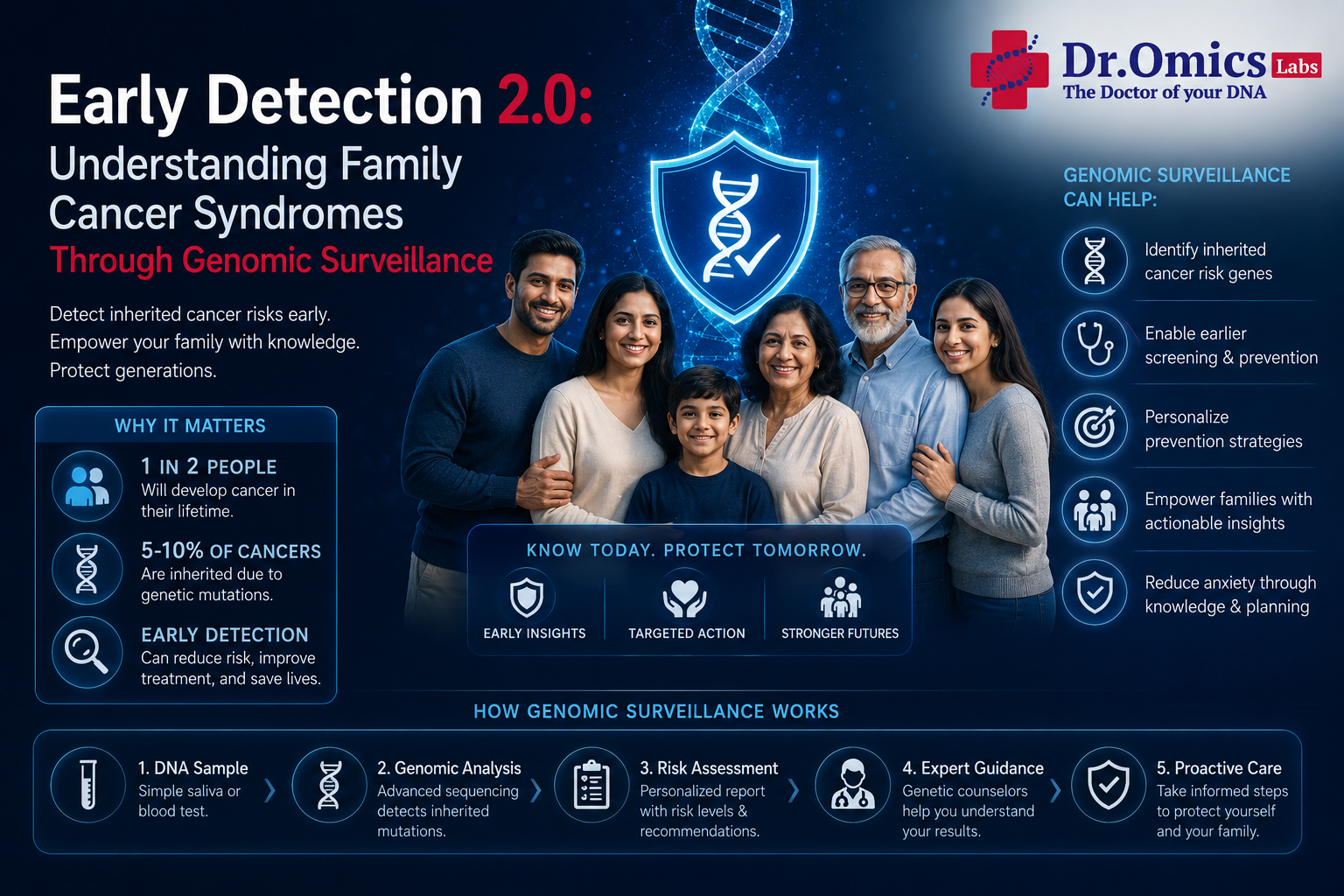
In the traditional medical model, cancer detection was often a race against time—a reactive process where the goal was to find a tumor before it spread. However, as we enter the era of Early Detection 2.0, the focus has shifted from finding the disease to predicting it. This shift is powered by genomic surveillance, a sophisticated approach that uses the Onco DNA test to look deep into a family’s biological history. For those with a family history of malignancy, understanding these patterns isn’t just about curiosity; it’s about a proactive strategy known as precision cancer prevention.
The Hidden Architecture of Hereditary Risk
While most cancers occur sporadically due to aging or environmental factors, approximately 5% to 10% are deeply rooted in our heritage. Family cancer syndromes occur when a specific, harmful change in a gene is passed from one generation to the next. These aren’t just “weaknesses”; they are structural vulnerabilities in the body’s ability to repair DNA or suppress tumor growth.
Through hereditary cancer screening, we can now identify these syndromes with pinpoint accuracy. Whether it is the well-known BRCA1/2 mutations associated with breast and ovarian cancers, or Lynch Syndrome linked to colorectal risks, the data allows families to move from a state of “high anxiety” to a state of “high information.”
Genetic Mutation Mapping: A Roadmap for Life
The core of modern genomic surveillance is genetic mutation mapping. This process involves more than just a “yes or no” answer regarding a mutation. It provides a detailed map of an individual’s specific variants and how they might interact with other health factors.
By mapping these mutations, an oncology risk assessment becomes a personalized forecast. It allows clinicians to answer critical questions:
- What is the specific risk? Identifying exactly which organs are most vulnerable.
- When should we act? Determining the optimal age to begin advanced screenings.
- How should we monitor? Choosing the most effective imaging technologies, such as 3T MRIs or specialized endoscopic procedures, that go far beyond standard checkups.
Precision Cancer Prevention: The Ultimate Shield
The most empowering aspect of an Onco DNA test is the ability to implement precision cancer prevention. Once a genetic risk is identified, the individual is no longer a passive observer of their health. They become a “Genetic Guard.”
Prevention in the genomic age is multi-layered:
- Surgical Proactivity: For high-risk mutations, risk-reducing surgeries can lower the probability of cancer developing by over 90%.
- Chemoprevention: The use of specific medications or supplements that can interfere with the biological pathways a mutation might exploit.
- Lifestyle Calibration: Aligning diet, environment, and habits to minimize the triggers that might cause a “latent” genetic risk to manifest.
Knowledge as a Legacy
One of the most profound benefits of hereditary cancer screening is its impact on the wider family. Identifying a mutation in one individual acts as a “sentinel event.” It provides siblings, children, and cousins the opportunity to undergo their own testing, often revealing life-saving information for relatives who may have had no idea they were at risk.
In this way, genomic surveillance becomes a gift of time and health passed down through the family tree, effectively “breaking the chain” of hereditary disease.
Conclusion
The “silent” threat of family cancer syndromes is silent no more. With the tools of Early Detection 2.0, we are rewriting the narrative of oncology. We are moving toward a future where cancer is caught in its earliest, most treatable stages—or better yet, prevented from ever starting. By embracing the Onco DNA test and committing to a precision cancer prevention strategy, you are taking control of your genetic destiny. Your family history doesn’t have to be your future; with the power of genomics, you have the map to a healthier tomorrow.

