
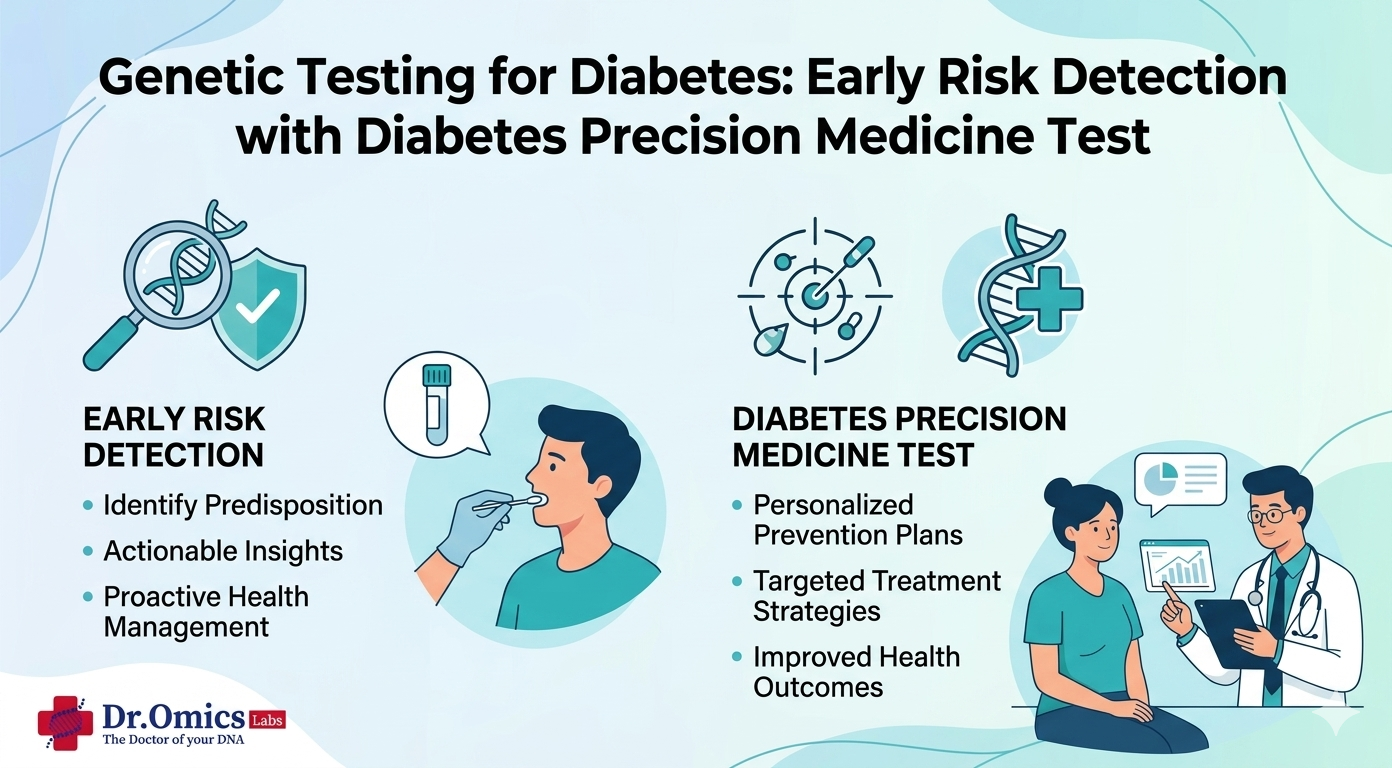
The Genetic Blueprint of Diabetes
For decades, we have known that diabetes runs in families. If your parents or siblings have the condition, your risk naturally increases. However, traditional family histories only tell part of the story. Hereditary diabetes testing has evolved from basic family trees into highly sophisticated molecular analyses.
Unlike rare monogenic forms of diabetes that are caused by a single gene mutation, type 2 diabetes is polygenic. This means it is influenced by the subtle interactions of hundreds of variations across your DNA. A standard blood sugar test only tells you your current metabolic state. In contrast, genetic testing for diabetes India allows clinicians to look directly at your inherited blueprint, revealing what might happen years down the road.
Decoding Your Risk: The Diabetes Genetic Risk Score
The core mechanism behind a diabetes DNA test is the calculation of a diabetes genetic risk score (GRS).
When you take a precision test, scientists analyze thousands of genetic variants scattered across your genome that are known to be linked to insulin resistance, beta-cell dysfunction, and glucose metabolism.
- How it works: Each genetic variant adds or subtracts a small amount of risk. By compiling these variants, the lab generates a single, comprehensive numerical score—your GRS.
- What it tells you: A high score indicates a strong type 2 diabetes gene risk. It alerts you that your body is genetically predisposed to metabolic failure if subjected to poor diet or high stress.
- The Power of Proactivity: Knowing your score early empowers you to make highly specific lifestyle shifts, neutralizing your genetic risks before they manifest as chronic illness.
Moving Toward Diabetes Precision Medicine
One of the greatest flaws of conventional medicine is the “one-size-fits-all” model. Two individuals with the exact same HbA1c level might be experiencing completely different internal dysfunctions. One might have an issue with insulin production in the pancreas, while the other struggles with severe insulin resistance in the muscles and liver.
This is where diabetes precision medicine changes the game. By identifying your specific genetic markers, healthcare providers can tailor interventions uniquely to your biology:
| Feature | Conventional Treatment | Diabetes Precision Medicine |
| Approach | Trial-and-error lifestyle changes and generic medications. | Targeted, data-driven diet, exercise, and drug therapies. |
| Timing | Initiated after blood glucose rises (Reactive). | Initiated years before onset based on DNA (Proactive). |
| Focus | Managing symptoms and avoiding immediate crises. | Maximizing cellular health and preventing disease onset. |
Innovation in Action: Diabetomics Dromics
As genomic science expands across India, pioneering platforms like Diabetomics Dromics (offered via specialized genomics providers like DrOmics Labs) are making these advanced tests highly accessible. The Diabetomics Dromics framework bridges the gap between complex laboratory sequencing and practical, everyday health solutions.
By analyzing specific metabolic pathways, this advanced testing platform delivers clear, actionable insights directly to patients and physicians. Instead of deciphering complex genetic jargon, you receive a clear map of how your body processes carbohydrates, responds to different types of exercise, and reacts to specific preventive medications.
Why Early Detection Matters for the Indian Population
Genetically, individuals of South Asian descent possess a unique metabolic profile often referred to as the “Thin-Fat Indian” phenotype. Even with a lower Body Mass Index (BMI), Indians tend to have higher visceral fat accumulation and a higher predisposition to insulin resistance at a younger age.
This unique vulnerability makes genetic testing for diabetes India an essential tool rather than a luxury. Detecting a high type 2 diabetes gene risk at age 20 or 25 allows for a lifetime of optimized wellness, effectively breaking the multi-generational cycle of hereditary diabetes.
Steps to Take Your Precision DNA Test
Embracing the future of preventive healthcare is entirely non-invasive and seamless:
- Sample Collection: A simple, painless cheek swab or saliva sample is collected from the comfort of your home.
- DNA Extraction & Sequencing: The laboratory extracts your DNA and sequences the specific genomic regions tied to metabolic health.
- Data Analysis: Bioinformatics specialists calculate your diabetes genetic risk score.
- Personalized Report & Consultation: You receive a detailed breakdown of your genetic predispositions along with a personalized roadmap for diet, fitness, and medical supervision.
Final Thoughts: DNA is Not Destiny
It is vital to remember a fundamental truth of modern genomics: your genes are a blueprint, not a final sentence. While you cannot alter the DNA sequence you were born with, you can completely alter how those genes express themselves. A high genetic risk score simply means you must be more intentional with your health choices. By utilizing the insights from a Diabetes Precision Medicine Test, you gain the ultimate blueprint to outsmart your DNA, pivot toward lasting health, and ensure a diabetes-free future.