
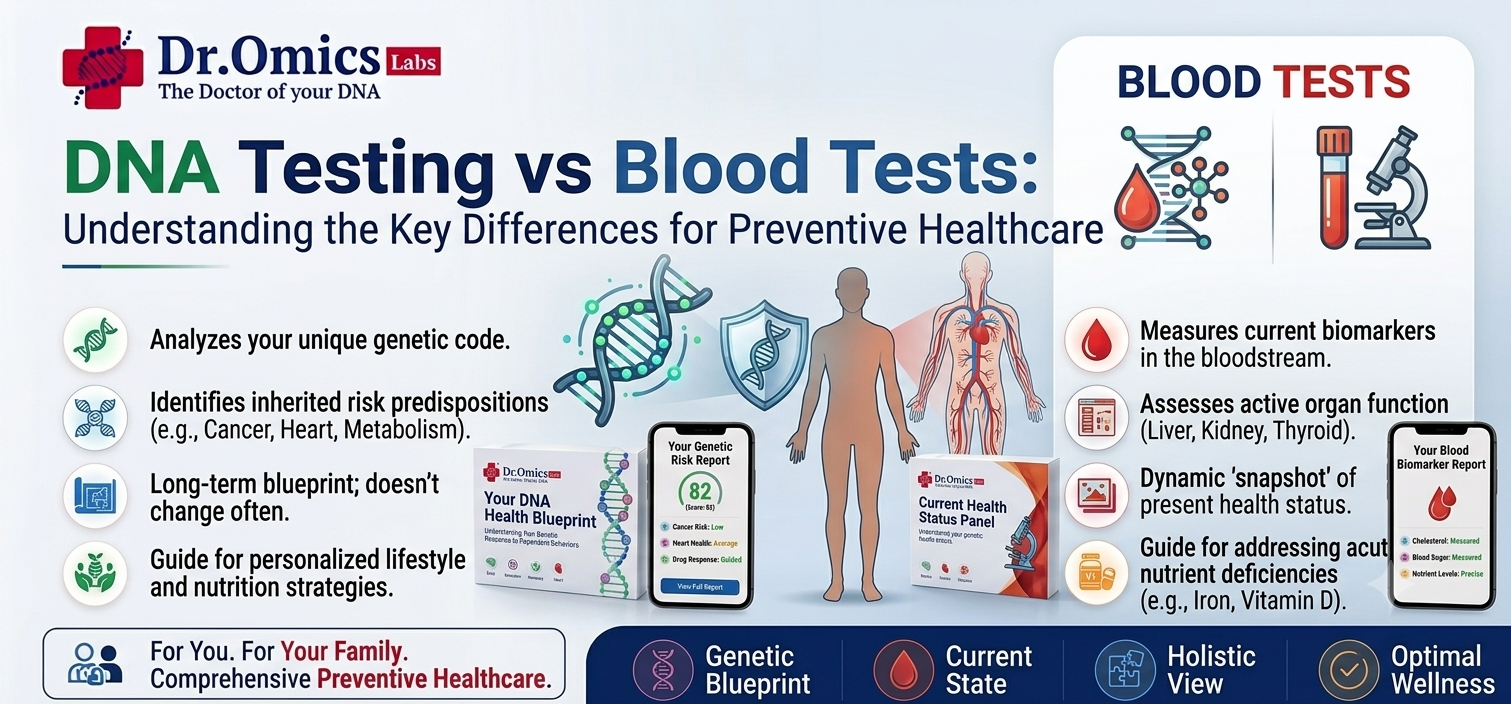
The philosophy of healthcare in India has fundamentally shifted. We are rapidly moving away from a traditional “wait-and-see” model toward proactive, science-led health management. When designing a preventive health strategy, two major tools dominate the landscape: modern pathology tests (routine blood tests) and advanced genomics (DNA testing).
While both require a sample from your body, they look at your health through entirely different lenses. Understanding the difference between a DNA test and a blood test is essential to knowing how to combine them for optimal lifelong wellness.
1. Preventive DNA vs Reactive Blood Test: The Timeline of Your Health
The most distinct contrast between these two testing methodologies is time. A DNA test maps your future risk blueprint, while a blood test captures your exact current physiological state.
- Preventive DNA Testing: Your genetic code does not change. A genomic screening looks directly at variations across your DNA to calculate your lifetime predisposition to chronic conditions like type 2 diabetes, cardiovascular diseases, or hereditary cancers (such as mutations in the BRCA1/2 genes). It tells you what might happen years before a single symptom appears.
- Reactive and Monitoring Blood Tests: A standard blood test measures active biomarkers circulating in your system right now. It checks your blood sugar (HbA1c), cholesterol fractions, or kidney function markers. It tells you what is happening in your body today.
The Core Shift: DNA testing allows for primary prevention (changing your lifestyle to ensure a genetic risk is never triggered). Routine blood tests offer secondary prevention or active monitoring (catching a metabolic shift or biochemical imbalance early enough to reverse it).
2. Genetic Test vs Diagnostic Test: What Do They Actually Measure?
To build an effective wellness routine, you must understand the clinical boundary between a genetic screening vs a lab test.
| Feature | DNA Testing (Genomics) | Blood Testing (Pathology) |
| Primary Target | Inherited genetic variants and mutations. | Hormones, proteins, lipids, and cellular counts. |
| Frequency | Once per lifetime (for foundational health panels). | Regularly (every 6 to 12 months). |
| Purpose | Predictive risk mapping and personalized planning. | Real-time diagnostic evaluation and disease monitoring. |
| Sample Type | Saliva, cheek swab, or a one-time blood draw. | Intravenous blood sample. |
3. Genomics vs Pathology Test India: Navigating the Local Healthcare Landscape
In India, the rise of lifestyle-driven metabolic conditions—such as early-onset cardiac events and insulin resistance—has accelerated the adoption of comprehensive health packages. However, the application of genomics vs pathology tests in India requires a tailored approach.
Traditional pathology labs are highly accessible across India, offering standardized profiles like the Complete Blood Count (CBC) or Lipid Profiles. These are vital for tracking your everyday metabolic health.
On the flip side, advanced genomic laboratories have developed massive, localized databases specifically optimized for Indian genotypes. Because Indian genetic architecture differs significantly from the Western datasets historically used in global studies, choosing a localized genetic panel ensures that your calculated polygenic risk scores (calculated probabilities across multiple genetic markers) are clinically accurate and relevant to your heritage.
4. DNA Test Accuracy vs Blood Test: Probabilities vs Absolute Present Facts
When analyzing data, comparing DNA test accuracy vs blood test accuracy comes down to understanding what the numbers signify.
Next-Generation Sequencing (NGS) technology makes modern DNA sequencing highly precise. If a reputable, accredited lab identifies a specific genetic marker in your sample, that marker is physically present in your code. However, a DNA test yields probabilities, not a diagnosis. Having a 40% higher genetic predisposition to high cholesterol does not mean you currently have a clogged artery—it simply means your body handles lipids less efficiently under poor environmental conditions.
Conversely, a blood test is a snapshot of absolute reality. If your fasting blood glucose reads 130 mg/dL, that is a definitive diagnostic fact for that specific day. It confirms the immediate presence of a metabolic imbalance, requiring immediate medical or lifestyle intervention.
5. When to Choose a DNA Test Over a Standard Lab Screening
An optimized preventive health framework does not choose one over the other; it utilizes both strategically. You should intentionally seek out a preventive DNA test in the following scenarios:
- A Strong Family History: If chronic conditions like early heart attacks, strokes, colorectal cancers, or severe diabetes run across generations in your family, a targeted gene panel maps out your personal inherited risk.
- Optimizing Lifestyle & Nutrition: If you want to eliminate the trial-and-error approach to health. DNA insights can highlight your specific macronutrient sensitivities, vitamin processing efficiencies, and how your muscle fibers respond to endurance versus strength training.
- Family Planning: To identify if you or your partner are silent carriers for inheritable monogenic disorders, such as Beta-thalassemia, which has a prominent carrier rate in the Indian population.
Summary: A Dual-Engine Approach to Preventive Healthcare
True preventive healthcare balances the blueprint with reality. Use a preventive DNA test once to establish your unique personal manual—revealing your systemic vulnerabilities and how to personalize your diet, sleep, and fitness. Then, utilize regular routine blood tests as your dashboard check, running them annually to verify that your targeted lifestyle adjustments are successfully keeping those genetic predispositions quiet.

