
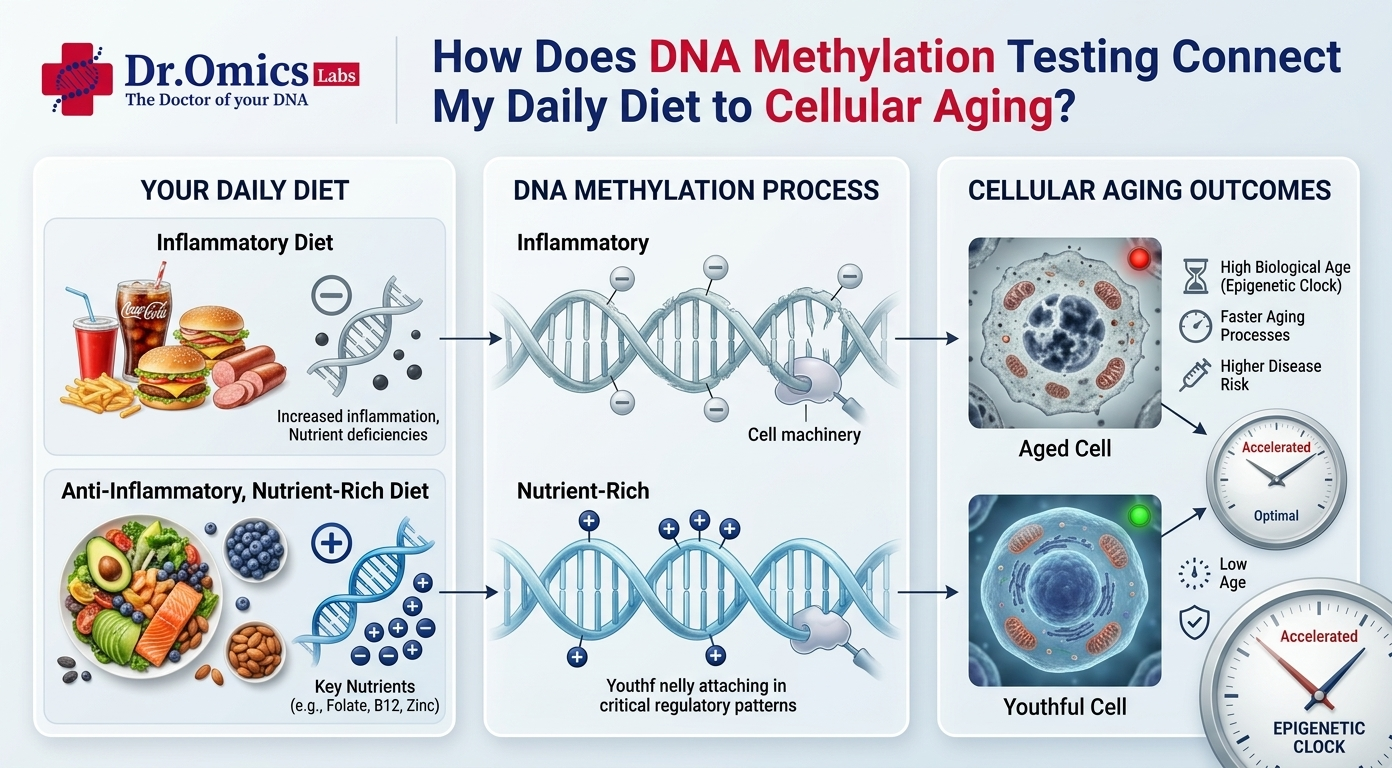
Every meal you eat does more than provide energy—it sends signals to your body that can influence how your cells function over time. This is where DNA methylation testing and epigenetics come into play. While your DNA sequence remains largely unchanged throughout your life, chemical markers such as methyl groups can affect how genes are expressed. These changes are influenced by diet, exercise, stress, sleep, and environmental factors, making DNA methylation a valuable tool for understanding biological aging and long-term wellness.
Many people ask, what can a wellness DNA test tell me? Traditional wellness DNA tests analyze inherited genetic variations to identify predispositions related to nutrition, fitness, metabolism, and health risks. Meanwhile, DNA methylation testing goes a step further by measuring epigenetic changes that reflect how your lifestyle is affecting your body today. Together, they provide a more complete picture of your health.
How Does a DNA Health Test Work?
If you’re wondering how does a DNA health test work, the process is generally simple. Most providers collect a saliva or cheek swab sample, while some methylation tests require a small blood sample. The DNA is analyzed to identify genetic variants and, in the case of epigenetic testing, methylation patterns associated with aging and cellular function.
Many people also ask, can at home DNA testing be trusted? Reputable laboratories that follow strict quality standards can produce reliable genetic results. However, the accuracy depends on laboratory practices, scientific validation, and proper interpretation by qualified professionals.
Diet, DNA Methylation, and Cellular Aging
One of the most exciting areas of research is what does DNA methylation reveals about aging. Scientists use methylation patterns to estimate your biological age, which may differ from your chronological age. Nutrients such as folate, vitamin B12, choline, and other methyl-donor compounds play an important role in maintaining healthy methylation processes.
This is also what is nutrigenomics testing has become an increasingly popular question. Nutrigenomics explores how your genes interact with nutrients, helping explain why two people may respond differently to the same diet. Understanding these interactions can help personalize wellness with DNA, making nutrition plans more targeted and sustainable.
Some individuals also wonder if DNA tests show vitamin deficiencies. While genetic testing cannot diagnose a current deficiency, it can identify genetic variants associated with nutrient metabolism, absorption, and utilization that may increase your likelihood of developing deficiencies under certain conditions.
Beyond Nutrition: A Broader View of Health
Modern wellness genetics extends beyond food choices. Many ask does DNA testing predict disease risk or can DNA test predict heart disease risk. Genetic testing can identify inherited risk factors, but it does not guarantee that a disease will develop. Lifestyle, environment, and regular medical care remain essential.
DNA reports may also provide insights into what does my DNA say about inflammation, can DNA testing improve my sleep, and how does genetics affect aging. Some advanced reports even include how does pharmacogenomics work, helping healthcare providers understand how certain medications may interact with your genetic profile.
People often ask can DNA test detect food intolerances. While genetic tests may identify predispositions affecting lactose or caffeine metabolism, they generally cannot diagnose most food intolerances or allergies, which require clinical evaluation.
Is Preventive Genetic Testing Worth It?
As technology advances, many consumers wonder how accurate are wellness DNA tests 2026 and is preventive genetic testing worth it. Current wellness DNA tests are highly accurate at identifying specific genetic variants when performed by certified laboratories. Their value lies in helping individuals make informed lifestyle decisions—not in replacing medical diagnosis.
Learning how to interpret DNA wellness results is equally important. Results should be viewed as risk indicators rather than predictions, ideally alongside personal health history, laboratory testing, and professional guidance.
Ultimately, what lifestyle changes based on DNA can support healthier aging? Personalized nutrition, regular physical activity, quality sleep, stress management, and routine health monitoring all contribute to healthier gene expression over time. As interest in what is epigenetic testing continues to grow, DNA methylation analysis offers an exciting way to understand how your everyday habits influence biological aging. For many individuals, is genetic testing for health safe is another important concern—the answer is generally yes when testing is performed by accredited laboratories that follow strict privacy and data security standards. Together, genetic and epigenetic insights can empower proactive, personalized wellness strategies that support healthier aging from the inside out.

