
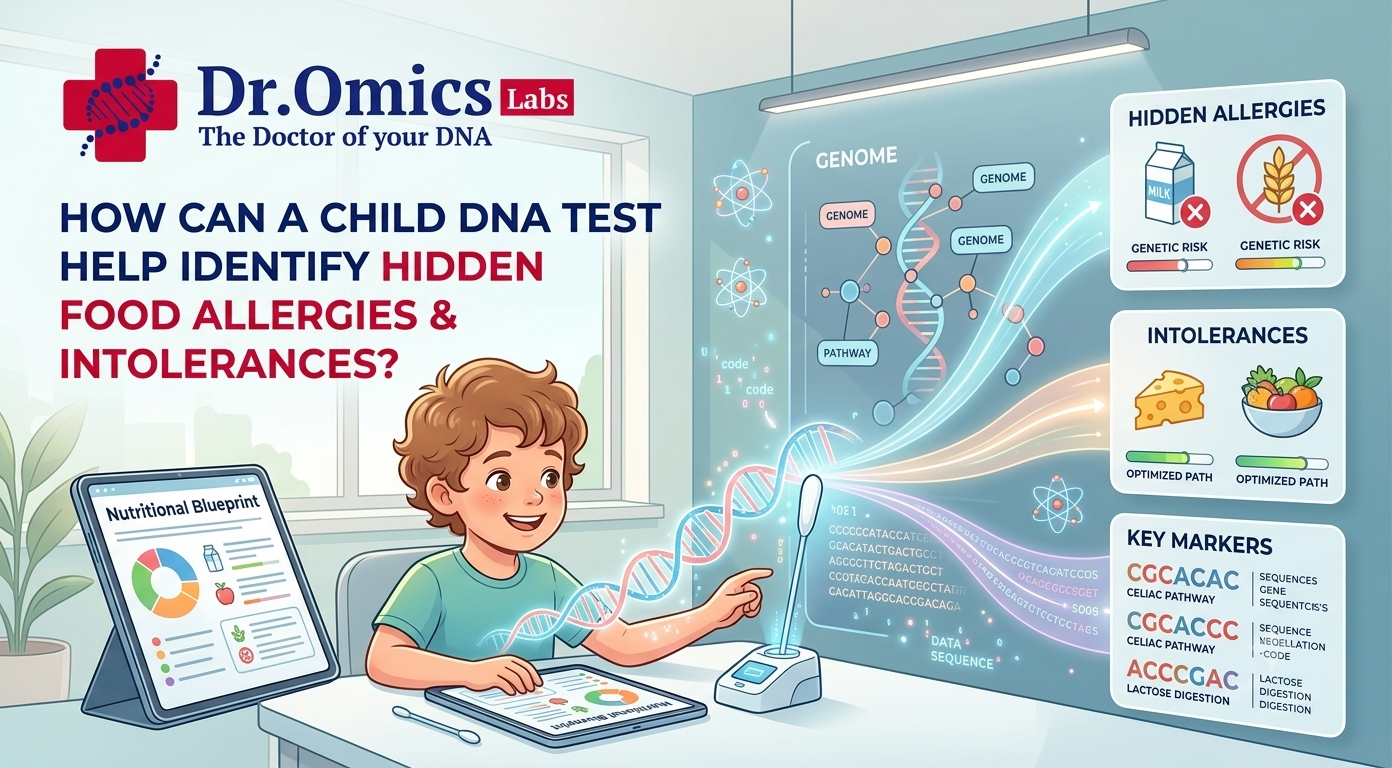
Mealtimes should be a space for connection, but for many parents, they turn into a source of stress. When a child struggles with frequent stomach aches, unexpected skin rashes, or persistent lethargy, finding the root cause can feel like guesswork. Often, these subtle signs point toward hidden dietary sensitivities.
Fortunately, pediatric genomics has stepped up. Understanding what can a child DNA test reveal allows us to peek into your child’s distinct biological makeup, helping you proactively distinguish between temporary pickiness and legitimate, gene-linked food sensitivities.
The Basics: How Does Pediatric Genetic Testing Work?
If you are new to genomic health, your first question is likely: how does pediatric genetic testing work? Unlike complex medical procedures, it is remarkably simple. Modern testing usually relies on a non-invasive, quick cheek swab or saliva kit.
Simple Cheek Swab ──> Targeted DNA Sequence Lab Analysis ──> Actionable Nutritional Insights
Is DNA Testing Safe for Children?
Parents often wonder: is DNA testing safe for children? Yes, because at-home collection kits are entirely non-invasive, painless, and pose zero physical risk to your little one. When evaluating if are kids DNA tests reliable, accuracy hinges on choosing clinical-grade labs. While a wellness panel won’t replace standard skin-prick diagnostic tools, it is exceptionally dependable for mapping out inherited metabolic pathways, such as identifying a genetic predisposition to lactose intolerance in kids.
Decoding Picky Eating, Allergies, and Weight Regimes
Genetics provide a unique look into your child’s plate dynamics, illuminating issues that standard elimination diets can easily miss.
1. The TAS2R38 “Picky Eater” Gene
If your child throws a tantrum over broccoli or spinach, it might not be a behavioral issue. An introduction to the TAS2R38 picky eater gene reveals that certain children inherit a high sensitivity to bitter thiourea compounds found in cruciferous vegetables. To a child carrying this variant, greens taste intensely bitter. Knowing this allows you to personalize cooking techniques—like roasting or masking bitterness—instead of forcing an uphill battle.
2. Can a DNA Test Identify Child Allergies?
It is essential to separate a true IgE-mediated food allergy from an inherited food intolerance. While standard allergies require an immunologist, genetic profiling determines whether your child has the genetic markers (like HLA-DQ2/DQ8) linked to celiac disease or low enzyme production leading to dairy sensitivities.
3. Growth, Development, and Metabolic Health
A comprehensive look at how does DNA help child growth shows that genetic pathways dictate how your child metabolizes macronutrients, absorbs bone-building Vitamin D, and regulates energy expenditure. A panel can also indicate if a child carries variants that elevate their child obesity risk, giving you the foresight to build active lifestyle habits early.
Clinical Boundaries and Doctor Recommendations
When exploring what conditions a child DNA test can screen for, it helps to separate everyday wellness testing from deep clinical diagnostics.
- Advanced Screenings: Technologies like is whole exome sequencing for kids or a chromosomal microarray test are comprehensive diagnostic options. These are deployed primarily if doctors need to detect developmental delays in children or find root causes for complex congenital conditions.
- Medical Guidelines: Parents often look to the AAP guidelines for child DNA testing. The American Academy of Pediatrics highlights that childhood genetic screening should prioritize the immediate, actionable best interest of the child. Because of this, is genetic testing for children recommended by doctors? Yes, when tailored to practical health interventions. Pediatricians routinely advocate for early metabolic screening to map out optimal developmental paths.
Setting Up Success: Age, Costs, and Communication
There is no single “perfect” timeline, but determining what age is best for child genetic testing depends on your goals. Wellness and nutritional profiling can safely be done at any stage of infancy or childhood to help personalize child nutrition with DNA.
When planning your budget, remember that how much does child DNA test cost varies widely. Simple at-home metabolic or nutritional swabbing kits generally run between $100 and $300, whereas deep clinical whole exome sequencing via a medical provider can cost significantly more.
Finally, if your child is old enough to ask questions, knowing how to explain a DNA test to a child keeps the process fun. Frame it as an exciting discovery mission: “We are taking a quick, soft swipe of your cheek to find your body’s secret instruction book, so we know exactly what superfoods make you grow tallest and strongest!”
By decoding your child’s DNA, you stop relying on generic health advice and build a personalized roadmap tailored to their unique biology.

