
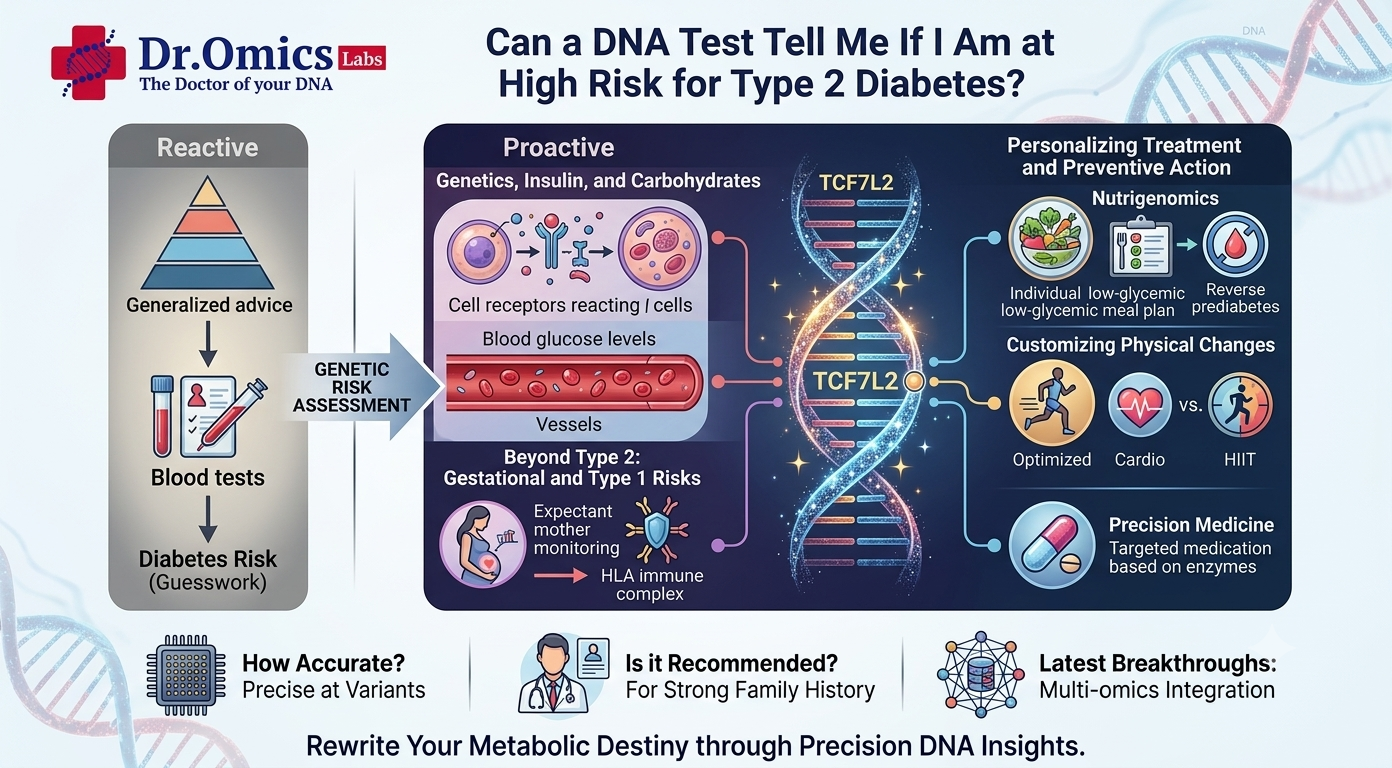
For millions of people worldwide, diabetes feels like an invisible shadow. If you have a family history of the condition, it’s entirely normal to worry about your future health. You might find yourself wondering: how does family history affect diabetes genes, and can DNA predict Type 2 diabetes risk before blood sugar levels ever begin to creep upward?
The short answer is yes. While your DNA is not a definitive crystal ball, a modern genetic risk assessment can map out your structural vulnerabilities. By shifting your mindset from reactive treatment to proactive prevention, genetic insights can give you the exact blueprint needed to rewrite your metabolic destiny.
The Biological Link: Genes, Insulin, and Carbohydrates
To understand what is genetic testing for diabetes, it helps to look at how specific variations alter your internal biochemistry. Type 2 diabetes is fundamentally a disease of cellular communication, heavily dictated by your genetic makeup.
- Insulin Resistance: A primary factor evaluated by these tests is how does genetics affect insulin sensitivity. Specific genetic markers dictate how effectively your cell receptors respond to insulin signals. When mutations disrupt these pathways, DNA tests can show insulin resistance long before clinical symptoms emerge.
- Carbohydrate Metabolism: Your genetic framework heavily regulates what genes affect carbohydrate metabolism. Variations determine how rapidly your body breaks down starches, processes glucose, and stores excess energy as fat.
- The TCF7L2 Gene: If you look at a diabetes genomic panel, one marker stands out above the rest: the TCF7L2 gene. So, what is TCF7L2 gene for diabetes? It is currently recognized as the single strongest common genetic risk factor for Type 2 diabetes. Variations in TCF7L2 impair insulin secretion and blood glucose clearance, significantly increasing an individual’s susceptibility.
Beyond Type 2: Tracing Gestational and Type 1 Risks
A comprehensive profile does not just look at standard Type 2 risks. Depending on your life stage, panels can highlight a elevated gestational diabetes risk, helping expectant mothers tailor their clinical monitoring early in pregnancy.
Furthermore, while Type 2 diabetes is metabolic and lifestyle-driven, panels can also screen for what genetic markers for Type 1 diabetes are present—such as specific HLA gene complexes—which flag an autoimmune predisposition rather than insulin resistance.
Personalizing Treatment and Preventive Action
The real magic of genetic testing isn’t just knowing your risks; it’s knowing exactly what to do about them.
Tailoring Diets via Nutrigenomics
Many individuals ask, can nutrigenomics reverse prediabetes? While genetics alone cannot cure a condition, the science of nutrigenetics allows you to can DNA test guide diabetes diet parameters perfectly. If your profile shows a sluggish carbohydrate pathway, your customized plan might shift you toward specific low-glycemic, fiber-dense fuel sources, effectively halting or reversing prediabetes.
Customizing Physical Changes
Knowing your markers helps clarify exactly what lifestyle changes for diabetes genes will yield the highest impact. Your DNA can reveal whether your body responds optimally to high-intensity interval training (HIIT) or steady-state endurance exercise to clear blood glucose. This completely removes the trial-and-error approach to health, showing you exactly how to prevent diabetes with DNA insights.
Precision Medicine and Pharmacogenomics
If management requires medical intervention, how to personalize diabetes treatment with DNA becomes vital. Through pharmacogenomics, doctors can determine which diabetes medication based on DNA will work most efficiently for your unique liver enzymes and receptors, proving that is pharmacogenomics for diabetes effective at reducing adverse drug reactions and accelerating glycemic control.
Realities, Reliability, and Next Steps
Before purchasing a kit, it is important to address a few practical questions:
- How accurate are diabetes genetic tests? Modern microarray technology is incredibly precise at identifying specific variants (SNPs). However, because lifestyle, diet, and physical parameters play massive roles, your DNA cannot accurately determine diabetes onset age.
- Is diabetes genetic testing recommended? While routine screening relies on traditional HbA1c blood work, doctors increasingly support genomic testing for patients with strong family histories to guide behavioral modifications early.
- What are the latest breakthroughs in diabetes genomics? The frontier of metabolic science involves integrating real-time multi-omics, matching genomic risk with proteomics and continuous biomonitoring to intercept metabolic decline at a cellular level.
By trading a reactive mindset for precise genetic foresight, you can stop guessing about your metabolic future and actively engineer a healthier, longer life.

