
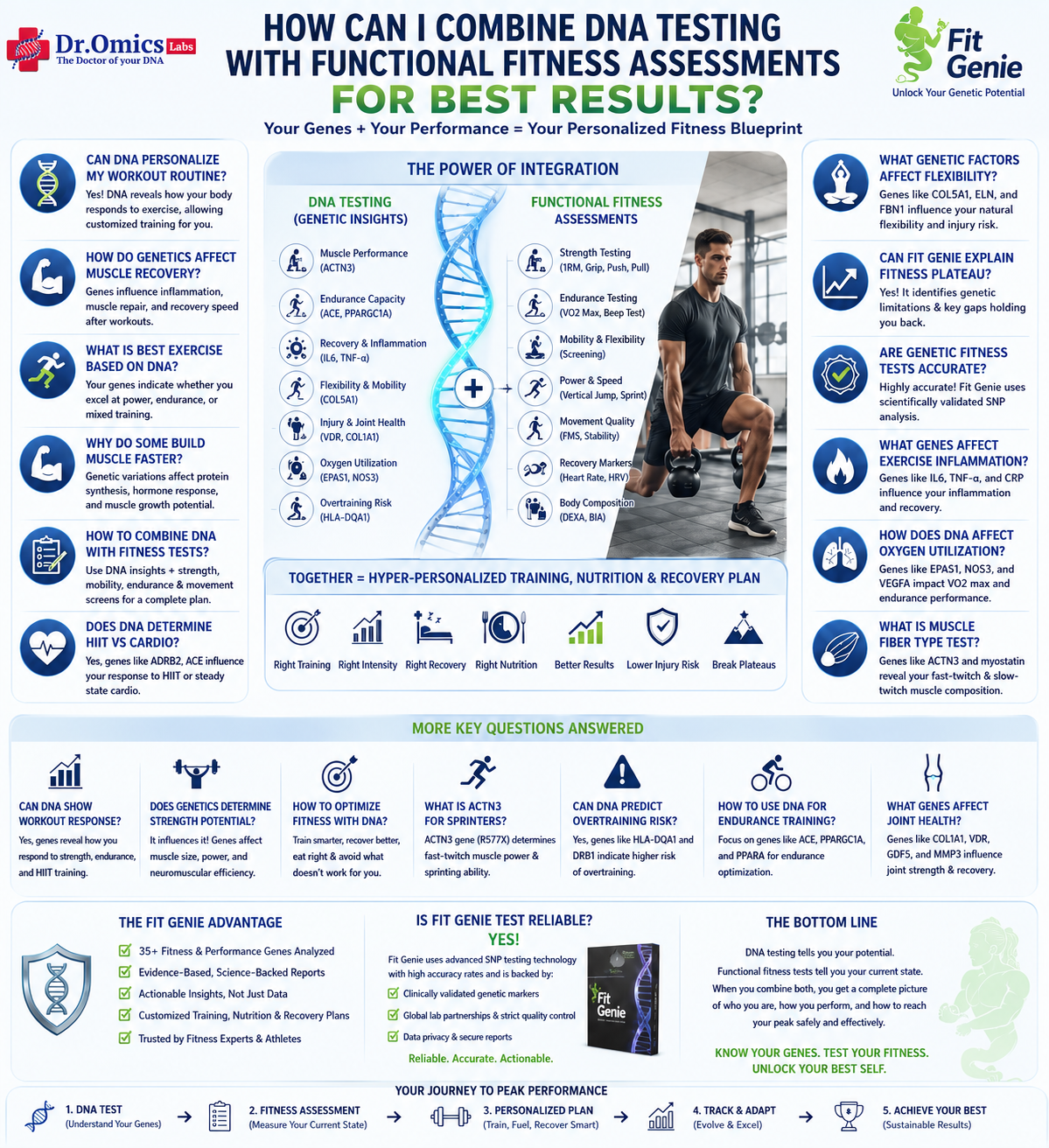
Fitness is no longer about following generic workout plans. By combining DNA testing with functional fitness assessments, you can create a personalized strategy that matches your body’s unique strengths, recovery patterns, and long-term goals. Instead of relying on trial and error, this approach helps you train smarter, recover faster, and reduce injury risk.
One of the most common questions people ask is, can DNA personalize my workout routine? The answer is yes. Genetic testing analyzes markers associated with muscle performance, endurance, recovery, flexibility, inflammation, and metabolism. While your genes don’t determine your destiny, they provide valuable insights into how your body is likely to respond to different types of exercise.
Many people also wonder, how do genetics affect muscle recovery? Certain genes influence inflammation, collagen production, and tissue repair. These variations help explain why some individuals recover quickly after intense workouts, while others require longer recovery periods. Understanding your genetic recovery profile allows you to schedule training more effectively and avoid burnout.
Another frequent question is, what is the best exercise based on DNA? DNA can indicate whether you’re naturally inclined toward explosive power, endurance, or a balanced combination. It may also suggest does DNA determine HIIT vs cardio preferences. While training adaptations occur regardless of genetics, knowing your natural tendencies helps optimize your program.
If you’ve ever wondered why do some build muscle faster, genetics plays a role alongside nutrition and consistency. Variations in genes related to muscle growth, protein synthesis, and hormone response contribute to differences in strength and muscle development. Likewise, does genetics determine strength potential isn’t a simple yes or no—but it can influence how efficiently your body responds to resistance training.
The real advantage comes from learning how to combine DNA with fitness tests. Functional fitness assessments measure your current mobility, strength, flexibility, cardiovascular fitness, balance, and movement quality. DNA testing predicts your potential, while fitness assessments measure your present performance. Together, they create a complete picture that guides personalized exercise, nutrition, and recovery strategies.
Many athletes ask, what is muscle fiber type test and what is ACTN3 for sprinters? The ACTN3 gene is often associated with fast-twitch muscle fibers that support sprinting and explosive movements. Knowing your muscle fiber tendencies can help determine the ideal balance between strength training and endurance work.
Your DNA may also answer questions like what genes affect exercise inflammation, how does DNA affect oxygen utilization, and what genes affect joint health. Genes involved in inflammatory response, oxygen transport, collagen formation, and connective tissue health influence recovery, endurance, and injury susceptibility. Similarly, what genetic factors affect flexibility can explain why mobility varies between individuals.
If you’ve reached a training plateau, you might ask, can Fit Genie explain fitness plateau or can DNA show workout response. By identifying genetic factors that influence adaptation, recovery, and training responsiveness, Fit Genie helps refine your fitness strategy instead of relying on guesswork. Many users also ask, can DNA predict overtraining risk and how to use DNA for endurance training. While genetics cannot predict every outcome, they can highlight tendencies that support smarter recovery planning and endurance programming.
Finally, are genetic fitness tests accurate and is Fit Genie test reliable? When based on scientifically validated genetic markers and combined with professional interpretation, DNA fitness testing offers meaningful, evidence-based insights. However, the greatest results come when genetic information is paired with regular functional fitness assessments, healthy nutrition, quality sleep, and consistent training.
Combining DNA testing with functional fitness assessments transforms fitness from a one-size-fits-all approach into a personalized roadmap. By understanding both your genetic blueprint and your current physical capabilities, you can optimize performance, improve recovery, prevent injuries, and build a sustainable fitness plan designed specifically for you.

