
For millions managing or at risk for Type 2 diabetes, the standard treatment path has traditionally been one of trial and error. You start with a common frontline medication, monitor your HbA1c, and adjust if it fails to yield results. However, modern metabolic science is shifting away from this one-size-fits-all model. By discovering how to personalize diabetes treatment with DNA, clinicians can now determine the most effective path toward glycemic control right from the start.
Understanding Your Blueprint: The Genetic Basis of Diabetes
To understand how your body responds to treatment, it helps to understand what is genetic testing for diabetes and what it reveals. A comprehensive metabolic panel analyzes how variation across your genome alters cellular communication and metabolic pathways.
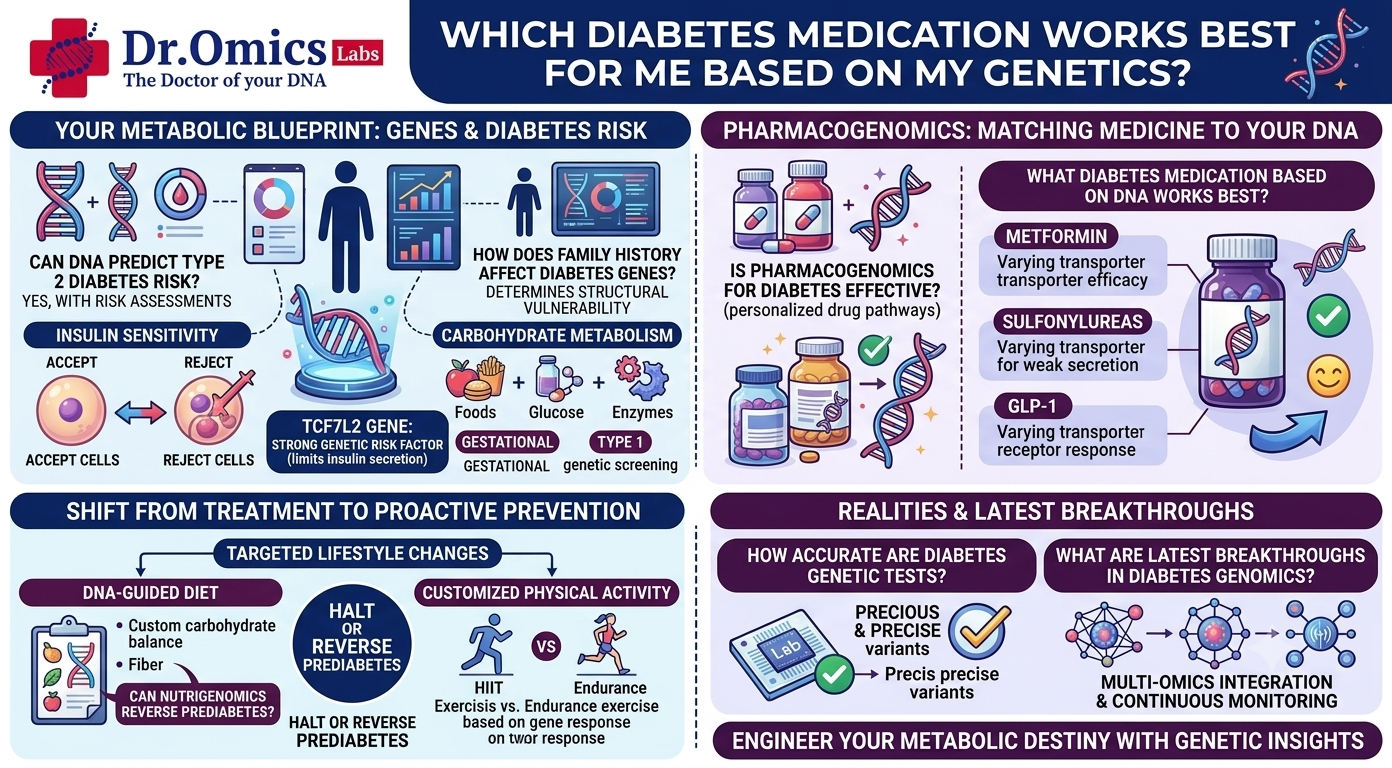
For instance, testing evaluates how does genetics affect insulin sensitivity and can DNA show insulin resistance before blood sugar levels begin to creep upward. Genetic markers dictate how effectively your cell receptors bind to insulin and clear glucose from your bloodstream. Additionally, a panel clarifies what genes affect carbohydrate metabolism, illustrating how rapidly your body breaks down starches and stores excess energy.
When evaluating a metabolic profile, specific markers stand out. If you look closely at a genomic report, the most significant factor is often the TCF7L2 gene. So, what is TCF7L2 gene for diabetes? It is recognized as the single strongest common genetic risk factor for Type 2 diabetes. Variations in TCF7L2 directly impair insulin secretion, altering how your pancreas responds to dietary glucose. Beyond Type 2, a complete profile screens for what genetic markers for Type 1 diabetes are present (such as specific HLA complexes) and evaluates if a patient carries an elevated can DNA show gestational diabetes risk.
Pharmacogenomics: Matching Medication to Your DNA
If lifestyle modifications alone are insufficient, discovering which diabetes medication based on DNA will work most efficiently becomes vital. This is where the science of pharmacogenomics provides clinical clarity.
Is pharmacogenomics for diabetes effective? Yes. Pharmacogenomics evaluates how your unique genetic variants alter drug metabolism, liver enzyme pathways, and receptor sensitivity.
- Metformin: The most common first-line drug can have wildly varying efficacy based on variations in organic cation transporters (like SLC22A1). Your DNA determines whether Metformin will efficiently lower your blood sugar or trigger heavy gastrointestinal side effects.
- Sulfonylureas: Individuals with specific variants in the TCF7L2 gene or KCNJ11 might respond poorly to certain secretagogues because their underlying genetic architecture already limits pancreatic insulin secretion.
- GLP-1 Receptor Agonists & DPP-4 Inhibitors: Genetic variations in the GLP1R gene dictate how robustly your body responds to modern weight-management and glucose-lowering therapies.
Shifting from Treatment to Proactive Prevention
The true power of genetic insights lies in catching metabolic decline early. If you have a strong family history, you might wonder: how does family history affect diabetes genes, and can DNA predict Type 2 diabetes risk early? While a test can map structural vulnerabilities, it is important to remember that lifestyle plays an enormous role. Because behavioral parameters are so influential, a test cannot definitively state: does DNA determine diabetes onset age.
Instead, a genomic blueprint teaches you how to prevent diabetes with DNA insights through highly targeted lifestyle shifts:
- Precision Diets: Many individuals ask, can nutrigenomics reverse prediabetes? While genetics alone isn’t a cure, the science of nutrigenetics shows how a can DNA test guide diabetes diet choices perfectly. If your profile shows sluggish carbohydrate clearance, your custom plan might prioritize specific low-glycemic, fiber-dense fuel sources to stall insulin resistance.
- Targeted Exercise: Your DNA reveals whether high-intensity interval training (HIIT) or steady-state endurance exercise will yield the highest impact on your specific glucose transporters, establishing the exact what lifestyle changes for diabetes genes will work best for you.
Realities and Next Steps
Before purchasing a kit, consider the clinical consensus. How accurate are diabetes genetic tests? Modern microarray technology is highly precise at identifying specific variants (SNPs). While traditional blood work like HbA1c remains the primary tool for diagnostic checking, is diabetes genetic testing recommended? Doctors increasingly support metabolic genomic panels for patients with strong family histories to guide early, precise interventions.
The what are latest breakthroughs in diabetes genomics involve combining polygenic risk scores with multi-omics and continuous biomonitoring. By trading a reactive approach for precise genetic foresight, you can stop guessing about your metabolic health and choose the exact path your body needs.

