
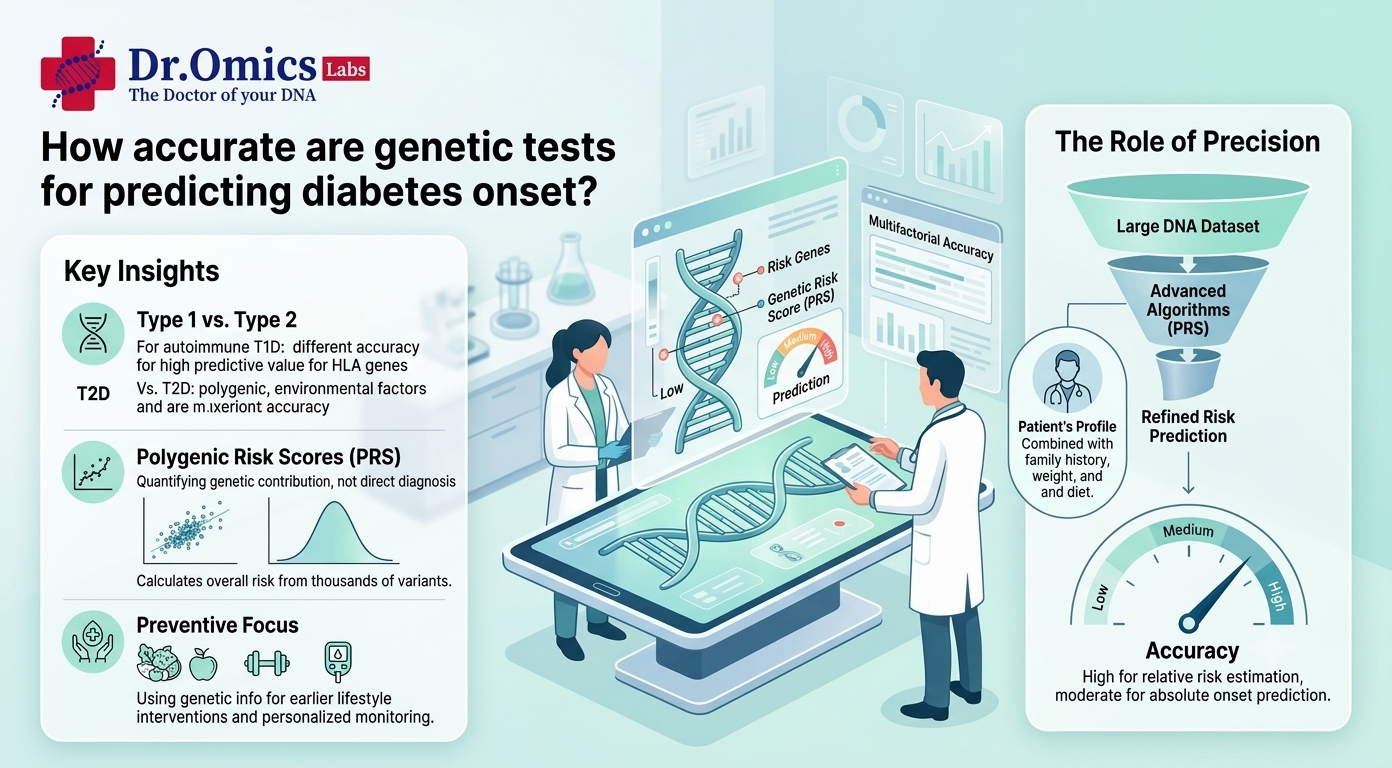
Diabetes is influenced by a combination of genetics, lifestyle, and environmental factors. With advances in genomics, many people ask, what is genetic testing for diabetes, can DNA predict Type 2 diabetes risk, and how accurate are diabetes genetic tests? While genetic testing provides valuable insights into inherited risk, it cannot predict with certainty whether someone will develop diabetes.
Understanding Genetic Risk for Diabetes
Scientists have identified hundreds of genetic variants linked to diabetes. One of the most studied is the TCF7L2 gene. If you’ve wondered what is TCF7L2 gene for diabetes, it is a gene associated with insulin production and glucose regulation. Certain variants significantly increase the likelihood of developing Type 2 diabetes, although lifestyle remains a major determining factor.
Genetic testing can also identify what genetic markers for Type 1 diabetes are present. Variants in HLA genes increase susceptibility to autoimmune diabetes, but not everyone carrying these markers develops the disease.
Can DNA Predict Type 2 Diabetes Risk?
The answer is yes—but only partially. Can DNA predict Type 2 diabetes risk depends on evaluating multiple genetic variants through a polygenic risk score. These scores estimate inherited susceptibility rather than providing a diagnosis.
Similarly, many people ask, does DNA determine diabetes onset age. Genetics can influence the likelihood of earlier disease development, but factors such as body weight, physical activity, sleep quality, and diet strongly modify that timeline.
Genetics and Insulin Function
Researchers continue studying how does genetics affect insulin sensitivity and can DNA show insulin resistance. Certain genes influence how efficiently cells respond to insulin, while others affect pancreatic beta-cell function.
Additionally, what genes affect carbohydrate metabolism includes genes involved in glucose transport, fat metabolism, and insulin signaling. These genetic insights help explain why different individuals respond differently to identical diets.
Can DNA Help Prevent Diabetes?
Genetic information becomes most valuable when combined with preventive healthcare. Many people ask how to prevent diabetes with DNA insights or what lifestyle changes for diabetes genes.
A genetic report may recommend:
- Maintaining a healthy body weight
- Following a balanced, lower-glycemic eating pattern
- Exercising regularly
- Improving sleep quality
- Monitoring blood sugar earlier if risk is elevated
Some individuals also wonder, can nutrigenomics reverse prediabetes. Nutrigenomics cannot reverse diabetes by itself, but personalized nutrition based on genetic predisposition may improve metabolic health when combined with healthy lifestyle changes.
Likewise, can DNA test guide diabetes diet by identifying tendencies toward carbohydrate sensitivity or fat metabolism, allowing nutrition plans to be better personalized.
Pharmacogenomics and Personalized Treatment
Another exciting field is pharmacogenomics. Patients often ask which diabetes medication based on DNA and is pharmacogenomics for diabetes effective.
Genetic testing may help healthcare providers understand how certain individuals respond to medications such as metformin or sulfonylureas. Although pharmacogenomics is not yet standard practice for every diabetes patient, research continues to improve how to personalize diabetes treatment with DNA.
Pregnancy and Family History
Researchers are also investigating can DNA show gestational diabetes risk. Certain genetic variants may increase susceptibility during pregnancy, although age, weight, and pregnancy-related hormonal changes remain important contributors.
People frequently ask how does family history affect diabetes genes. Family history reflects both shared genetics and shared lifestyle habits, making it one of the strongest indicators of future diabetes risk.
Latest Advances in Diabetes Genomics
The latest breakthroughs in diabetes genomics include AI-powered polygenic risk scoring, whole genome sequencing, precision nutrition, and improved pharmacogenomic research. These innovations are helping physicians identify high-risk individuals earlier and develop more personalized prevention strategies.
Final Thoughts
So, is diabetes genetic testing recommended? Genetic testing is not a standalone diagnostic tool, but it can provide meaningful information about inherited risk, insulin function, medication response, and personalized prevention strategies. When combined with family history, clinical screening, and healthy lifestyle choices, genetic insights become a powerful tool for proactive diabetes management.
Ultimately, while DNA does not determine your future, understanding your genetic profile can help you make informed decisions that reduce risk and support long-term metabolic health.

