
Elite athletes and fitness enthusiasts are increasingly turning to genetics to improve their training. But can DNA improve athletic performance? While genetics isn’t the only factor behind success, a sports DNA test can provide valuable insights into your body’s strengths, recovery patterns, and injury risks, allowing you to train smarter rather than harder.
Understanding Sports DNA Testing
A sports DNA test analyzes specific genetic markers linked to fitness, endurance, strength, recovery, and injury susceptibility. Many athletes ask, what is the best DNA test for athletes? The answer depends on the company and the number of scientifically validated genetic markers it examines. The most reliable tests focus on evidence-backed genes associated with athletic performance.
Can DNA Improve Athletic Performance?
The short answer is yes—but indirectly. Rather than creating talent, DNA testing helps personalize training. If you’ve ever wondered, does genetics determine ideal workout, the answer is that genetics can indicate how your body responds to different exercise styles.
For example, some people respond better to strength training, while others excel in endurance sports. Knowing this helps athletes optimize workouts and reduce unnecessary fatigue.
What Is ACTN3 Speed Gene?
One of the most researched genes in sports science is the ACTN3 gene, often called the ACTN3 speed gene. This gene influences fast-twitch muscle fibers responsible for explosive movements like sprinting, jumping, and weightlifting.
Many athletes ask, can DNA show fast twitch muscle fibers? While a DNA test doesn’t directly measure muscle fibers, ACTN3 variants provide clues about your natural muscle composition.
How Does Genetics Affect Muscle Growth?
Another common question is how does genetics affect muscle growth. Genes influence protein synthesis, muscle repair, hormone regulation, and recovery. Similarly, what genes affect strength training depends on several markers that regulate muscle development and adaptation.
This information helps trainers create personalized strength programs instead of using a one-size-fits-all approach.
What Genetic Markers Predict Endurance?
Endurance performance is also influenced by genetics. Athletes often ask, what genetic markers predict endurance or what is VO2max genetics. Certain genes are associated with oxygen utilization, cardiovascular efficiency, and aerobic capacity.
Although training significantly improves endurance, genetic insights help identify which endurance strategies may produce better results.
Can DNA Tests Prevent Sports Injuries?
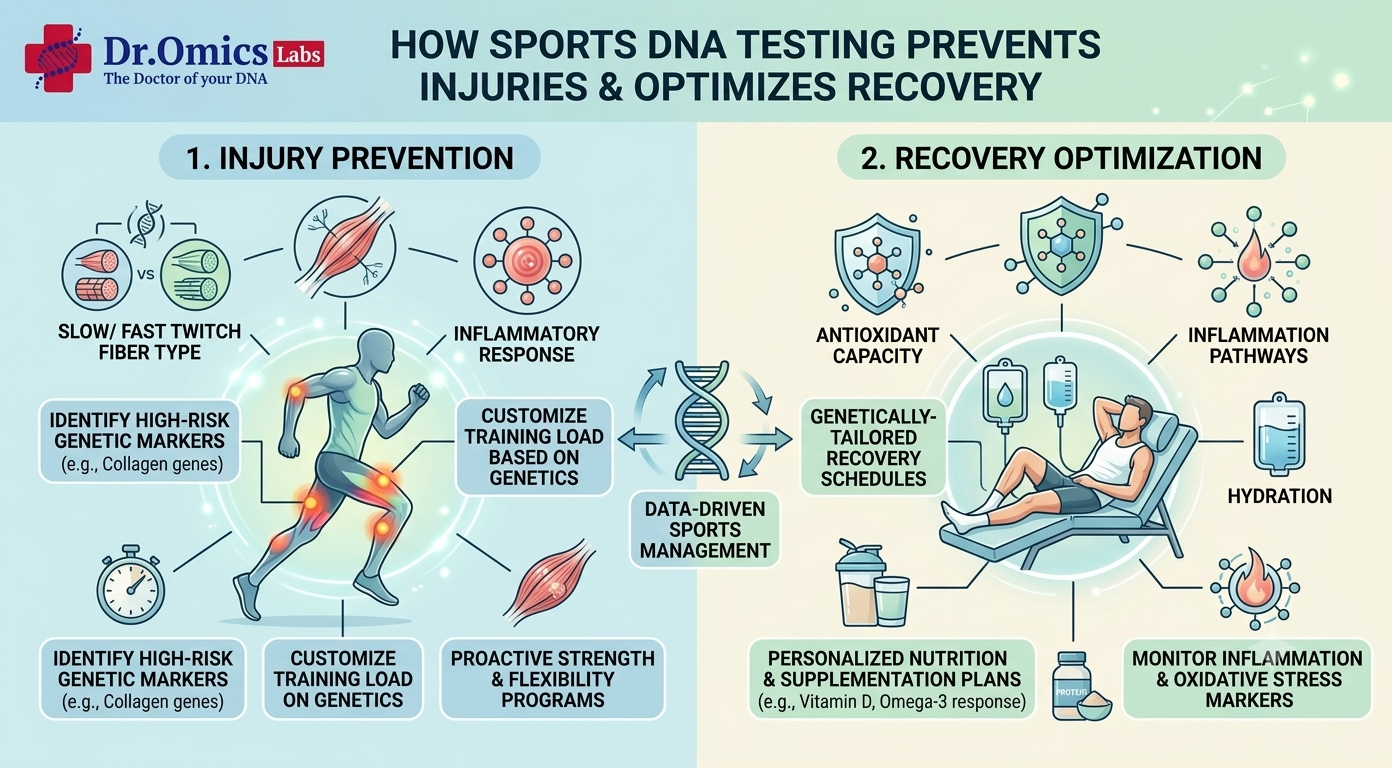
One of the biggest advantages of sports DNA testing is injury prevention. Many athletes ask, can DNA test prevent sports injuries? While no test can completely eliminate injuries, it can identify inherited risks related to tendon strength, collagen production, inflammation, and joint stability.
For example, can DNA predict ACL injury risk? Research suggests that certain collagen-related genetic variants may increase susceptibility to ligament injuries, including ACL tears. Coaches can then adjust training loads, improve movement mechanics, and include preventive strengthening exercises.
How Does Genetics Affect Recovery Time?
Recovery is just as important as training. How does genetics affect recovery time depends on genes involved in inflammation, oxidative stress, and tissue repair. Athletes who recover more slowly can benefit from longer rest periods, recovery nutrition, and personalized training schedules.
If you’re wondering how to optimize training with DNA, recovery data is one of the most valuable insights a genetic test can provide.
Can DNA Tests Show Exercise Response?
Everyone responds differently to exercise. Can DNA tests show exercise response? Yes, certain genetic markers indicate how efficiently your body adapts to aerobic exercise, resistance training, or high-intensity workouts, making personalized fitness plans more effective.
Is Sports DNA Testing Accurate?
A common concern is is sports DNA testing accuracy. Modern genetic tests accurately identify DNA variants. However, interpreting those results requires scientific expertise because performance also depends on nutrition, sleep, coaching, motivation, and consistent training.
Another emerging area is genetic doping detection, where sports organizations use genetic science to identify illegal genetic modifications that could unfairly enhance athletic performance.
Final Thoughts
So, why athletes take DNA tests is no longer a mystery. Sports DNA testing provides personalized insights into strength, endurance, recovery, flexibility, and injury risk. While how much of performance is genetic varies, genes are only one part of the equation. Lifestyle, training, and mindset remain equally important.
Whether you’re curious about whether DNA affects flexibility, improving muscle growth, or learning how to use DNA for injury prevention, sports DNA testing can help create a smarter, safer, and more personalized fitness journey.

