
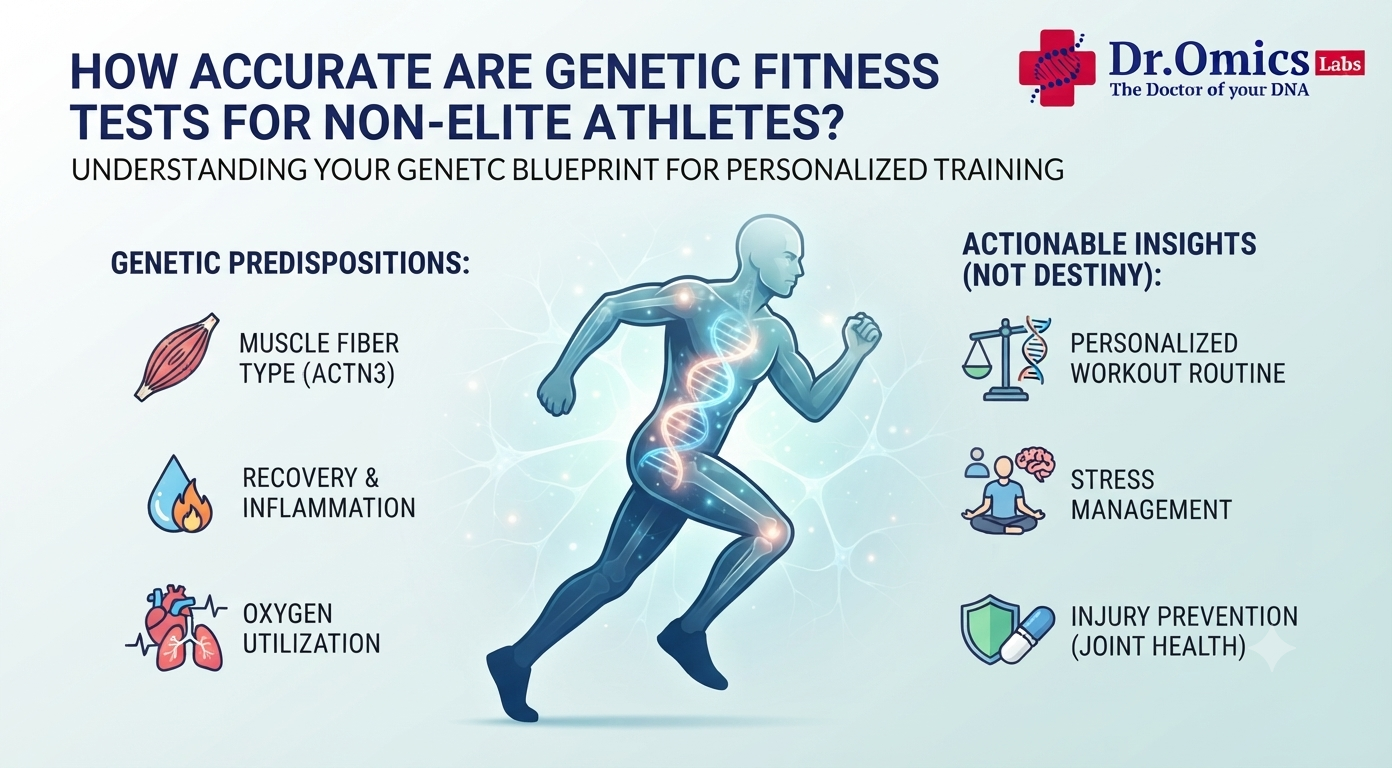
In the modern fitness landscape, the allure of “precision training” is stronger than ever. Many non-elite athletes are turning to genetic testing to understand their biological blueprints, hoping to move beyond trial-and-error and find the best exercise based on DNA. But as you seek to optimize fitness with DNA, it is crucial to distinguish between actionable insights and marketing hype.
The Science Behind the Blueprint
Every individual possesses a unique genetic code that influences physiological traits like muscle fiber composition and recovery capacity. For example, the ACTN3 gene for sprinters is a well-studied marker; specific variants can indicate a predisposition toward explosive power or endurance. Similarly, understanding your muscle fiber type test results can clarify whether your body naturally leans toward high-intensity power movements or sustained aerobic activities.
However, the question remains: are genetic fitness tests accurate for the average person? While scientific research has identified numerous genetic associations with physical traits—such as how genetics affect muscle recovery, what genes affect joint health, and how does DNA affect oxygen utilization—the current consensus is that these tests cannot deterministically predict athletic outcomes. Athletic performance is a complex polygenic trait influenced by thousands of variants, alongside training history, nutrition, and environmental factors.
Using DNA for Personalized Fitness
If these tests cannot predict whether you will be an Olympic athlete, can they still be useful? Many proponents argue that while they shouldn’t be used for talent identification, they can provide a framework to personalize your workout routine.
- Recovery and Overtraining: Genetic markers, such as those related to inflammation (e.g., IL6), can influence your recovery speed. Knowing your predisposition can help you manage your overtraining risk and schedule rest days more effectively.
- Training Modality: Does DNA determine HIIT vs cardio? While lifestyle and goals are paramount, understanding your genetic profile can help you decide how to balance different training styles to achieve your specific objectives.
- Explaining Plateaus: If you are frustrated by progress, can Fit Genie explain fitness plateau? By looking at markers for mitochondrial function and oxidative stress, a genetic report might highlight why your body struggles to adapt to certain stimulus types, allowing for smarter adjustments.
Navigating Reliability and Expectations
When considering if a Fit Genie test is reliable, it is important to understand that the field of direct-to-consumer (DTC) genetic testing for fitness is still maturing. Scientific bodies have cautioned that some companies may misrepresent the current level of knowledge for commercial gain.
To effectively combine DNA with fitness tests, treat your genetic report as one tool in your kit—not a rigid set of rules. Your fitness journey should always include:
- Professional Guidance: Use these insights in consultation with trainers or healthcare providers who can interpret the data in the context of your overall health and goals.
- Listen to Your Body: Genetics provide tendencies, not destinies. If a recommended workout feels wrong, prioritize your body’s real-time feedback over a genetic report.
- Consistency: Regardless of your DNA, progressive overload and deliberate practice remain the primary drivers of physical improvement.
Conclusion
Genetic fitness tests offer an exciting, data-driven window into your biological predispositions. They can help you understand why some build muscle faster, identify potential areas for injury prevention, and refine your approach to recovery. However, these tests are not “magic bullets.” For the non-elite athlete, they are most useful as a starting point for dialogue with fitness professionals rather than a replacement for structured, consistent training. By viewing your DNA as a guide rather than a rulebook, you can use these insights to train smarter, stay injury-free, and ultimately find more joy in your fitness journey.

