
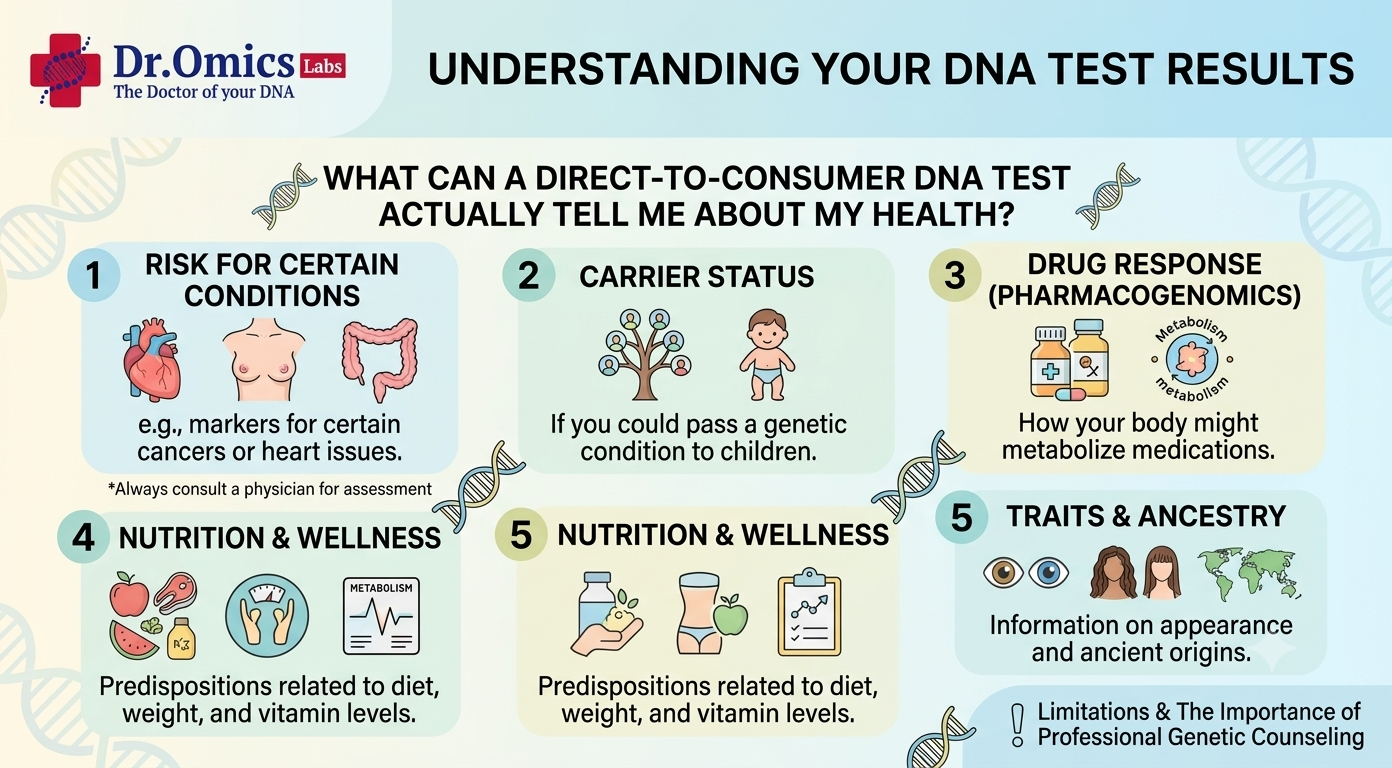
In recent years, the direct-to-consumer (DTC) genetic testing market has grown rapidly, making it easier than ever to explore your genetic code from the comfort of home. With just a quick cheek swab or saliva sample, at-home DNA test kits offer a fascinating peek into your heritage, biological traits, and potential wellness markers.
However, before clicking “buy” on an online DNA test kit, it is crucial to understand what these tests actually deliver—and where their limitations lie.
What Do DTC DNA Tests Cover?
When asking, “What can direct-to-consumer DNA test tell me?”, the answer depends heavily on the specific kit you purchase. Most commercial products fall into three main categories:
- Ancestry and Ethnicity: Pinpointing your geographic origins and connecting you with distant biological relatives.
- Health and Disease Predispositions: Identifying potential genetic risks for conditions such as Alzheimer’s, Parkinson’s, or specific hereditary heart conditions.
- Trait and Wellness Reports: Exploring non-clinical traits like sleep patterns, caffeine sensitivity, and muscle composition.
Can Consumer DNA Tests Show Diabetes Risk or Heart Conditions?
Yes, certain test kits evaluate genetic variants associated with Type 2 diabetes or cardiovascular health. However, are heart DNA test kits accurate enough to diagnose disease?
The short answer is no. A consumer genomics report only highlights increased predispositions. Having a high-risk gene variant does not mean you will develop the condition, just as missing a variant does not guarantee immunity.
Emerging Trends: Can Hair DNA Test Show Deficiencies?
As at-home health testing evolves, many people wonder what is hair DNA analysis used for and can hair DNA test show deficiencies in vitamins or minerals.
In clinical genetics, hair root bulbs can provide DNA samples. However, wellness hair kits that claim to analyze hair strands for mineral deficiencies, food intolerances, or metabolic health are generally not true genetic tests. Mineral levels in hair reflect environmental exposures and diet rather than genetic code, and these tests lack medical validation compared to standard blood panels.
Risks, Limitations, and Ethical Concerns of DTC Testing
Before deciding, “Should I buy a DNA test kit online?“, you must weigh both the benefits and the potential drawbacks.
1. Accuracy and Limitations
Understanding what are limitations of at home DNA tests prevents misinterpretation. Are at home DNA test kits reliable? They are reliable for non-medical self-exploration, but they should never replace standard medical screenings or clinical lab work.
2. Privacy and Security: Is Consumer Genomics Safe?
Privacy is one of the primary ethical concerns of DTC testing. When you submit your genetic data online, you must review how the company stores, shares, or sells your anonymized biological data to third-party researchers or law enforcement agencies.
3. Unexpected Discoveries
A major consideration is whether consumer genomics can reveal family secrets. Many individuals discover undisclosed adoption, unknown siblings, or non-paternity events, which can be emotionally overwhelming.
4. Interpretation and Misleading Results
Learning how to interpret consumer DNA results without professional guidance is difficult. False positives or false reassurances can lead to unnecessary anxiety or a false sense of security.
This is why genetic counseling is important for DTC testing: a board-certified genetic counselor helps contextualize raw data, separate lifestyle factors from genetic risk, and determine if follow-up clinical testing is needed.
What to Consider Before Buying a DNA Kit
If you are evaluating what to consider before buying DNA kit, keep these questions in mind:
- What is your goal? Are you looking for fun ancestry facts or actionable health insights?
- Can DTC test guide lifestyle changes? Yes, learning about trait predispositions can motivate better nutrition, regular exercise, and proactive routine checkups.
- Are you prepared for the data? Ensure you are comfortable with potential privacy risks and unexpected family findings.
Conclusion
Direct-to-consumer DNA tests are powerful tools for self-discovery, offering a accessible glimpse into your ancestry, traits, and general health predispositions. However, they are not diagnostic medical tools. To protect your privacy and physical health, treat DTC testing as an educational starting point rather than a medical final answer—and always consult a healthcare professional or genetic counselor to interpret significant health findings.

