
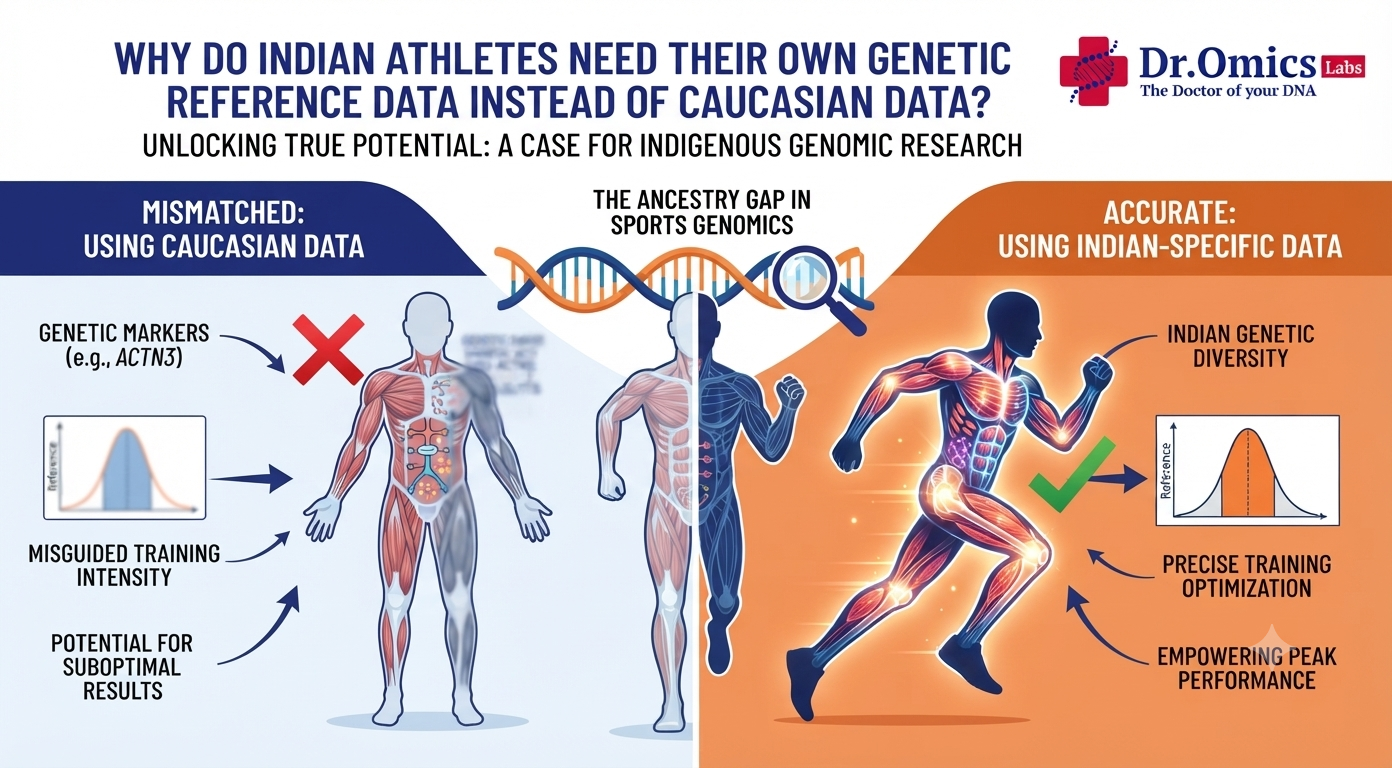
In the evolving field of sports genomics, the ability to tailor training, nutrition, and injury prevention strategies to an individual’s DNA is revolutionary. However, a significant gap exists for Indian athletes: most current sports genetic research and databases are based on Caucasian populations. Because genetic architecture varies significantly across different ethnic groups, relying on external datasets can lead to inaccurate interpretations and suboptimal training outcomes for Indian athletes.
The Genetic Divergence Between Populations
India is one of the most genetically diverse nations on Earth, characterized by over 5,000 distinct ethno-linguistic groups shaped by a complex history of migration, admixture, and endogamy. Some Indian communities are as genetically distinct from each other as Europeans are from East Asians.
When sports science relies on Caucasian-centric data, it overlooks these unique local variations. Genetic markers—such as the ACTN3 “speed gene” or variants in the ACE gene—may have different frequencies and effects within Indian sub-populations compared to Western cohorts. Without a local reference, we cannot accurately determine how these genes influence muscle fiber composition, aerobic capacity, or recovery time in an Indian context.
Why DNA Matters for Performance
Athletic performance is a polygenic trait, with genetics accounting for 60% to 70% of the variance in athlete status. Understanding this “nature” component allows coaches and athletes to:
- Optimize Training: DNA testing can identify an athlete’s predisposition for power (fast-twitch fibers) or endurance. For example, knowing an athlete’s ACTN3 genotype helps in deciding whether to focus on explosive strength training or high-volume endurance work.
- Prevent Injuries: Certain genetic markers are associated with an increased risk of soft tissue injuries, such as ACL tears or muscle damage during marathons. Tailoring recovery protocols based on these markers can significantly reduce downtime.
- Personalize Nutrition: Athletes respond differently to macronutrients and micronutrients like vitamin D and caffeine based on their genotype. A “one-size-fits-all” diet often fails because it does not account for these metabolic differences.
The Path Forward: Indigenous Data Collection
The Athletics Federation of India (AFI) has recognized this necessity, initiating the collection of DNA data from Indian athletes to build a proprietary database. This shift is critical for several reasons:
- Research & Development: Building an indigenous database allows for long-term research into how Indian physiology adapts to specific training stressors.
- Fairness and Accuracy: Sports DNA testing is only reliable when the reference data matches the individual’s ancestry. Caucasian data simply does not capture the nuances of Indian genetic diversity.
- Beyond Talent ID: The primary goal is not just identifying future stars, but using genetic information for personalized injury prevention, recovery optimization, and training efficiency for existing athletes.
Conclusion
Genetics provides the blueprint for athletic potential, but that blueprint is written in a language unique to our ancestry. By investing in indigenous sports genomics, India can move beyond generic, Western-based models to provide its athletes with truly personalized, data-driven support. Establishing an Indian genetic reference dataset is not merely a scientific ambition; it is a fundamental requirement for empowering our athletes to reach their full potential on the world stage. Through this approach, India can foster a more scientific, inclusive, and effective sports ecosystem that respects the biological reality of its diverse population.

