
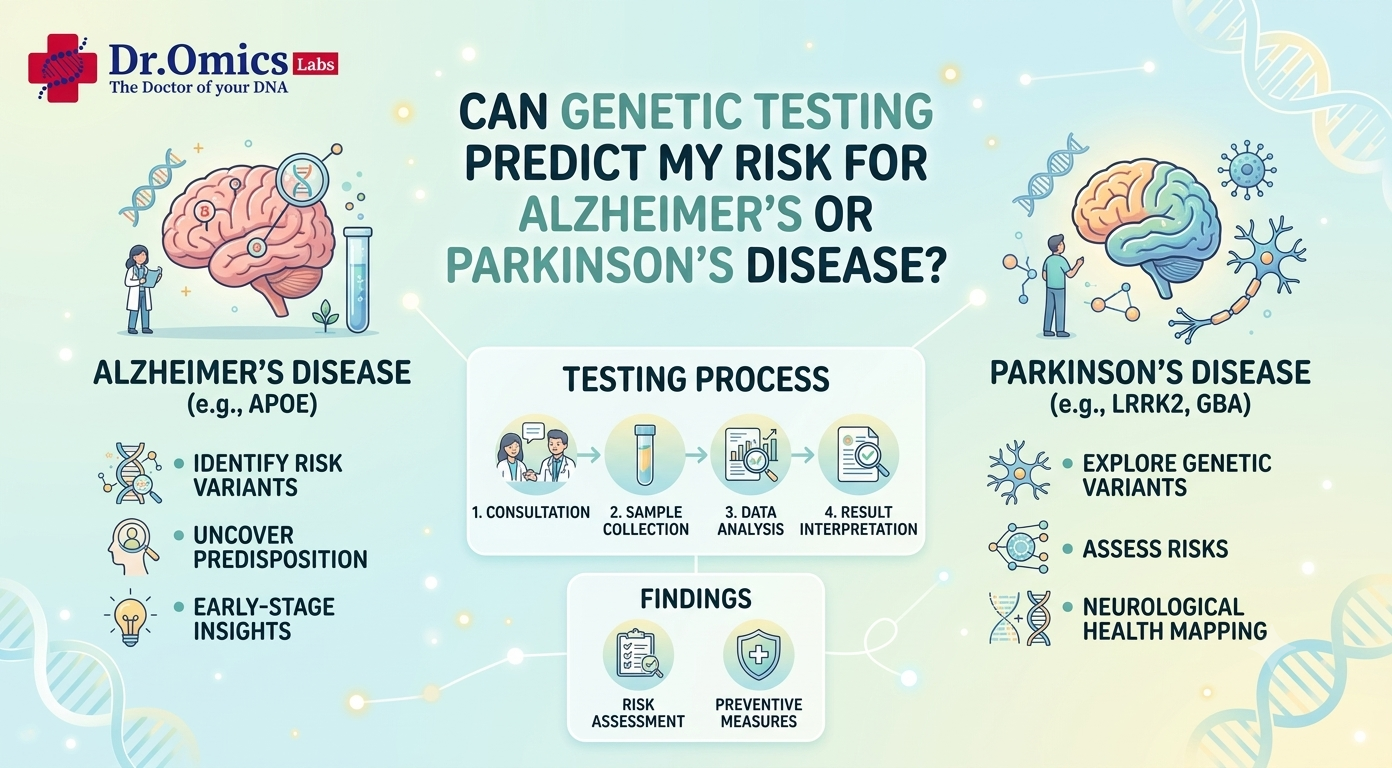
As advances in genomics continue to transform healthcare, many people are asking: can DNA predict Alzheimer’s risk or reveal a person’s likelihood of developing Parkinson’s disease? While genetic testing cannot guarantee whether someone will develop these conditions, it offers valuable insights into inherited risk factors and biological pathways that influence brain health. Modern neurogenomic testing is becoming an essential tool for preventive healthcare, enabling individuals to make informed lifestyle and medical decisions long before symptoms appear.
What Is Genetic Testing for Brain Health?
What is genetic testing for brain health? It involves analyzing specific genes associated with neurological function, cognitive performance, and disease susceptibility. These tests evaluate what neurological conditions genetic testing can detect, including Alzheimer’s disease, Parkinson’s disease, certain neurodevelopmental disorders, hereditary ataxias, and other inherited neurological conditions.
Many people also ask, can DNA show Parkinson’s disease risk? Variants in genes such as LRRK2, GBA, SNCA, and PARK2 have been linked to increased Parkinson’s risk. Similarly, genes like APOE—particularly the APOE 4 variant—are strongly associated with Alzheimer’s disease. However, possessing these variants does not guarantee disease development; it only indicates an increased genetic predisposition.
How Genetics Influence Brain Function
Beyond disease risk, researchers continue exploring what genes affect memory and cognition. Genes involved in neurotransmitter signaling, inflammation, oxidative stress, and neuronal repair all contribute to cognitive performance throughout life.
Another frequently discussed marker is the COMT gene for brain health. The COMT gene regulates dopamine metabolism in the prefrontal cortex, influencing executive function, attention, stress resilience, and decision-making. Understanding how DNA affects neurotransmitter processing helps explain why individuals respond differently to stress, medications, and cognitive challenges.
Scientists are also studying methylation in brain health. DNA methylation is an epigenetic process that regulates gene expression without altering the DNA sequence itself. Abnormal methylation patterns have been linked to aging, cognitive decline, neurodegeneration, and psychiatric disorders.
Can Genetic Testing Improve Prevention?
One of the most important questions is can DNA tests guide dementia prevention. Although genetics cannot eliminate disease risk, identifying inherited predispositions enables earlier preventive strategies. Healthy lifestyle choices—including regular exercise, balanced nutrition, quality sleep, cognitive stimulation, and cardiovascular health management—may reduce overall dementia risk, even among genetically susceptible individuals.
Similarly, understanding how genetics affect cognitive decline allows healthcare providers to monitor higher-risk individuals more closely and recommend personalized preventive care.
Genetics and Mental Health
Neurogenomics extends beyond dementia. Many patients wonder, can DNA tests guide mental health treatment or can pharmacogenomics guide psychiatric medication. Pharmacogenomic testing analyzes genes that influence medication metabolism, helping physicians select antidepressants, antipsychotics, and anxiety medications that are more likely to be effective while reducing unwanted side effects.
Researchers also investigate how genetics influence depression risk, how to use genetics for stress management, and can DNA predict neurodevelopmental disorders. While these conditions involve both genetic and environmental influences, genomic insights contribute to more individualized care plans.
Understanding Your Results
Many individuals ask how accurate are neuro genetic tests and is neuro genetic testing reliable. Clinical-grade genetic testing is highly accurate in detecting genetic variants. However, interpreting disease risk requires expert analysis because most neurological diseases result from complex interactions between multiple genes, lifestyle, environmental exposures, and aging.
Learning how to interpret neuro genetic results is equally important. A positive genetic finding represents increased susceptibility—not certainty—while a negative result does not completely eliminate future risk.
The Future of Neurogenomics
Among the latest breakthroughs in neurogenomics are polygenic risk scoring, AI-assisted genomic analysis, multi-omics integration, and biomarker discovery using proteomics and epigenetics. These technologies are improving our understanding of what are key neurological genetic markers and enabling earlier identification of individuals who may benefit from preventive interventions.
As precision medicine advances, genetic testing is becoming an increasingly valuable component of proactive brain healthcare. While DNA cannot perfectly predict whether someone will develop Alzheimer’s or Parkinson’s disease, it provides actionable insights that support personalized prevention, optimized treatment selection, and better long-term cognitive health. Combined with healthy lifestyle choices and regular medical care, neurogenomic testing empowers individuals to take a more informed approach to protecting their brain throughout life.

