
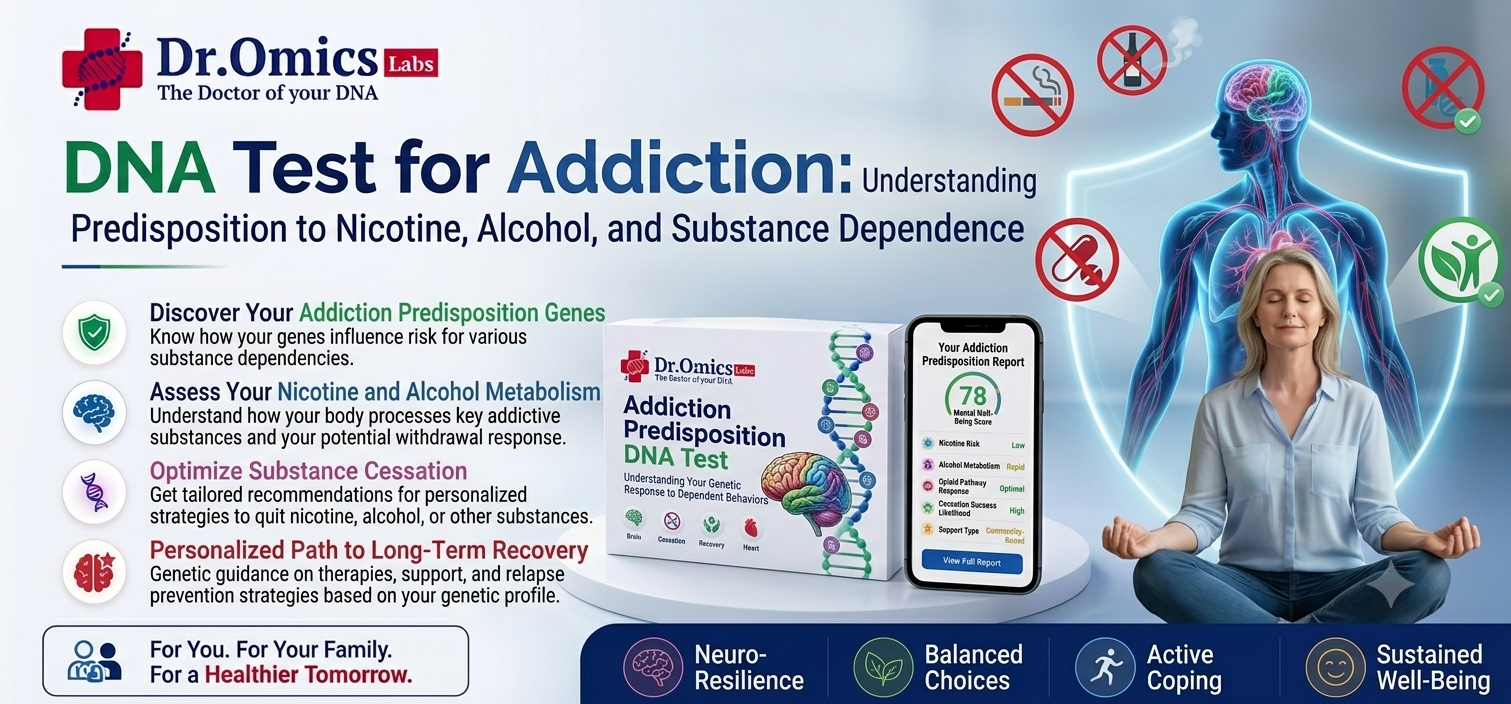
For decades, society viewed addiction strictly as a moral failing or a lack of willpower. However, modern medicine tells a completely different story. Addiction is a chronic, relapsing brain disease, heavily influenced by our biology. Today, advanced genomic science allows us to look directly into our biological blueprint. A DNA test for addiction is transforming how we understand our vulnerabilities, offering a personalized window into our genetic predisposition to addiction.
In India, where changing lifestyles and urban stress have led to a rise in substance use, tools like substance use genomics India panels are gaining traction. These tests do not declare whether you will become addicted; rather, they map out your baseline biological vulnerabilities, enabling proactive, preventive lifestyle choices.
The Biological Blueprint of Addiction
Addiction is fundamentally complex. Studies show that genetics account for roughly 40% to 60% of a person’s vulnerability to substance use disorders. This genetic addiction risk is governed by how our brains process pleasure, how our bodies metabolize chemicals, and how we handle stress.
An addiction DNA profile screens specific gene variants to evaluate how your body interacts with different substances. It primarily focuses on two core biological mechanisms:
- The Reward Pathway (Neurotransmitters): How your brain experiences pleasure and reward when a substance is introduced.
- Metabolic Efficiency (Enzymes): How quickly or slowly your liver and tissues break down and clear toxins from your system.
Nicotine Addiction Genetics: The Microscopic Trigger
Have you ever wondered why some people can smoke a casual cigarette at a party and never pick up another, while others become daily smokers after just a few puffs? The answer largely lies in nicotine addiction genetics.
The primary targets in genetic screening for nicotine dependence are the CHRNA5-CHRNA3-CHRNA5 gene cluster, which codes for nicotinic acetylcholine receptors in the brain.
A specific variant in the CHRNA5 gene alters the receptor’s sensitivity. Individuals carrying this variant often experience less initial discomfort (like coughing or nausea) when smoking for the first time. Instead, their brain experiences an immediate, heightened reinforcement loop, significantly increasing their baseline risk for heavy nicotine dependence and making smoking cessation much harder.
Alcohol Metabolism Gene Test: Flushes and Cravings
When it comes to alcohol, genetic testing focuses heavily on processing efficiency. An alcohol metabolism gene test primarily analyzes two critical enzyme groups: Alcohol Dehydrogenase (ADH) and Aldehyde Dehydrogenase (ALDH).
[ADH Enzyme] [ALDH2 Enzyme]
Ethanol ———–> Acetaldehyde ————–> Acetate (Harmless)
(Alcohol) (Highly Toxic)
In India, variations in the ALDH2 gene are highly significant. If a DNA test reveals a slow-acting or inactive ALDH2 gene, toxic acetaldehyde builds up rapidly in the body. This causes the “alcohol flush reaction,” characterized by facial redness, a rapid heart rate, and nausea. While this unpleasant reaction actually acts as a natural deterrent against alcoholism, individuals with highly efficient ADH enzymes and hyper-functioning ALDH2 enzymes clear the toxins so rapidly that they can drink large amounts without immediate discomfort, paradoxically increasing their long-term risk for dependence.
The Dopamine Receptor Gene: The Hunt for the “Buzz”
At the heart of all substance dependence is dopamine—the brain’s primary reward chemical. The dopamine receptor gene India market frequently highlights the DRD2 gene, specifically the TaqA1 polymorphism.
| DRD2 Gene Variation | Receptor Density | Behavioral Impact |
| Normal Variant | High density of dopamine receptors | Experiences natural pleasure from everyday achievements (food, socializing, hobbies). |
| TaqA1 Variant | ~30% fewer dopamine receptors | Lives in a baseline state of “Reward Deficiency.” Requires stronger stimuli (substances, gambling) to feel a normal sense of pleasure. |
Carriers of the TaqA1 variant possess an inherent vulnerability. Because their brains are naturally starved for dopamine, introducing an addictive substance causes an intense chemical surge that the brain desperately wants to replicate, creating a fast track to physical dependence.
Clinical Reality: What an Addiction DNA Profile Can and Cannot Do
While a DNA test for addiction India service provides powerful data, it is crucial to interpret the results with balanced clinical expectations.
What It Can Do
- Identify Early Risk: Pinpoints young adults or individuals with a family history of substance use who possess high-risk alleles.
- Tailor Cessation Strategies: Helps doctors choose the right smoking or alcohol cessation medications (pharmacogenomics) based on how a patient metabolizes them.
- Remove Stigma: Reassigns accountability from a “moral failing” to a documented genetic vulnerability, reducing shame and encouraging individuals to seek medical help.
What It Cannot Do
- It Is Not a Diagnosis: Carrying a risk gene does not mean you are guaranteed to develop an addiction.
- It Does Not Clear You: Having a “low risk” genetic profile does not make you immune to addiction if you engage in heavy, prolonged substance abuse.
Genetics load the gun, but the environment pulls the trigger. Stress, trauma, socioeconomic factors, and peer availability interact with your DNA (epigenetics) to ultimately shape your health outcomes.
Empowering Preventive Healthcare
Understanding your genetic data is a tool for empowerment, not a diagnosis of destiny. If a genomic panel reveals a high genetic risk for nicotine or alcohol dependence, it serves as an early warning system. Armed with this knowledge, individuals can consciously design healthier coping mechanisms for stress, establish strict personal boundaries around substance exposure, and approach lifestyle choices with personalized mindfulness.

