
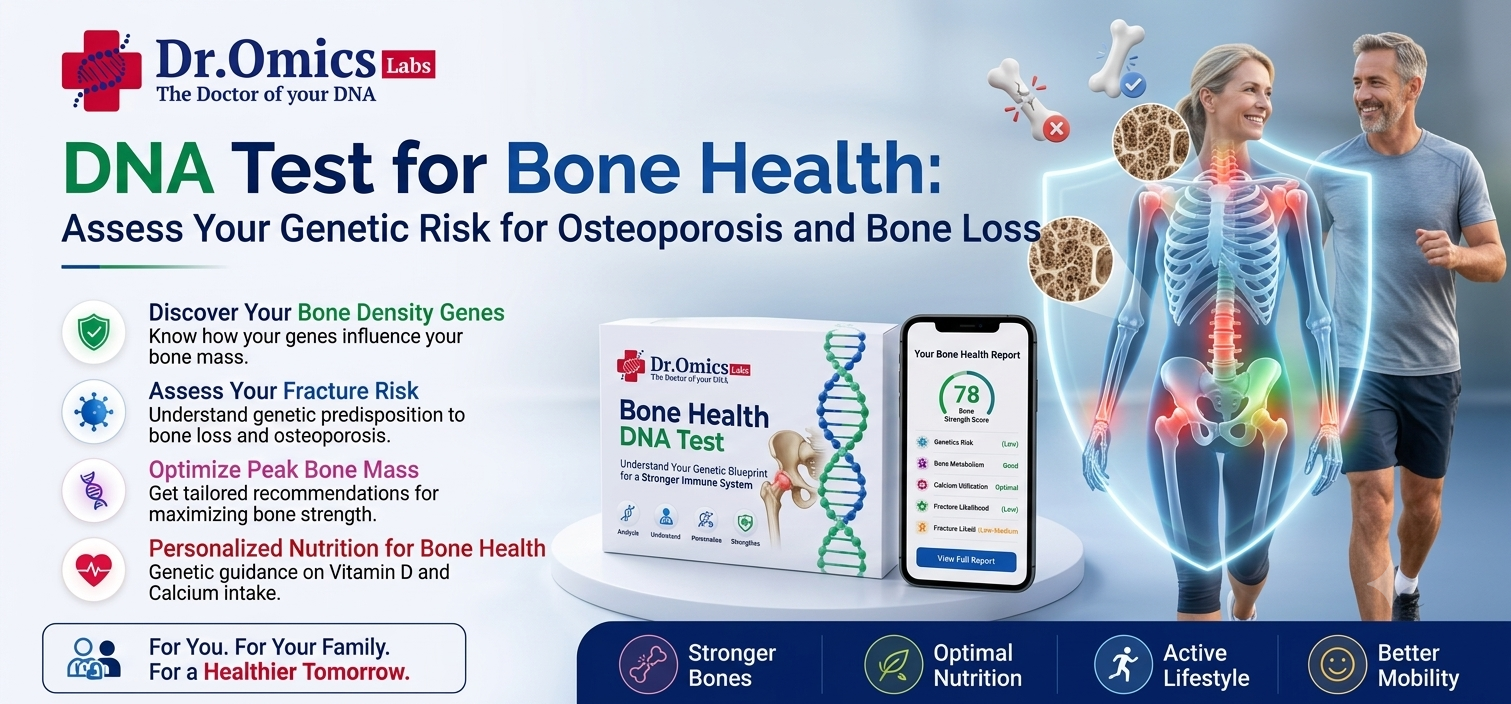
When we think about bone health, the advice we hear is almost always the same: drink more milk, take a calcium supplement, and get some sunlight. Yet, many people follow these rules diligently, only to discover their bone mineral density (BMD) is still dropping. If you have been doing everything right and your bone density scans are still a cause for concern, the missing link isn’t your effort—it is your DNA.
Osteoporosis is often called a “silent disease” because it progresses without symptoms until a sudden fracture occurs. While lifestyle factors like diet and exercise play a massive role, twin and family studies show that up to 60% to 80% of our peak bone mass is genetically determined.
A specialized DNA test for bone health India offers a proactive roadmap to understanding your skeletal blueprint before bone loss even begins.
Why Calcium and Vitamin D Depend on Your Genes
Your body cannot build bone matrix out of thin air; it requires a highly coordinated biochemical cascade to absorb minerals from your diet and deposit them into your skeleton. This cascade is run entirely by your genes.
If you carry specific variations (known as single nucleotide polymorphisms, or SNPs) in these pathways, it can drastically alter your bone remodeling cycle—the continuous process where old bone is broken down by osteoclasts and new bone is built by osteoblasts.
The Vitamin D Receptor (VDR) Gene Test
Vitamin D is the absolute gatekeeper of calcium absorption. Without it, your intestines cannot pull calcium from food into your bloodstream. The vitamin D receptor gene test looks at specific polymorphisms—such as FokI, BsmI, and TaqI—within the VDR gene.
Carrying certain VDR variants can reduce your intestinal calcium absorption efficiency by 20% to 40%. Even if you consume the recommended daily allowance of calcium, a sluggish receptor means the mineral simply passes through your digestive tract unused.
Calcium Absorption Genetics India
Beyond the receptor, genes like CYP2R1 and GC control how effectively your body converts sunlight or dietary supplements into the active, usable form of Vitamin D (calcitriol). If your genetic profile indicates a poor conversion rate, you are at a significantly higher risk for chronic deficiencies, driving down your bone density over time.
Beyond Minerals: The Structural Blueprint of Your Bones
Bone strength is not just about mineral thickness; it is about structural flexibility and architecture. A comprehensive genetic bone health profile looks at the structural scaffold of your skeleton.
[COL1A1 Gene] ───> Produces Type I Collagen ───> Structural Scaffolding
[WNT16 Gene] ───> Signals Osteoblasts ───> Activates Bone Formation
- COL1A1 (The Collagen Scaffold): This gene provides the blueprint for Type I collagen, which makes up roughly 90% of the organic matrix of your bones. Think of collagen as the steel rebar in reinforced concrete, while calcium is the cement. If variants in your COL1A1 gene result in weaker collagen fibers, your bones will be brittle and prone to low-trauma fractures, regardless of how much calcium is deposited onto them.
- WNT16 (The Bone Builder): The WNT16 signaling pathway is essential for cortical bone thickness and bone remodeling. Variants here can cause your body to fall behind on building new bone, tipping the scale toward accelerated bone loss as you age.
Who Should Consider a Bone Strength Genomics India Test?
Because peak bone mass is achieved around the age of 30, bone loss is a gradual decline that accelerates sharply later in life. A bone density gene test is highly recommended for:
- Individuals with a Family History: If a parent or grandparent suffered from a hip fracture, early-onset osteoporosis, or a stooped posture, your osteoporosis risk DNA profile may carry the same inherited markers.
- Post-Menopausal Women: Estrogen protects bones by keeping bone-breaking osteoclasts in check. When estrogen drops during menopause, women with underlying ESR1 (Estrogen Receptor 1) or VDR genetic variants experience vastly accelerated bone loss.
- People with Chronic Vitamin D Resistance: If your routine blood work consistently shows low Vitamin D levels despite high-dose supplementation, your genes are likely the bottleneck.
Shifting from Generalized Advice to Precision Bone Health
The ultimate benefit of uncovering your osteoporosis genetics is the power of personalization. Instead of guessing, you can adjust your prevention strategies based on your exact cellular deficiencies:
- Targeted Supplementation: If your VDR gene test shows reduced absorption, a standard calcium carbonate supplement won’t cut it. You may need highly bioavailable forms like calcium citrate combined with magnesium glycinate and Vitamin K2 to ensure calcium actually reaches your bone matrix rather than building up in your arteries.
- Customized Training: If your genetic profile indicates low cortical bone density, integrating specific resistance training and heavy, impact-based weight-bearing exercises can help mechanically signal your osteoblasts to reinforce those weak zones.

