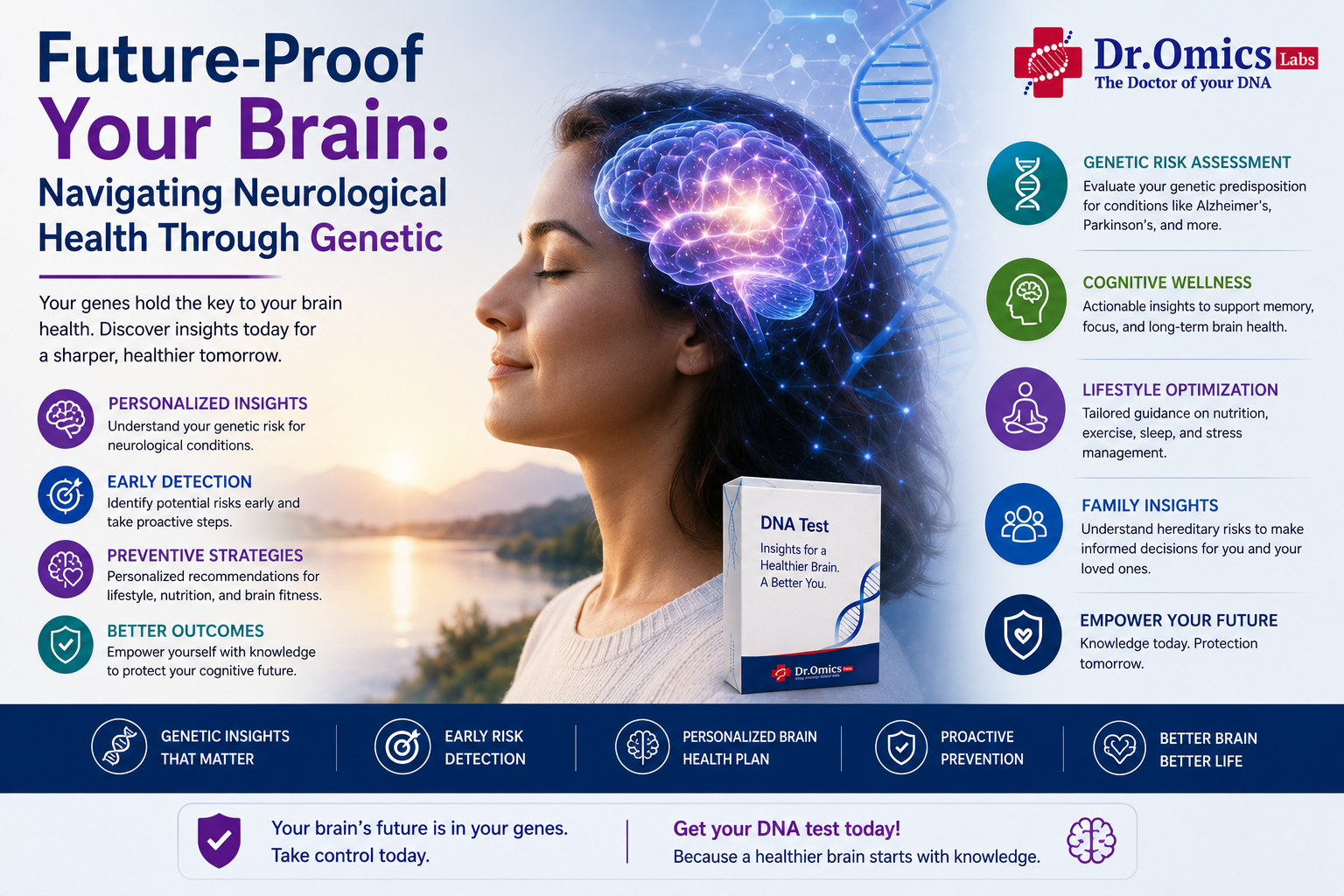
The brain has long been considered the final frontier of human biology—a “black box” that we only truly understood when something went wrong. However, as we move through 2026, the field of neurogenomics is shining a light into that darkness. We are no longer passive observers of our cognitive decline; we are entering an era where we can “future-proof” our minds.
By utilizing a Neuro DNA test, individuals can now identify their unique predispositions and implement lifestyle changes decades before symptoms appear. Understanding your genetic risk for brain health isn’t about predicting an unavoidable fate; it’s about gaining the lead time necessary to protect your most vital organ.
Understanding Neurogenomics: The Blueprint of the Mind
Neurogenomics is the study of how our entire genome influences the development, function, and health of the nervous system. Unlike traditional testing that looked for rare, single-gene disorders, modern neurological genetic testing looks at a complex web of markers that influence everything from neurotransmitter balance to how our brains clear out metabolic waste.
Two of the most discussed markers in 2026 include:
- APOE-ε4: This is perhaps the most well-known variant associated with late-onset Alzheimer’s disease. While carrying this allele increases risk, it is not a diagnosis. Knowing your APOE status allows for aggressive intervention in cardiovascular health and sleep hygiene—two factors that can significantly mitigate that genetic risk.
- COMT and BDNF: These genes influence “brain plasticity” and dopamine levels. They dictate how well you handle stress, your capacity for learning new skills, and your resilience against age-related cognitive decline.
The Power of a Cognitive Health DNA test
A cognitive health DNA test offers a personalized manual for mental longevity. One of the most significant breakthroughs in recent years is the understanding that our brains are highly sensitive to “gene-environment interactions.”
When you uncover your genetic profile, you can tailor your lifestyle in three critical areas:
1. Precision Nutrition for the Brain
Some individuals possess genetic variants that make them less efficient at converting B-vitamins into usable forms (like the MTHFR variant). Since B-vitamins are crucial for reducing homocysteine—a compound linked to brain shrinkage—knowing your status tells you exactly which supplements or foods are non-negotiable for your cognitive health.
2. Sleep as a Neurological Filter
We now know that the brain has a waste-clearance system called the “glymphatic system.” Genetic testing can reveal if your body is naturally less efficient at this “nightly cleaning.” For someone with high-risk markers, strict sleep hygiene becomes a medical necessity rather than a luxury, as it is the primary way the brain clears the plaques associated with neurodegeneration.
3. Stress Resilience and Mental Health
Our genes dictate how we process cortisol and maintain neurochemical balance. A Neuro DNA test can help explain why certain people are more prone to burnout or anxiety, allowing for the selection of specific mindfulness practices or therapeutic interventions that align with their biological stress-response system.
Moving from Fear to Empowerment
A common concern regarding neurological genetic testing is the “fear factor.” Why would I want to know if I’m at risk for a condition that has no cure?
The answer lies in the shift from treatment to proactive prevention. In 2026, we understand that “dementia” is often the end-stage of a process that begins 20 to 30 years earlier.
Insight: Genetic testing provides a 20-year head start. It allows you to manage blood pressure, inflammation, and blood sugar—the “three pillars” of brain health—with a level of intensity that is specifically calibrated to your genetic vulnerabilities.
Ethical Considerations and Modern Accuracy
As with any powerful tool, neurological genetic testing must be handled with care. It is essential to work with providers that offer genetic counseling to help interpret results. Modern tests are more accurate than ever, but they provide probabilities, not certainties.
The goal of neurogenomics is to replace “generalized advice” (like “do a crossword puzzle”) with “targeted action” (like “your DNA suggests you need more long-chain Omega-3s and high-intensity resistance training to maintain hippocampi volume”).
How to Start Your Brain-Health Journey
If you are interested in “future-proofing” your cognitive abilities, consider the following steps:
- Seek Comprehensive Panels: Look for tests that include markers for inflammation, lipid metabolism, and neurotrophic factors, not just a single disease marker.
- Focus on Epigenetics: Remember that genes can be “turned on or off” by lifestyle. Your DNA test is the starting point, but your daily habits are the finishing touches.
- Monitor and Re-evaluate: Brain health is a marathon. Use your genetic data as a baseline and pair it with annual cognitive screenings to track your progress.
Conclusion
The future of brain health is not found in a “magic pill” discovered at age 80; it is found in the data we collect today. By embracing neurogenomics and neurological genetic testing, we take the guesswork out of aging.
Your brain is the hardware of your identity. A Neuro DNA test gives you the schematic for that hardware, allowing you to optimize, protect, and preserve your cognitive legacy for decades to come. Don’t wait for the fog to set in—use the science of today to keep your future bright and clear.