
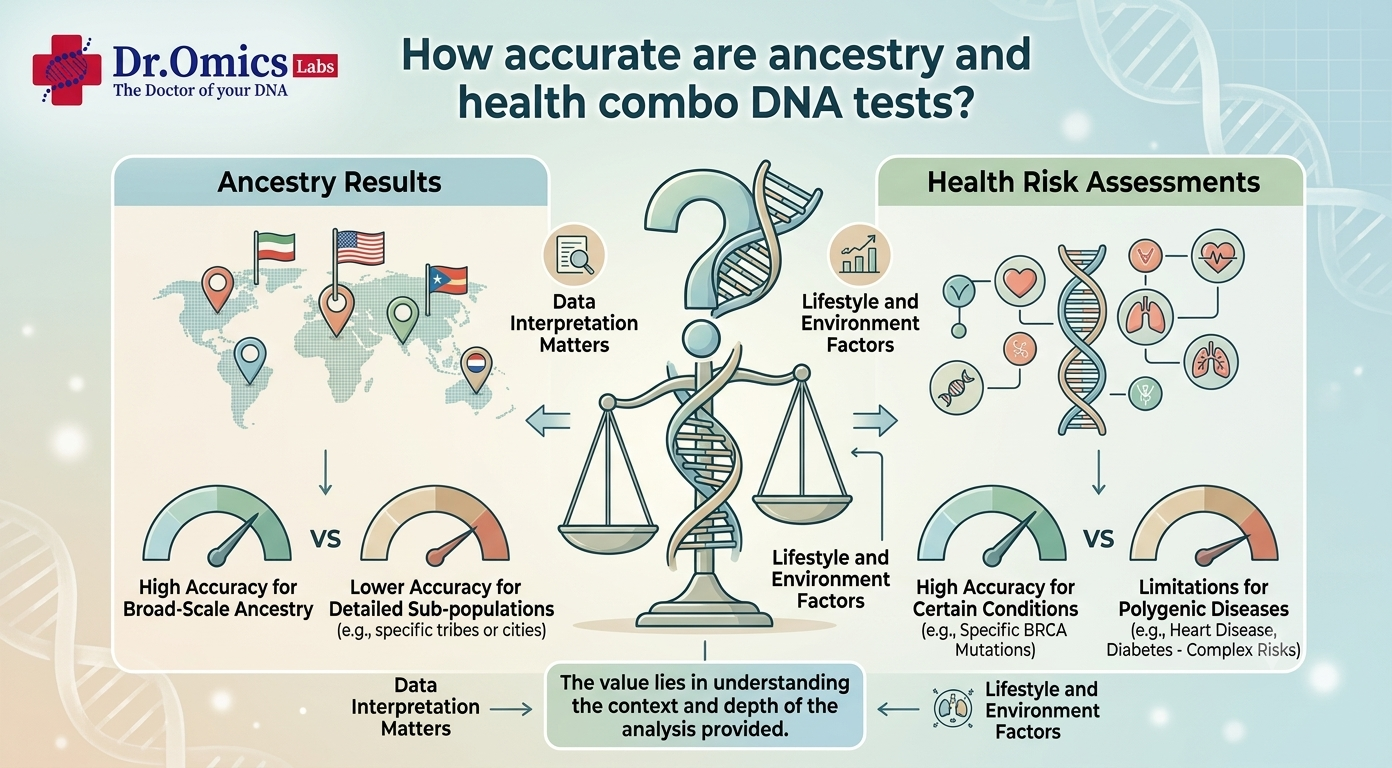
Direct-to-consumer (DTC) DNA testing has become increasingly popular, allowing people to explore their ancestry, health traits, and genetic predispositions from the comfort of home. But how accurate are ancestry health combo tests, and can they truly provide reliable health insights? Before purchasing a kit, it’s important to understand both the benefits and limitations of consumer genetic testing.
Many people wonder, what can direct-to-consumer DNA tests tell me? Most ancestry and health combo tests analyze hundreds of thousands of genetic markers to estimate ethnic origins, identify genetic relatives, and assess the likelihood of carrying certain inherited traits. Some tests also evaluate whether consumer DNA test show diabetes risk or provide insights into heart health. However, these tests estimate genetic risk rather than diagnose diseases.
One of the most common questions is, are at home DNA test kits reliable? Generally, reputable companies use high-quality laboratory methods, making their ancestry results reasonably accurate. Health reports are also scientifically validated for the specific genetic variants they analyze. However, no consumer DNA test examines your entire genome, meaning what DTC DNA tests cover is only a fraction of your overall genetic profile.
Consumers also ask, are heart DNA test kits accurate? These kits may identify certain inherited variants linked to cardiovascular conditions, but they cannot predict whether you will develop heart disease. Lifestyle, diet, exercise, age, and environmental factors all play major roles. Similarly, while consumer DNA tests show diabetes risk, they only estimate inherited susceptibility rather than confirm future disease.
Some alternative wellness services claim hair DNA analysis used for nutritional assessments or health optimization. In reality, can hair DNA tests show deficiencies? The answer is generally no. Hair samples may be used for DNA extraction in some cases, but they cannot accurately diagnose vitamin or mineral deficiencies. Blood tests remain the gold standard for evaluating nutritional status.
Understanding what is the difference between clinical and consumer DNA test is equally important. Clinical genetic tests are ordered by healthcare professionals, analyze medically relevant genes in greater detail, and are interpreted alongside your medical history. Consumer tests are designed primarily for educational purposes and should not replace professional medical advice.
There are also several risks of consumer genetic testing to consider. Privacy concerns, unexpected findings, and emotional impacts are among the biggest issues. In some cases, consumer genomics reveal family secrets, such as unexpected biological relationships or previously unknown relatives. These discoveries can have significant emotional and legal implications.
Another concern is what are ethical concerns of DTC testing. Questions surrounding data ownership, genetic privacy, consent, and third-party data sharing continue to shape discussions within the healthcare and biotechnology industries. As the DTC genetic testing market grow, regulators are paying closer attention to consumer protections and testing standards.
Many consumers ask whether consumer genomics is safe. Reputable companies implement security measures to protect genetic information, but users should always review privacy policies before sharing their DNA. This is one of the key factors in what to consider before buying DNA kit.
Finally, can DTC test guide lifestyle changes? In some cases, genetic insights may encourage healthier habits, but they should be combined with professional medical advice. Learning how to interpret consumer DNA results is essential because risk estimates do not guarantee outcomes. Equally important are the limitations of at home DNA tests, which cannot detect every genetic condition or replace clinical diagnosis. This is precisely why genetic counseling is important for DTC testing—it helps individuals understand complex results, avoid unnecessary anxiety, and make informed healthcare decisions.
Ultimately, ancestry and health DNA tests can provide valuable personal insights, but understanding their capabilities and limitations is the key to using them responsibly.

