
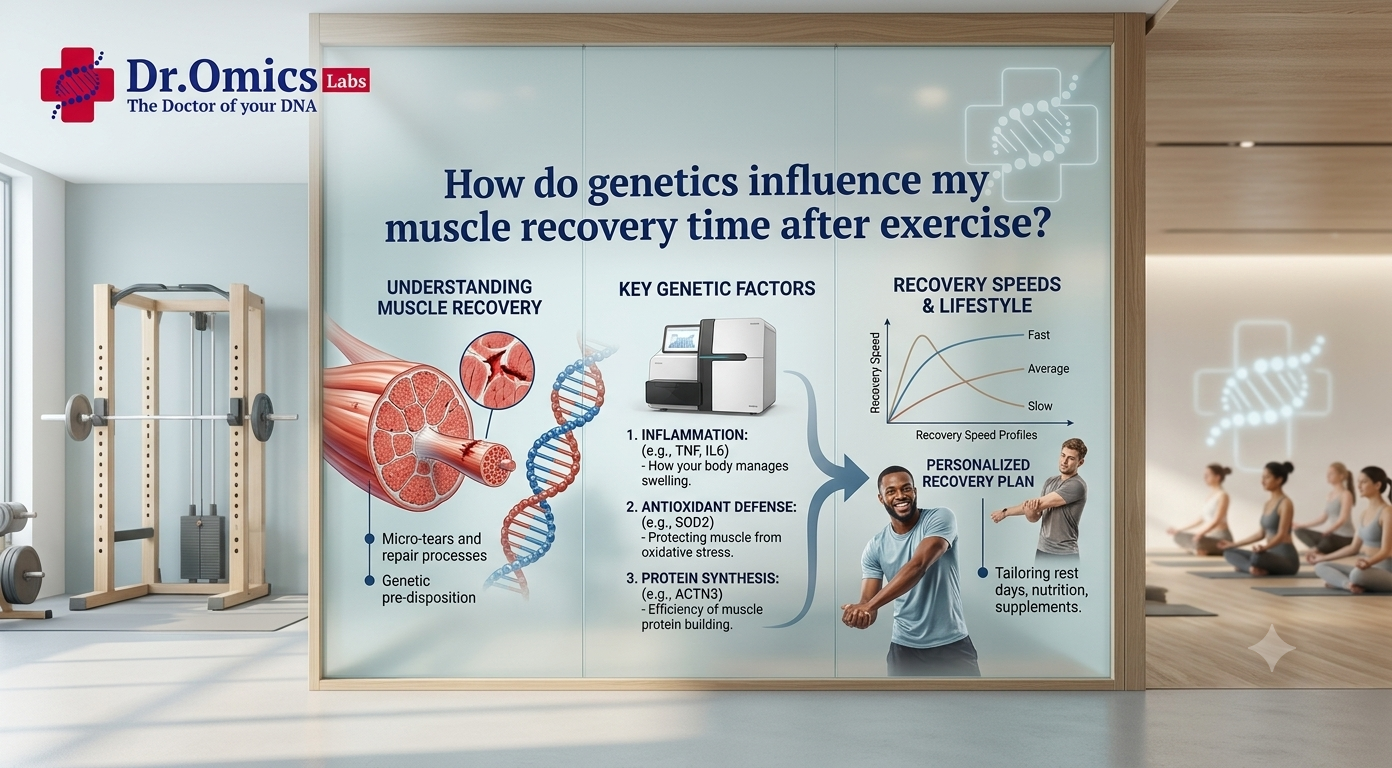
Have you ever noticed that some people recover from an intense workout within a day while others need several days before they feel ready to train again? If you’ve been asking how genetics affect muscle recovery, the answer may be hidden in your DNA. Recovery is influenced by sleep, nutrition, hydration, and training intensity, but your genes also play a significant role in determining how efficiently your muscles repair themselves after exercise.
Modern DNA analysis has transformed fitness by allowing individuals to understand their unique biological makeup. Instead of following generic exercise plans, you can now discover can DNA personalize my workout routine and make informed decisions based on your body’s natural strengths and limitations. This personalized approach helps improve performance while reducing the risk of injury and overtraining.
One of the biggest questions in fitness is why do some build muscle faster than others. The answer often lies in genetics. Certain genes regulate muscle growth, protein synthesis, recovery speed, and inflammation. For example, the well-known ACTN3 for sprinters gene influences fast-twitch muscle fibers, making some people naturally better at sprinting, powerlifting, and explosive movements. A muscle fiber type test can identify whether your muscles are better suited for strength-based activities or endurance sports.
Genetics also influence how does DNA affect oxygen utilization, which impacts cardiovascular endurance and athletic performance. Individuals with genetic traits that support efficient oxygen transport may perform better in long-distance running, cycling, or swimming. This also helps answer questions like does DNA determine HIIT vs cardio and what is best exercise based on DNA. While no single gene determines your perfect workout, understanding your genetic profile helps create a training plan that matches your body’s natural abilities.
Recovery isn’t only about muscles—it also involves inflammation and joint health. Many athletes ask what genes affect exercise inflammation because inflammation directly influences soreness and healing time. Genetic variations can affect how quickly your body repairs damaged muscle tissue after exercise. Likewise, what genes affect joint health can explain why some individuals are more prone to tendon or ligament injuries than others. These insights allow athletes to adjust recovery strategies and reduce long-term injury risks.
Another common concern is fitness plateaus. If your progress has slowed despite consistent training, you may wonder can Fit Genie explain fitness plateau. Sometimes, the issue isn’t a lack of effort but using a workout style that doesn’t match your genetic profile. DNA insights can reveal can DNA show workout response, helping you understand whether your body responds better to strength training, endurance exercises, interval training, or recovery-focused routines.
Combining genetics with traditional fitness assessments produces even better results. If you’re wondering how to combine DNA with fitness tests, the answer is simple: use DNA data alongside body composition measurements, strength tests, endurance evaluations, and mobility assessments. Together, these provide a complete picture of your fitness potential and help create a truly personalized training program.
Many people also ask does genetics determine strength potential or can DNA predict overtraining risk. Genetics cannot define your ultimate limits, but they can identify tendencies related to recovery, fatigue, muscle repair, and injury susceptibility. Knowing these tendencies allows you to schedule rest days more effectively and avoid unnecessary physical stress.
At Fit Genie, advanced DNA testing analyzes over 100 genetic markers related to muscle performance, endurance, flexibility, recovery, inflammation, metabolism, and overall fitness. This scientific approach helps answer important questions such as how to optimize fitness with DNA while providing practical recommendations tailored to your body.
Finally, many people ask, are genetic fitness tests accurate and is Fit Genie test reliable? When based on validated genetic markers and interpreted alongside your lifestyle, nutrition, and training habits, DNA fitness testing provides valuable insights that support smarter decision-making. Although genes don’t replace hard work, they help you understand how your body naturally performs and recovers.
Your DNA is not your destiny—it is your blueprint. By understanding how genetics influence muscle recovery, endurance, strength, and flexibility, you can train more efficiently, recover faster, minimize injuries, and achieve long-term fitness success with confidence.

