
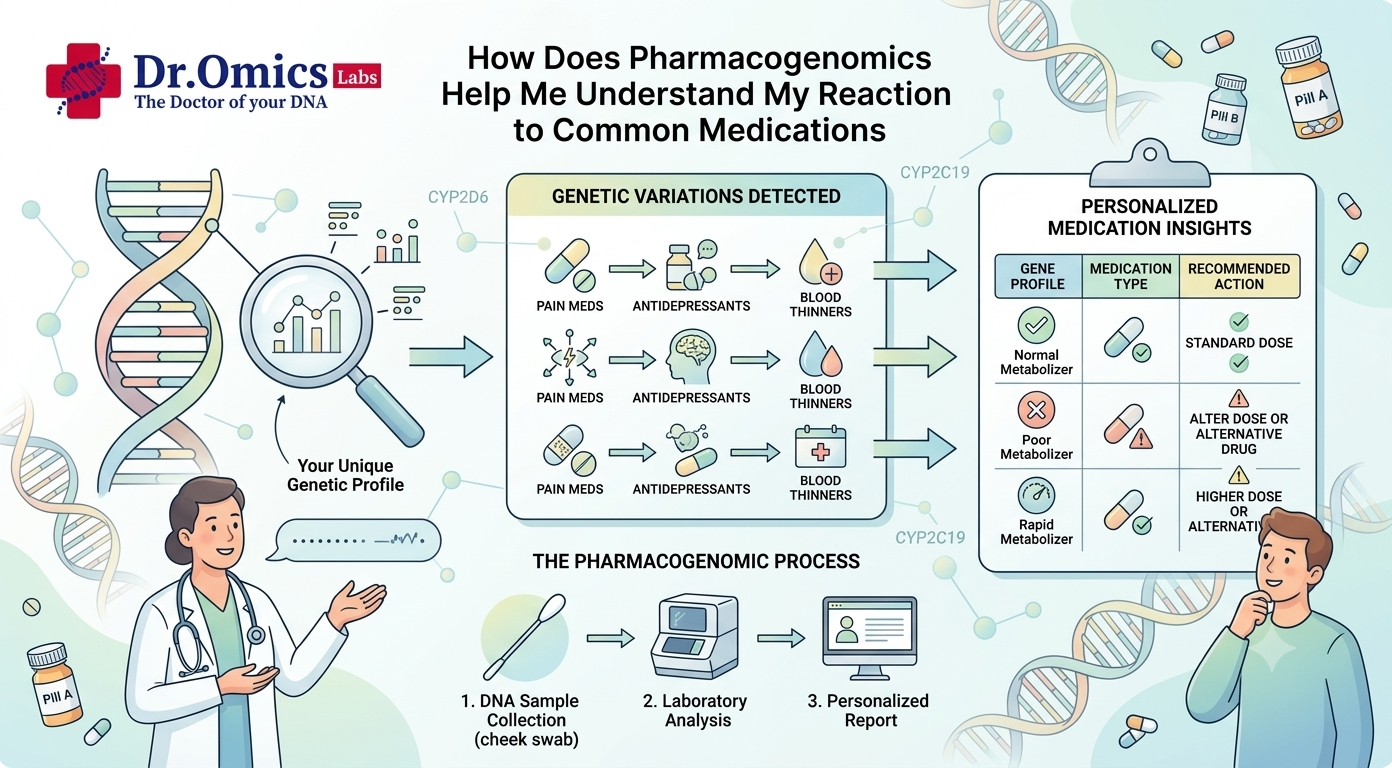
Have you ever wondered why the same medication works well for one person but causes side effects or little benefit for another? The answer often lies in your genes. Pharmacogenomics is the science of understanding how your genetic makeup influences your response to medications, helping healthcare providers make more personalized treatment decisions. Combined with modern wellness genomics, it is becoming an essential part of preventive healthcare.
Many people ask, what can a wellness DNA test tell me beyond ancestry. Advanced wellness DNA testing can provide insights into medication metabolism, nutrient utilization, inflammation, sleep patterns, fitness potential, and genetic health risks. Understanding how a DNA health test works begins with collecting a saliva sample that is analyzed for specific genetic variants associated with health and wellness.
One of the most valuable applications is understanding how pharmacogenomics work. Certain genes control enzymes that break down medications in your liver. Variations in these genes may cause you to metabolize a drug too quickly, reducing its effectiveness, or too slowly, increasing the risk of side effects. Pharmacogenomic information may help healthcare professionals choose the right medication or adjust the dosage based on your genetic profile.
As personalized healthcare grows, many people ask, can at home DNA testing be trusted? Reputable laboratories that follow strict quality standards can provide highly accurate genetic analysis. However, results should always be interpreted alongside your medical history by qualified healthcare professionals. Similarly, how accurate are wellness DNA tests 2026 depends on laboratory quality, scientific validation of genetic markers, and proper clinical interpretation.
Another common concern is does DNA testing predict disease risk. While DNA testing can identify inherited genetic predispositions, it does not guarantee that a disease will develop. Instead, it provides valuable information that supports preventive healthcare strategies. For example, individuals often ask can DNA test predict heart disease risk or what does my DNA say about inflammation. Genetic markers may indicate increased susceptibility, allowing lifestyle modifications and regular health monitoring to reduce future risks.
Wellness DNA testing extends beyond medications. Many individuals explore what is nutrigenomics testing to understand how genes influence nutrient absorption and dietary responses. Learning how to personalize wellness with DNA can help optimize nutrition, exercise, and daily habits. Although people frequently ask if DNA tests show vitamin deficiencies, DNA tests typically identify genetic tendencies affecting vitamin metabolism rather than measuring current vitamin levels, which require blood tests.
Likewise, some ask if DNA tests detect food intolerances. Genetic testing can reveal predispositions to conditions such as lactose intolerance or caffeine sensitivity, but it cannot diagnose all food allergies or intolerances. Similarly, users are increasingly interested in can DNA testing improve my sleep, as certain genetic variants influence circadian rhythm, melatonin regulation, and sleep quality, helping guide healthier sleep habits.
Modern genomic wellness also includes what is epigenetic testing and what does DNA methylation reveal. Unlike inherited DNA, epigenetic markers such as DNA methylation reflect how lifestyle, nutrition, stress, and environmental exposures influence gene activity over time. These insights may also contribute to understanding how genetics affect aging by estimating biological age and identifying opportunities to support healthy aging.
Many people also wonder what lifestyle changes based on DNA can truly make a difference. Personalized recommendations may include nutrition adjustments, exercise planning, sleep optimization, stress management, and targeted supplementation. However, the key to how to interpret DNA wellness results is recognizing that genetics provides probabilities—not certainties. Your daily choices remain one of the strongest determinants of long-term health.
Finally, many ask, is preventive genetic testing worth it and is genetic testing for health safe. For many individuals, the answer is yes when testing is performed through reputable providers with appropriate privacy protections. Preventive genetic insights can empower informed healthcare decisions, encourage healthier lifestyle habits, and support more personalized conversations with healthcare professionals.
As pharmacogenomics and wellness genomics continue to advance, personalized healthcare is shifting from reactive treatment to proactive prevention. By understanding how your genes influence medication response, nutrition, inflammation, aging, and overall wellness, you can make more informed choices that support lifelong health.

