
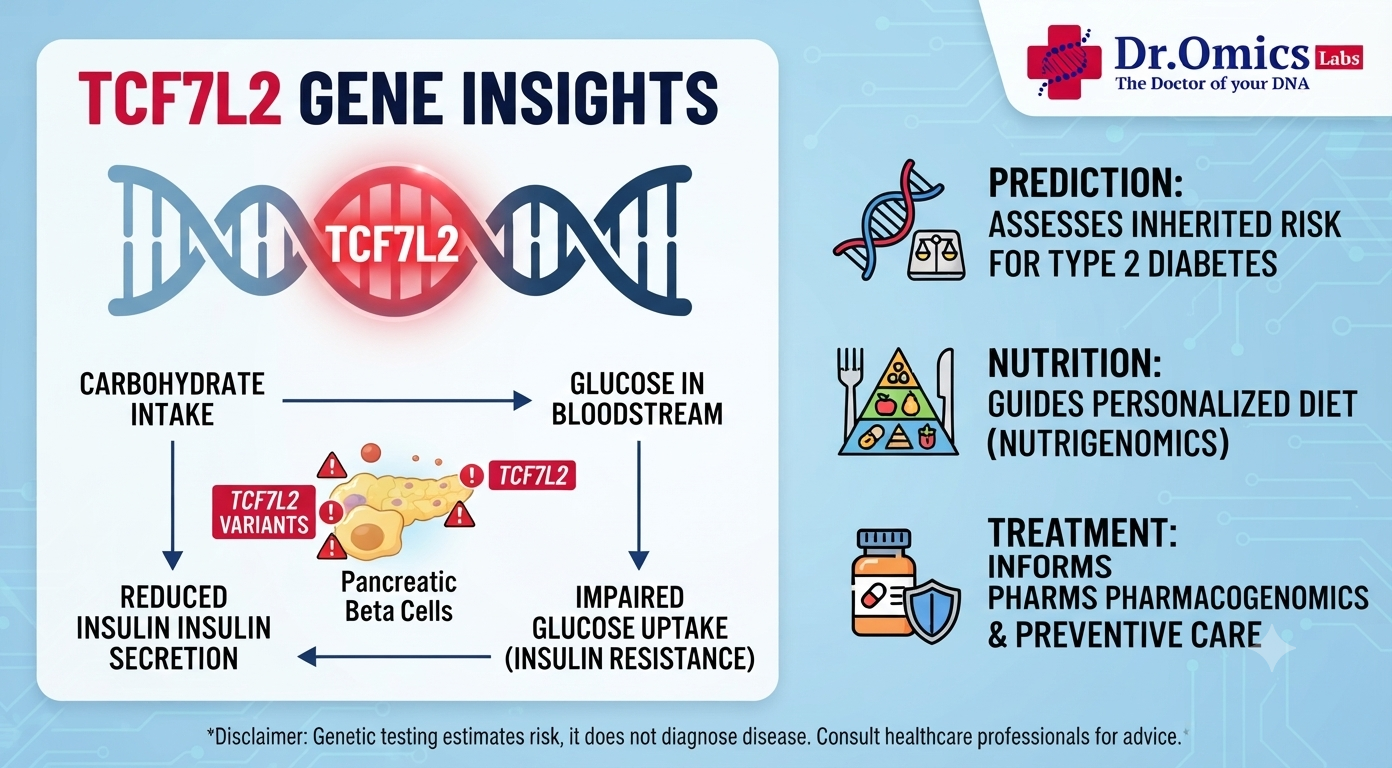
Diabetes is influenced by both lifestyle and genetics, and one of the most researched genes in this field is the TCF7L2 gene. If you’ve ever wondered what is TCF7L2 gene for diabetes or can DNA predict Type 2 diabetes risk, modern genetic science provides valuable insights. While your DNA doesn’t determine your destiny, understanding your genetic profile can help you make smarter decisions about nutrition, exercise, and preventive healthcare.
What Is the TCF7L2 Gene?
The TCF7L2 (Transcription Factor 7-Like 2) gene regulates several biological pathways involved in glucose metabolism, insulin production, and pancreatic beta-cell function. Variations in this gene are considered among the strongest genetic risk factors for Type 2 diabetes identified to date.
Many people ask, what genes affect carbohydrate metabolism? TCF7L2 is one of the most important because it influences how efficiently your body processes carbohydrates and responds to rising blood sugar after meals.
How Does TCF7L2 Affect Carbohydrate Metabolism?
When you consume carbohydrates, they are converted into glucose, which enters your bloodstream. Insulin helps transport this glucose into your cells for energy.
Certain TCF7L2 variants can:
- Reduce insulin secretion from pancreatic beta cells.
- Alter glucose regulation after meals.
- Affect incretin hormone signaling involved in insulin release.
- Increase blood sugar fluctuations after carbohydrate-rich meals.
This explains how does genetics affect insulin sensitivity and why two individuals with similar diets may experience very different blood sugar responses.
Can DNA Show Insulin Resistance or Diabetes Risk?
Many individuals wonder, can DNA show insulin resistance or what is genetic testing for diabetes?
A DNA test cannot diagnose diabetes, but it can identify inherited genetic variants associated with:
- Higher Type 2 diabetes susceptibility
- Reduced insulin production
- Impaired glucose metabolism
- Increased carbohydrate sensitivity
This answers how accurate are diabetes genetic tests—they estimate genetic predisposition rather than confirm disease. When combined with clinical markers like HbA1c, fasting glucose, and lifestyle assessments, genetic testing becomes a powerful preventive tool.
Can DNA Predict Type 2 Diabetes Risk?
Research shows that TCF7L2 variants significantly increase susceptibility, especially when combined with obesity, physical inactivity, and poor dietary habits.
Therefore, can DNA predict Type 2 diabetes risk? It predicts inherited risk—not certainty. Lifestyle choices remain one of the strongest modifiers of genetic predisposition.
Similarly, does DNA determine diabetes onset age is only partially true. Genetics influence timing, but environmental factors often determine when—or even whether—the disease develops.
Personalizing Nutrition with Nutrigenomics
One of the most exciting developments is can DNA test guide diabetes diet through nutrigenomics.
Individuals carrying high-risk TCF7L2 variants may benefit from:
- Lower glycemic index carbohydrates
- Higher dietary fiber intake
- Balanced protein with meals
- Weight management strategies
- Regular physical activity
- Consistent meal timing
This supports how to prevent diabetes with DNA insights and raises the question, can nutrigenomics reverse prediabetes? While genes cannot be changed, personalized nutrition and healthy habits may improve glucose regulation and delay disease progression.
Pharmacogenomics and Diabetes Treatment
Another growing field is pharmacogenomics—using DNA to guide medication selection.
People frequently ask:
- Which diabetes medication based on DNA?
- Is pharmacogenomics for diabetes effective?
- How to personalize diabetes treatment with DNA?
Certain genetic variants may influence how patients respond to medications such as metformin or sulfonylureas. Although pharmacogenomic testing is not yet routine for all diabetes treatments, research continues to expand its clinical applications.
Beyond Type 2 Diabetes
Genetic testing may also help answer:
- Can DNA show gestational diabetes risk?
- What genetic markers for Type 1 diabetes?
- How does family history affect diabetes genes?
- Is diabetes genetic testing recommended?
Type 1 diabetes is associated with different immune-related genes, particularly HLA variants, whereas gestational diabetes shares some genetic overlap with Type 2 diabetes, including TCF7L2.
Individuals with a strong family history may benefit from genetic counseling to better understand inherited risk and preventive options.
Latest Advances in Diabetes Genomics
Researchers continue to discover what are latest breakthroughs in diabetes genomics, including polygenic risk scores that combine hundreds of genetic markers to estimate overall diabetes risk. These innovations, together with wearable glucose monitoring, AI-powered health analytics, and personalized nutrition, are making preventive healthcare increasingly precise.
Conclusion
The TCF7L2 gene offers valuable insight into carbohydrate metabolism, insulin secretion, and Type 2 diabetes susceptibility. Although your genes influence risk, they do not determine your future. Combining genetic testing with healthy eating, regular exercise, weight management, and medical monitoring enables a proactive approach to diabetes prevention. As nutrigenomics and pharmacogenomics continue to evolve, DNA-based healthcare is becoming an increasingly important tool for personalized diabetes prevention and treatment.

