
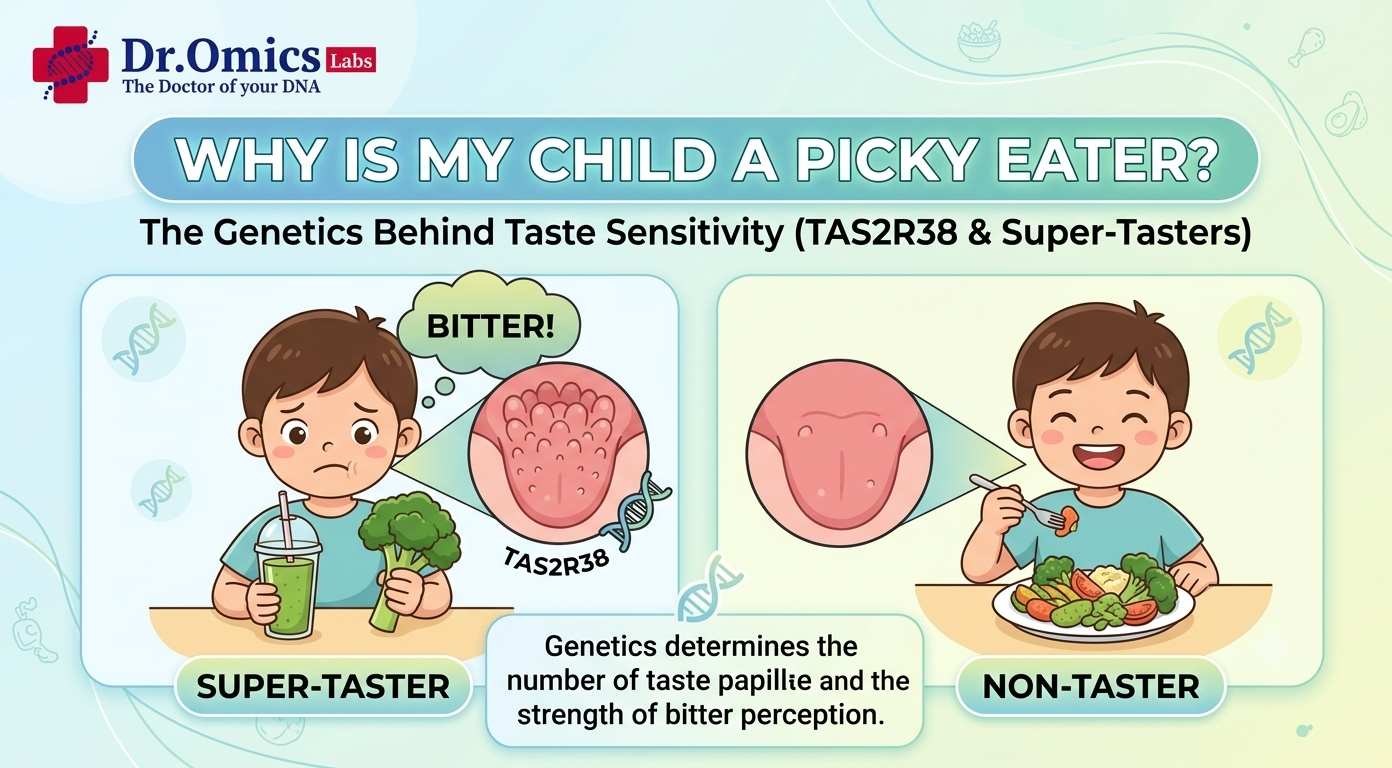
If your child refuses broccoli, spinach, or other healthy vegetables, you’re not alone. Many parents wonder whether picky eating is simply a phase or something deeper. Surprisingly, science suggests that genetics may play a significant role in how children experience taste. A child DNA test can provide valuable insights into taste sensitivity, helping parents understand their child’s food preferences and nutritional needs.
One of the most studied genes related to taste is TAS2R38, often called the “bitter taste gene.” Variations in this gene determine how strongly a child perceives bitter flavors. Children with certain versions of TAS2R38 are known as super-tasters, meaning they experience bitter foods much more intensely than others. For these children, vegetables like kale, Brussels sprouts, and broccoli may genuinely taste unpleasant rather than simply being disliked.
This is where pediatric genetic testing and a kids DNA test can be beneficial. By identifying genetic variations associated with taste perception, parents can better understand why their child avoids certain foods instead of assuming they are being stubborn. A DNA test for child development also offers insights into nutritional needs, metabolism, and wellness factors that influence healthy growth.
Understanding your child’s genetics can help create a personalized nutrition plan. A children’s nutrition DNA analysis supports the development of a genetic diet for kids, allowing parents to introduce healthier alternatives that match their child’s natural taste preferences. Instead of forcing bitter vegetables, families can focus on nutrient-rich foods that are more enjoyable while gradually expanding their child’s palate.
Beyond taste sensitivity, pediatric genomic profiling provides information about overall health and development. A child growth DNA test can identify genetic factors related to growth, nutrient absorption, and physical development. Similarly, a child allergy DNA test may reveal inherited sensitivities that could affect dietary choices, while pediatric pharmacogenomics helps healthcare providers understand how a child may respond to certain medications if treatment is ever required.
Modern solutions like the Little Genie DNA test combine these genetic insights into a comprehensive report focused on pediatric health. Whether you’re exploring pediatric wellness DNA, a kids health DNA test, or broader genetic testing for children, the goal is not to label your child but to better understand their unique biology.
Every child is different, and genetics is only one piece of the puzzle. Environment, family eating habits, and repeated exposure to new foods also influence food preferences. However, combining healthy parenting strategies with information from a DNA test for kids nutrition can help reduce mealtime stress and support better long-term eating habits.
A child’s picky eating may not simply be a behavioral challenge—it could be written in their genes. Understanding those genetic differences empowers parents to make informed nutritional choices that support healthier growth, improved wellness, and a more positive relationship with food.

