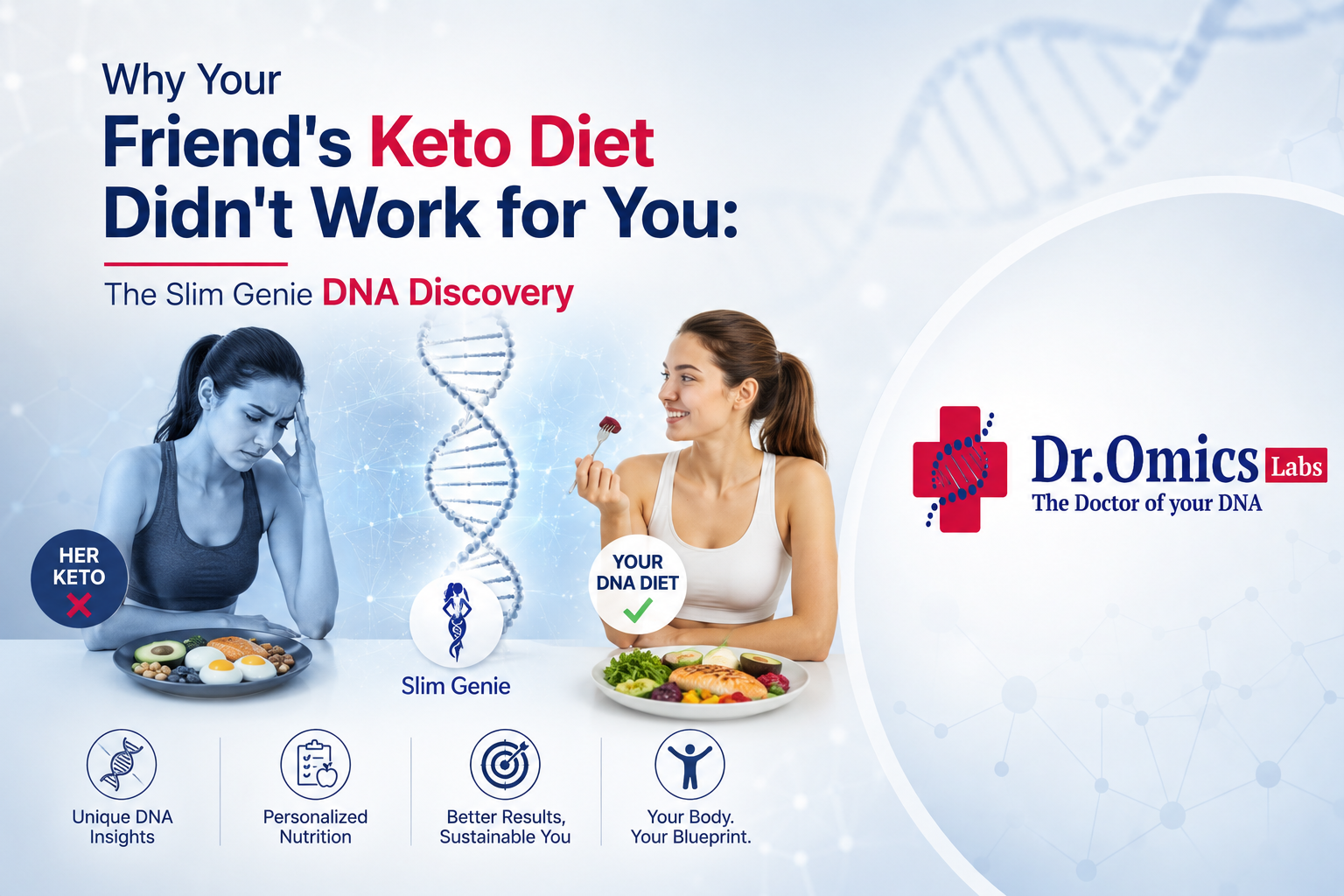
We’ve all seen it happen: a friend or coworker starts a ketogenic diet and the weight seemingly melts away. Inspired, you clear your pantry of pasta, stock up on avocados and grass-fed butter, and wait for the “Keto Magic” to happen. But instead of boundless energy and a shrinking waistline, you feel sluggish, your digestion stalls, and the scale refuses to budge.
In 2026, we finally have the answer to this frustrating phenomenon. It isn’t a lack of willpower; it’s a lack of biological alignment. The “Slim Genie” secret lies in your code. By utilizing a weight management DNA test, we can now see that the “perfect diet” doesn’t exist in a cookbook—it exists in your double helix.
The Myth of the Universal Diet
For decades, the weight loss industry has cycled through “one-size-fits-all” trends. First, it was low-fat; then, it was low-carb; now, it’s keto. However, DNA based weight loss research has proven that our bodies are hard-wired to process macronutrients differently based on our ancestral heritage and specific genetic mutations.
When you choose personalized keto vs low carb strategies based on your DNA, you are essentially picking the right fuel for your specific engine. Some people are “fat burners” by nature, while others are “carb managers.” Forcing a carb manager into a high-fat keto state can actually lead to increased inflammation and metabolic stall.
Genetic Fat Metabolism: The Hidden Controller
The way your body handles dietary fat is governed by several key genes. A weight management DNA test typically looks at the following markers to determine your ideal profile:
- PPARG: This gene is a master regulator of fat cell formation and insulin sensitivity. Certain variants of PPARG make individuals highly responsive to a high-fat diet, making them the “perfect” candidates for Keto.
- APOA5: This gene influences triglyceride levels. If you have a specific variation here, consuming a high amount of saturated fat (the staple of a traditional Keto diet) can actually cause your lipid levels to spike and your weight loss to plateau.
- FABP2: This gene controls how efficiently your intestines absorb fat. “High absorbers” may find that even “healthy fats” lead to weight gain if the caloric density isn’t strictly managed, regardless of ketosis.
By understanding your genetic fat metabolism, you can stop fighting your biology and start working with it. If your DNA suggests you are a “slow fat processor,” a moderate low-carb approach with lean proteins might be your “Slim Genie” breakthrough, while your “high-fat processing” friend thrives on bacon and butter.
The Carbohydrate Connection: AMY1 and Beyond
While fat metabolism is crucial, how we handle the “other” fuel source is just as important. The AMY1 gene determines how much salivary amylase you produce—the enzyme that breaks down starch.
- High AMY1 Copy Number: You can likely handle complex carbohydrates efficiently. For you, a restrictive Keto diet might be unnecessarily difficult and could even lead to muscle loss or thyroid slowdown.
- Low AMY1 Copy Number: You struggle to break down starches, leading to higher blood sugar spikes. For you, a low-carb or keto lifestyle is likely the biological “key” to maintaining a healthy weight.
DNA Based Weight Loss: Beyond the Macronutrients
A weight management DNA test doesn’t just stop at what’s on your plate. To truly unlock your “Slim Genie” potential, you need to understand the behavioral and exercise triggers written in your code:
- Satiety and Cravings (FTO Gene): Often called the “fat mass and obesity-associated” gene, certain variants of FTO affect your “fullness” signals. If you have the “risk” variant, you may need a diet higher in protein and fiber to physically trigger the satiety hormones that your brain might otherwise ignore.
- Exercise Synergy: Your DNA can tell you if you are more likely to lose weight through steady-state cardio or high-intensity resistance training. Some people have a genotype that sees almost no weight loss from running but responds dramatically to lifting weights.
- Sweet Taste Perception: Genetic variations can make you “blind” to sugar, meaning you need more of it to register a sweet taste. Knowing this allows you to consciously manage your “sweet tooth” using data rather than just willpower.
How to Find Your “Slim Genie”
If you’re tired of the “diet of the month” merry-go-round, it’s time to look at personalized keto vs low carb through a genetic lens.
Step 1: Get a Weight Management DNA Test.
Look for a panel that specifically includes fat metabolism, carb sensitivity, and eating behavior markers.
Step 2: Ignore the “Trends.”
If your results say you process fats poorly, don’t let a social media influencer convince you that you must do Keto to be healthy. Trust your data over the trend.
Step 3: Test and Trace.
Combine your DNA results with a simple food log for 30 days. You will likely find that when you eat according to your genetic fat metabolism, the “brain fog” lifts and the weight begins to stabilize naturally.
Conclusion
The reason your friend’s Keto diet didn’t work for you isn’t because you failed the diet—it’s because the diet failed your biology. DNA based weight loss is the ultimate tool for ending the cycle of frustration.
By embracing the science of the Slim Genie, you can stop guessing and start progressing. Whether your body demands a Mediterranean-style low-carb plan or a strict ketogenic protocol, the answer is already inside you. It’s time to unlock your code and discover the most effortless version of your healthy self.