
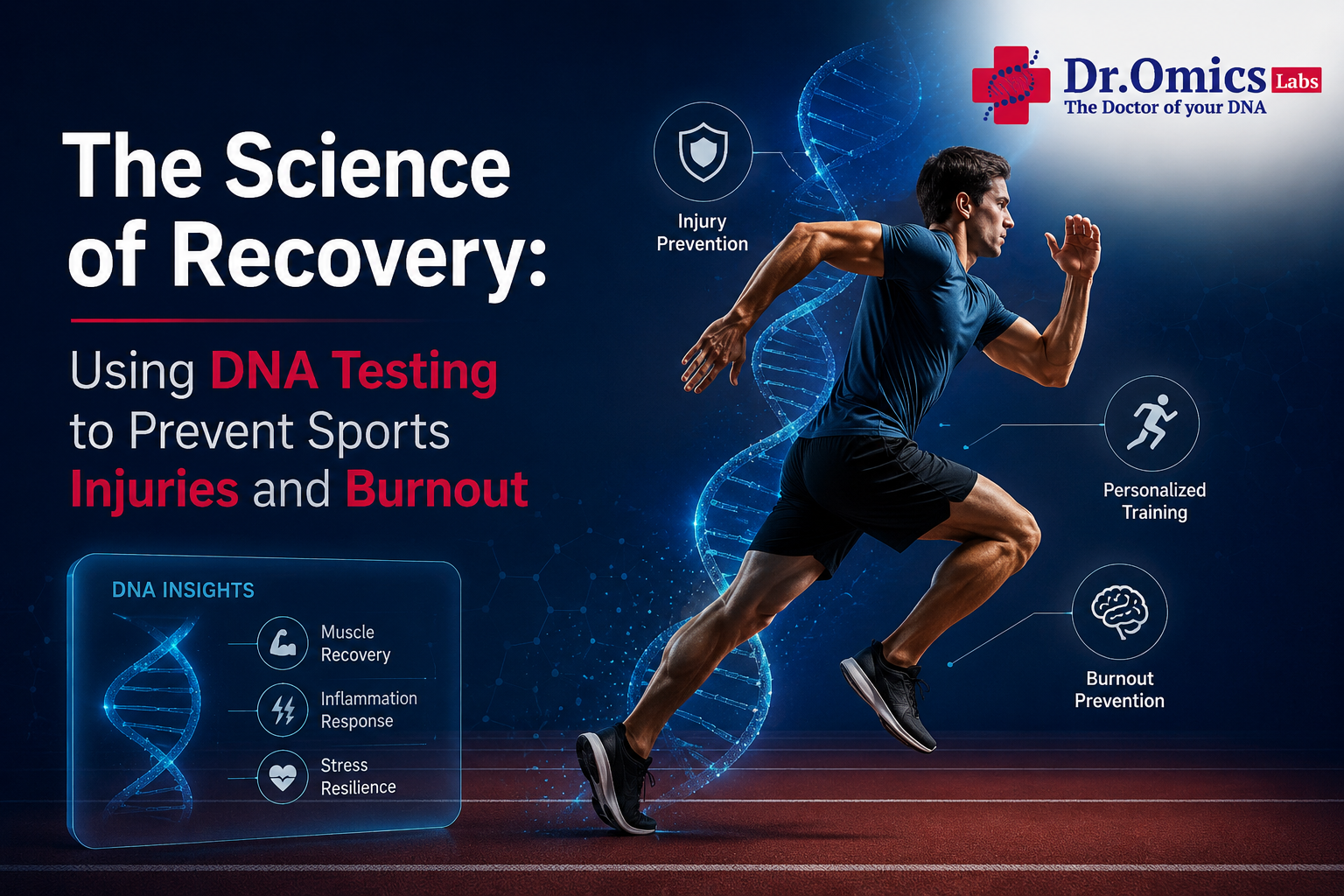
In the high-stakes world of athletics, the difference between a podium finish and a season-ending injury often comes down to a single factor: recovery. For decades, athletes followed a “more is better” philosophy, pushing their bodies to the limit and assuming that soreness was simply a badge of honor. However, as we enter a new era of sports science, we are discovering that how your body heals is just as important as how it performs. By utilizing sports injury prevention DNA testing, we can finally move away from generic rest days and toward a scientifically calibrated approach to healing.
The Biological Blueprint of Recovery
Every time you train, you create microscopic tears in your muscle fibers and stress your connective tissues. Your DNA determines how quickly and efficiently your body repairs this damage. Some athletes are genetically “resilient,” possessing variants that promote rapid tissue regeneration and high anti-inflammatory responses. Others may carry genetic recovery markers that indicate a slower repair cycle or a higher susceptibility to tendon and ligament stress.
Without this data, an athlete might follow a standard training program that doesn’t allow their specific biological systems enough time to reset. This “recovery debt” is the primary driver of overuse injuries, such as Achilles tendinopathy or stress fractures. By understanding your genetic predispositions, you can intervene before the “wear and tear” turns into a tear that requires surgery.
Sporty Genie Analysis: Identifying Your Soft-Tissue Risk
One of the most powerful tools in modern athletics is the Sporty Genie analysis. This specialized DNA profile looks beyond just speed and power to examine the structural integrity of your body. It analyzes genes like COL1A1 and COL5A1, which are responsible for the production of collagen—the primary building block of your tendons and ligaments.
If your analysis reveals a genetic predisposition for “stiffer” or more brittle connective tissue, your training must reflect that. Instead of jumping into high-impact plyometrics every day, you might prioritize eccentric loading exercises and specific nutritional support to bolster your joints. This isn’t about avoiding hard work; it’s about working hard on the things that keep you on the field.
Crafting a Personalized Sports Recovery Plan
The ultimate goal of genetic testing is the creation of a personalized sports recovery plan. This plan serves as a user manual for your body’s maintenance. A DNA-driven strategy might include:
- Targeted Nutrition: Identifying if you need higher levels of specific antioxidants or omega-3 fatty acids to manage genetically high inflammation markers.
- Optimized Rest Intervals: Determining if your DNA suggests a 24-hour or a 48-hour window for full glycogen replenishment and muscle repair.
- Active Recovery Modalities: Discovering if your body responds better to cold-water immersion, compression therapy, or light aerobic “flush” workouts based on your circulatory genetic markers.
When your recovery matches your biology, the risk of burnout—both physical and mental—drops significantly. You are no longer fighting a losing battle against fatigue; you are giving your cells exactly what they need to bounce back stronger.
Athletic Longevity: Playing the Long Game
The hallmark of a great athlete isn’t just a single championship; it is athletic longevity. Whether you are a professional player or a dedicated “weekend warrior,” the goal is to stay active and competitive for as many years as possible.
By using sports injury prevention DNA insights, you are making an investment in your future self. You are avoiding the catastrophic injuries that often force early retirement and the chronic inflammation that can lead to long-term health issues. You are choosing a path of precision, ensuring that your passion for sports remains a source of joy rather than a source of pain.
Conclusion
The era of “training through the pain” is being replaced by the era of “training with the brain.” Through Sporty Genie analysis and the identification of genetic recovery markers, we have the power to protect our bodies with unprecedented accuracy. Don’t leave your health to chance. Embrace a personalized sports recovery plan and unlock the secret to a longer, stronger, and more resilient athletic career. Your DNA has the answers—it’s time to listen.

