
For decades, pediatric nutrition followed a standard playbook: a balanced diet, plenty of milk for bones, and “eating your greens.” But as we navigate 2026, we’ve realized that the “average” child doesn’t exist. Every child possesses a unique biochemical identity. This is the heart of nutrient-gene interaction in children—the study of how your child’s specific DNA influences how they absorb, process, and utilize the food they eat.
By leveraging pediatric genomic profiling, parents and clinicians are moving away from guesswork. We are now able to build personalized childhood nutrition plans that don’t just fuel growth but optimize long-term health by identifying early-stage metabolic traits before they manifest as health challenges.
Decoding the Blueprint: Pediatric Genomic Profiling
A child’s DNA is the instruction manual for their development. However, these instructions aren’t always straightforward. Some children may have genetic variants that make them highly efficient at processing certain nutrients, while others may struggle.
Pediatric genomic profiling focuses on key markers that dictate a child’s metabolic “factory” settings:
- The VDR Gene (Vitamin D Receptor): This gene determines how well a child’s body absorbs calcium and builds bone density. A child with certain variants may need significantly more Vitamin D than the standard RDA to prevent growth delays or weak enamel.
- The FTO Gene: Often called the “appetite gene,” certain variations can affect satiety signals, making a child feel hungry even after a full meal. Recognizing this early allows parents to focus on high-fiber, high-protein foods that help regulate these biological signals.
- MTHFR and Folate: This gene is critical for “methylation,” a process that influences everything from brain development to DNA repair. Children with specific MTHFR variants may need specific forms of folate (methylfolate) to thrive.
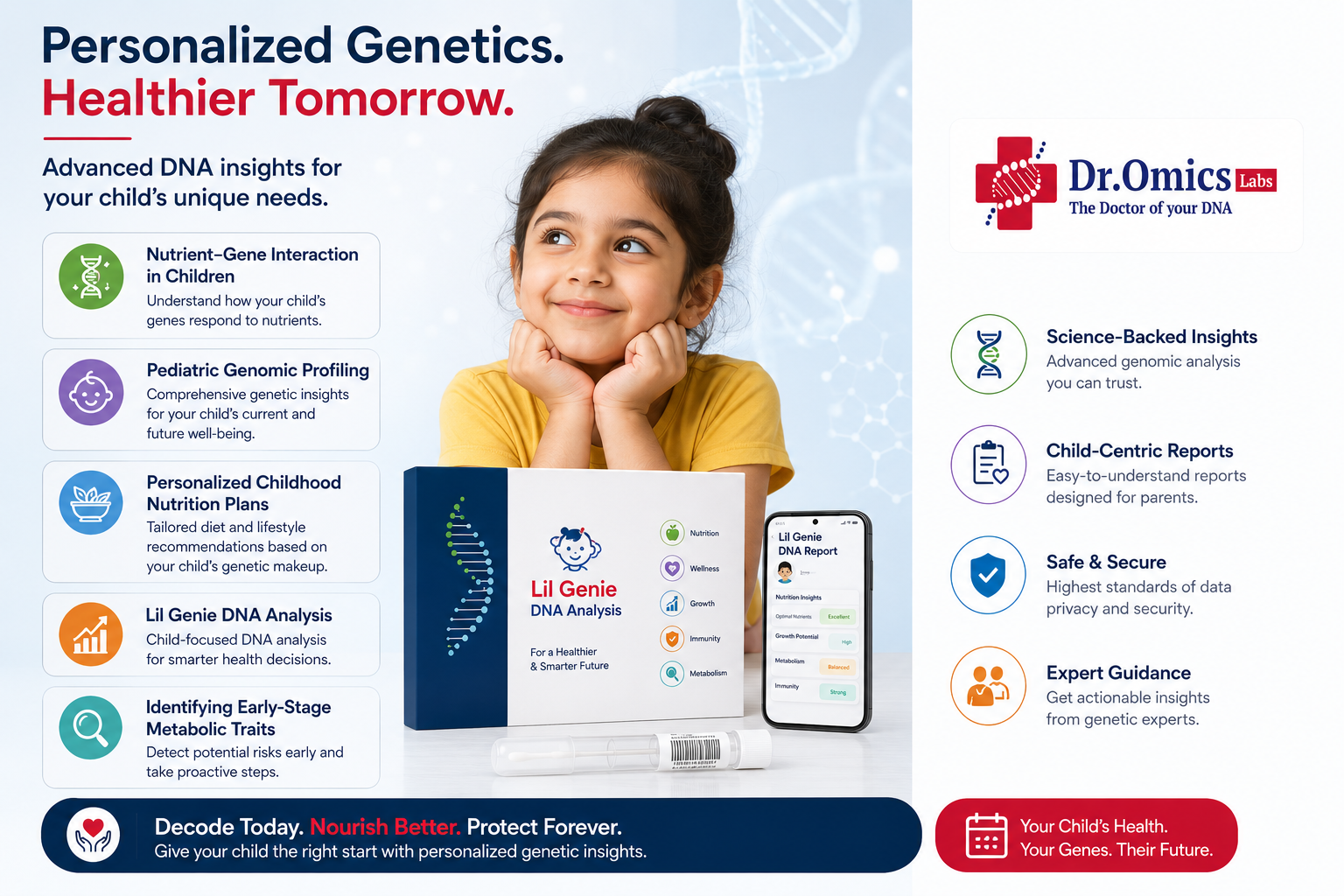
Lil Genie DNA Analysis: Precision for the Smallest Patients
One of the most exciting breakthroughs in 2026 is the Lil Genie DNA analysis. Designed specifically for the pediatric demographic, this tool simplifies complex genomic data into actionable insights for parents.
Unlike adult tests that focus on aging and chronic disease, Lil Genie DNA analysis prioritizes developmental milestones. It provides a roadmap for:
- Food Sensitivities: Identifying genetic predispositions to lactose intolerance or gluten sensitivity before the “trial and error” phase of introducing solids.
- Cognitive Support: Highlighting specific needs for Omega-3 fatty acids (DHA) based on the FADS1 gene, which influences brain and eye development.
- Physical Potential: Analyzing muscle fiber type and energy metabolism to help parents choose extracurricular activities that align with their child’s natural athletic strengths.
Identifying Early-Stage Metabolic Traits
The true power of looking at a child’s DNA lies in identifying early-stage metabolic traits. Type 2 diabetes, obesity, and cardiovascular issues often have roots in childhood metabolism.
The 2026 Shift: We are no longer waiting for a child to fall outside the “healthy” weight range on a growth chart. Instead, we are looking at their genetic predisposition for insulin resistance or lipid processing.
If a pediatric genomic profile reveals a high risk for metabolic dysfunction, a personalized childhood nutrition plan can be implemented at age five instead of trying to reverse damage at age fifteen. This “primary prevention” is the holy grail of modern medicine.
Building Personalized Childhood Nutrition Plans
So, what does a DNA-informed lunchbox look like? It’s not about restriction; it’s about optimization.
A personalized childhood nutrition plan might include:
- Customized Macronutrient Ratios: Some children are genetically better at processing fats for fuel, while others thrive on a higher percentage of complex carbohydrates.
- Targeted Micronutrients: Instead of a generic multivitamin, supplementation is tailored to the child’s specific “gaps,” such as iron, zinc, or B12.
- Proactive Habits: If a child has a genetic predisposition for slow caffeine metabolism (which can affect focus and sleep even with small amounts of hidden caffeine in chocolate or sodas), parents can make informed choices about their intake.
The Ethics and Future of Pediatric DNA Testing
As we embrace these tools, the focus remains on empowerment, not labeling. Lil Genie DNA analysis and similar tools are designed to give parents more choices, not fewer. By understanding the nutrient-gene interaction in children, we are giving the next generation a “metabolic head start.”
In 2026, we understand that nutrition is the most powerful tool we have to influence gene expression. We can’t change the DNA our children were born with, but through personalized childhood nutrition plans, we can change how that DNA expresses itself.
Conclusion
The days of one-size-fits-all parenting are over. With pediatric genomic profiling, we have the opportunity to see our children for who they truly are—right down to the molecular level. By identifying early-stage metabolic traits and acting on them through Lil Genie DNA analysis, we aren’t just feeding our children; we are architecting their future health.
Is your child’s diet working with their DNA or against it? The answer is written in their code.